


Forecasters at the National Oceanic and Atmospheric Administration released updated predictions for how weather is expected to behave over the next three months in North America.
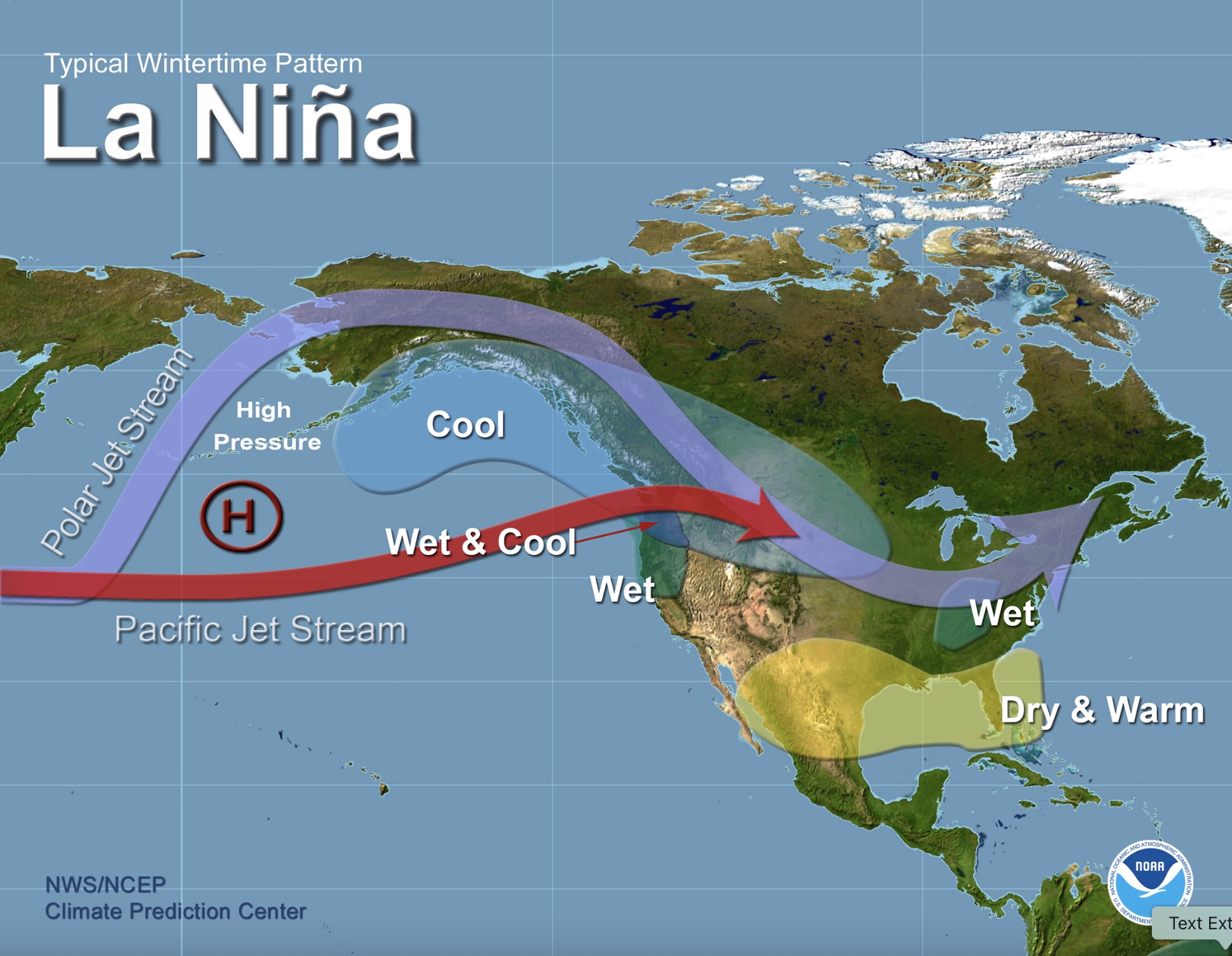
The Climate Prediction Center, part of NOAA, issued its seasonal outlook covering November 2025 through January 2026. The update reflects the typical influence of La Niña, a climate pattern characterized by cooler-than-normal ocean temperatures in the central and eastern Pacific Ocean, which can shift global weather patterns and cool the northern latitudes.
How accurate is the forecast? Historical data since 1995, when modern outlooks began, show that NOAA’s seasonal forecasts tend to be moderately accurate for temperature, but less reliable for precipitation, which is harder to predict due to its variability.
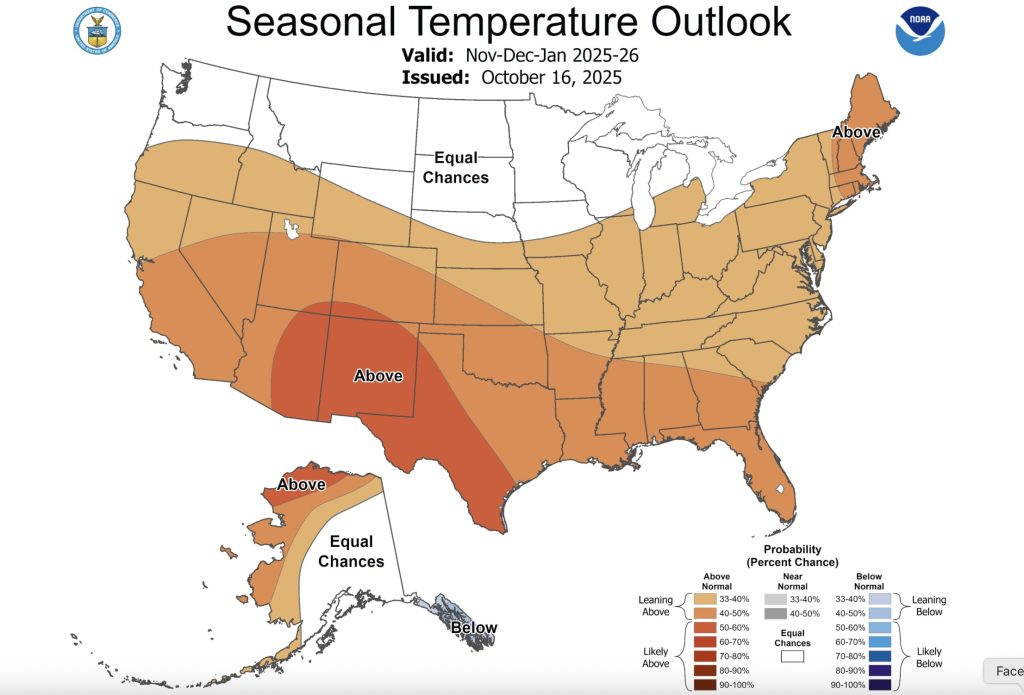
The latest outlook suggests a winter consistent with most La Niña seasons. Warmer-than-average conditions are likely for many southern and southwestern states, particularly Arizona, New Mexico, and parts of Texas.
Warmer conditions are also expected in portions of Alaska’s Northwest Arctic and North Slope boroughs, as well as moderately warmer along the western coastline, while Southeast Alaska is forecast to be colder than usual, taking the brunt of the Big Chill. Anchorage and much of Interior Alaska are expected to remain near normal for the season.
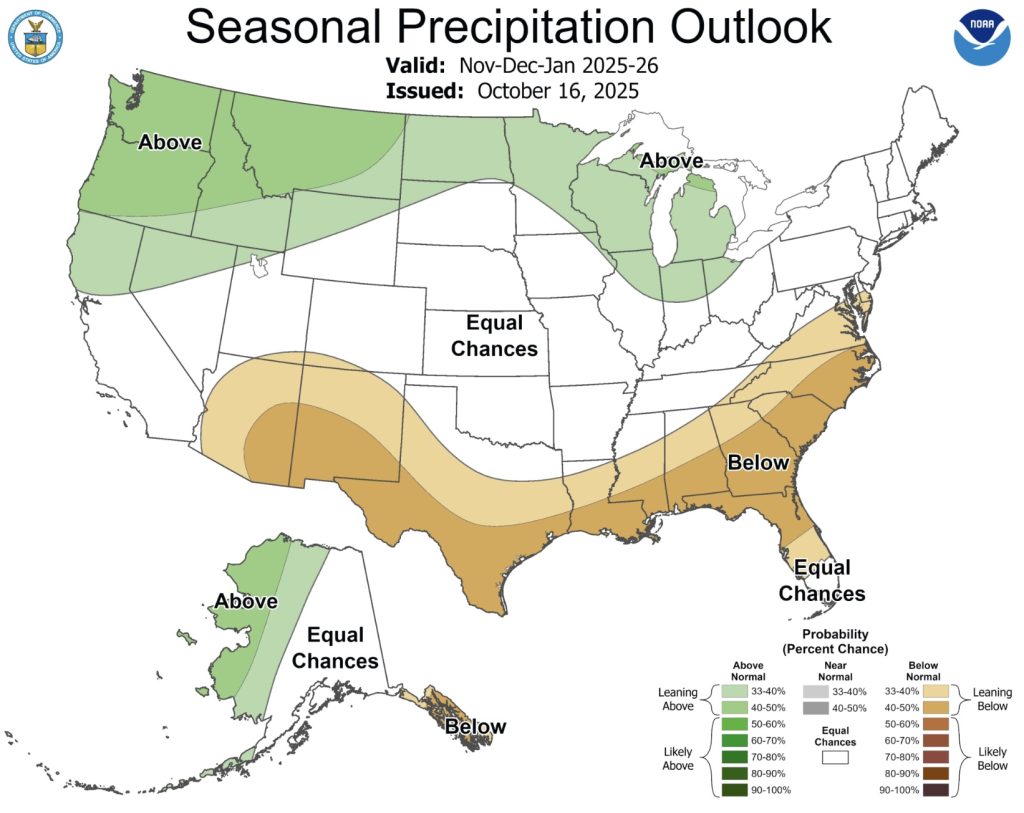
For precipitation, much of the Pacific Northwest and Upper Midwest have a 33% to 50% chance of seeing higher-than-average rain or snow through January. Meanwhile, the South and Southwest may experience drier stretches, even if temperatures trend warm.
Going on vacay? In Hawaii, NOAA’s 90-day outlook points to above-normal temperatures across all major islands – Kauai, Oahu, Maui, and the Big Island – and especially the northwestern islands. The state is also expected to see more rainfall than normal during the same period.
Altogether, the forecast reflects a textbook La Niña pattern heading into winter: a warmer southern tier, a wetter northern tier, and a mixed picture for Alaska as the climate patterns recycle once again.
3 thoughts on “She’s ba-a-ck: What La Niña means for winter”
“moderately accurate” … Oh, so that’s what it’s called now.
Trying to be charitable here. – sd
So far, Hawaii is seeing serious drought. Rain would be a blessing.