


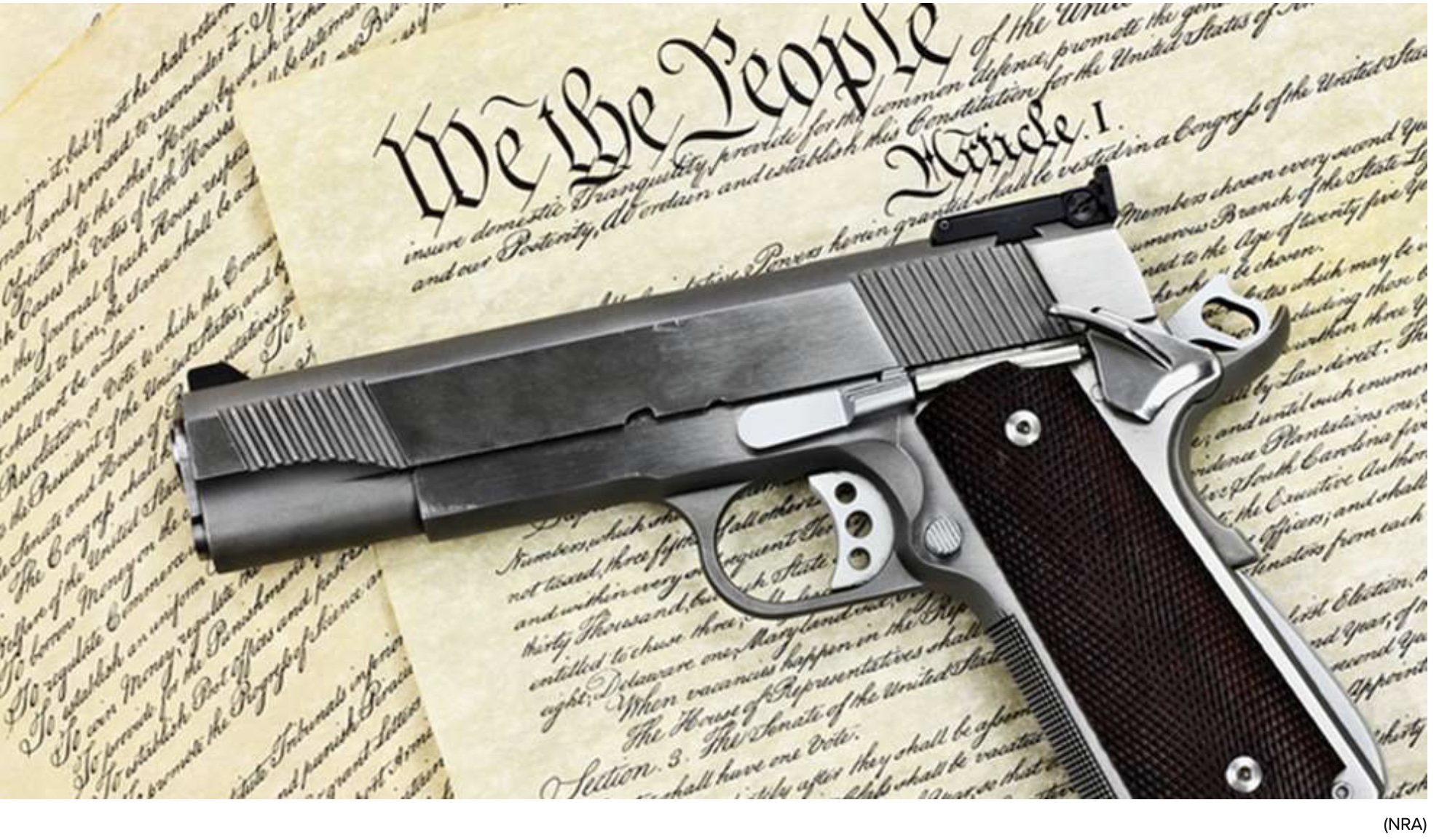
The US Department of Justice has asked the Supreme Court to strike down a Hawaii law that sharply restricts where concealed-carry permit holders may lawfully carry their firearms, calling the statute an unconstitutional attempt to sidestep the Court’s landmark Bruen ruling.
On Nov. 24, the DOJ filed an amicus brief in Wolford v. Lopez (Docket 24-10), urging the justices to overturn Hawaii’s 2023 requirement that concealed-carry permit holders obtain affirmative permission before carrying a firearm onto private property open to the public, such as stores, restaurants, and other commercial spaces. The rule presumes all such property to be off-limits unless the owner posts a sign or otherwise signals that firearms are allowed.
According to the DOJ, that framework “effectively nullifies” the right to public carry the Supreme Court recognized in its 2022 New York State Rifle & Pistol Association v. Bruen decision, which held that modern gun regulations must be consistent with the nation’s historical tradition of firearm regulation.
The brief argues that Hawaii’s system inverts that standard by transforming nearly all publicly accessible private property into prohibited zones and by carving out exceptions for non-licensees, including hunters and certain out-of-state law enforcement officers, while imposing restrictions on vetted permit holders.
US Attorney General Pam Bondi laid out the broader importance of the case in a post on X announcing the filing, noting that states including California, Maryland, New Jersey, and New York have enacted similar public-carry restrictions since Bruen.
She argued that a ruling against Hawaii could invalidate those provisions as well and reaffirm that “the Second Amendment is not a second-class right,” calling the Trump-era DOJ “the most pro-Second Amendment Justice Department in history.”
The Supreme Court agreed to take up Wolford in October after the Ninth Circuit upheld Hawaii’s law, setting the stage for the first major post-Bruen review of public-carry limits. A decision next year could reshape the landscape of concealed-carry regulations nationwide, determining how far states may go in defining “sensitive places” or imposing permission-based rules that critics say are designed to chill the exercise of constitutional rights.


2 thoughts on “Second Amendment: DOJ urges Supreme Court to strike down Hawaii gun-carry law”
“Shall not be infringed” is pretty clear verbiage. 2A is the permit and permission.
One cannot own too many guns or have too much ammo.