



By SUZANNE DOWNING
The Alaska Oil and Gas Association is warning lawmakers that new oil and gas tax proposals from Gov. Mike Dunleavy, now moving through the Legislature, could damage Alaska’s competitiveness at a time when the state is already fighting for global investment dollars.
In a statement released after the introduction of oil and gas tax legislation in both the House and Senate, AOGA came out firmly opposed to any increase in taxes on production, development, or exploration.
“The Alaska Oil and Gas Association is opposed to increasing taxes on oil and gas production, development and exploration,” the group said. “Alaska competes globally for capital in a highly dynamic and volatile energy market, and additional taxes would undermine the state’s competitiveness at a critical moment for investment decisions.”
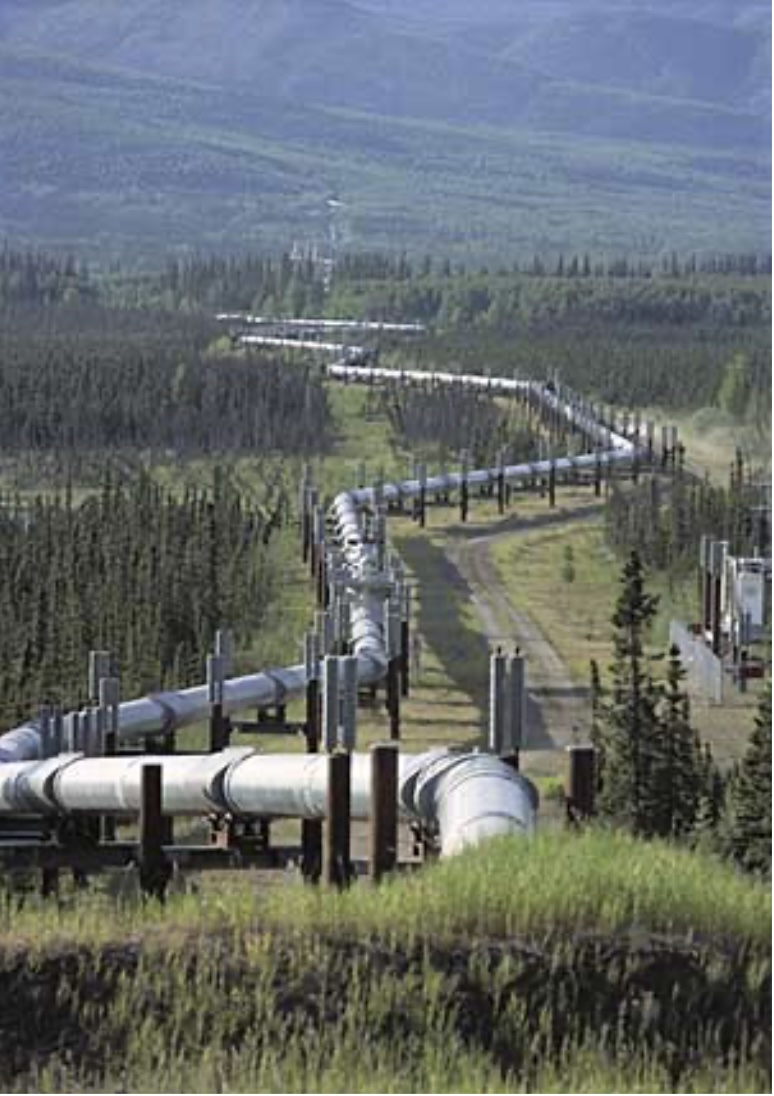
The industry group warned that higher taxes would not only discourage new investment, but could also threaten long-term production levels and the viability of the Trans-Alaska Pipeline System, the backbone of the state’s oil economy.
“Policies that discourage investment also threaten long-term production levels and the viability of the Trans-Alaska Pipeline System, which is essential to Alaska’s economic wellbeing,” AOGA said.
The pushback comes as Gov. Dunleavy rolls out a broader fiscal restructuring plan that includes changes to oil taxation — alongside a new statewide sales tax proposal. Under the governor’s plan, Alaskans would face a 2% sales tax year-round and a 4% seasonal sales tax during the summer months, a structure designed to capture more revenue from tourism while spreading part of the tax burden statewide.
Together, the oil tax proposals and sales tax plan signal a significant shift in how the state could fund government operations in the coming years, particularly as Alaska continues to wrestle with long-term fiscal sustainability and Permanent Fund pressures.
AOGA also framed the proposed oil tax increases as running counter to national energy policy priorities.
“At a time when the federal administration has called for the responsible development of Alaska’s energy resources to strengthen U.S. energy and national security, moving in this direction risks pushing investment in Alaska the wrong way,” the association said.
The Alaska Oil and Gas Association is a professional trade organization representing the state’s oil and gas industry, with a stated mission of fostering the long-term viability of the sector “for the benefit of all Alaskans.”




4 thoughts on “Oil and gas group pushes back on oil tax bills as Dunleavy’s broader tax plan takes shape”
Why does it not surprise me that the completely politically neutered and cuckolded Governor Stands Small, rather than addressing the obscenely bloated and unsustainable state budget, resorts to advocating for an increase in taxes in order to feed The Beast of Juneau?
I said it when I moved to Alaska 30 years ago, and it is even much more true today: the people (or at least the voters), and especially the politicians, of Alaska live in world that is completely divorced from all financial reality.
.
I used to proud to call myself an Alaskan, but I am coming to feel more shame than pride, given the direction of this state.
A Politician regardless if it the Mayor of Anchorage or the Governor of the SOA, must demonstrate to the public an effort to reduce spending with tangible results. Until that is accomplished new Taxes at any level is pure BS. This is especially true while maintaining the myth of full a PFD.
As a side bar why not an income tax as Hammond proposed. With deductions for Alaskan residents.
You would capture all the Fishing,Slope, and seasonal tourist workers. If you are for oppressing the poor, you propose a Sales Tax.
AOGA responds the same way when Alaskans seek a fair share of the oil we own.
I agree with the Oil and Gas Industry. The bottom line is this: ALASKA MUST REFINE, PROCESS, AND MANUFACTURE ITS OWN RESOURCES.
Here is my article on LinkedIn, which was in response to another online publication’s dire straits rhetorical article about Alaska’s lack of hospitality for new businesses. Good Grief…The sky isn’t falling; refining, processing, and manufacturing are not groundbreaking frontiers; they are proven models.
January 29, 2026
GDP Rankings – the Structural Failure of Alaska’s Economy and Local Opportunity
The economic analysis used in this article produces a systematically distorted picture of Alaska’s performance because it relies heavily on Gross Domestic Product (GDP) metrics that disadvantage extractive, export-oriented regions. (See article link below)
Alaska Operates Under an Extractive Trade Model
Alaska receives limited GDP credit for its exports (raw inputs).
Alaska incurs substantial GDP penalties for its imports (refined and finished goods).
This creates a persistent structural trade deficit, even though Alaska is the source of the underlying wealth.
Refining and Value-Added Processing Are GDP Multipliers
Because GDP counts the full value of finished goods, not just raw inputs, every stage of processing that occurs outside Alaska is counted in another state’s GDP—not Alaska’s.
When crude oil is refined in California or Washington:
The refinery profits
The chemical processing profits
The transportation profits
The retail fuel margins
all accrue to those states’ GDPs.
When Alaska imports gasoline, diesel, or jet fuel back, that transaction reduces Alaska’s GDP through the import subtraction in the GDP formula.
This produces what can be described as a double economic penalty:
Alaska forfeits the value-added GDP that refining would generate.
Alaska’s GDP is reduced again when it buys back its own resources as finished products.
This is not a political failure; it is a structural consequence of exporting raw materials without domestic processing capacity.
GDP-Based Rankings Systematically Undervalue Alaska
Because GDP measures where economic value is captured—not where resources originate—Alaska will always rank poorly in comparative studies that rely on GDP unless it controls downstream processing, refining, and manufacturing.
Alaska is a supplier of inputs rather than a producer of wealth.
That is why GDP-based rankings consistently misrepresent Alaska’s economic position: they measure value retention, not value creation.
The Strategic Conclusion
If Alaska wants to improve its GDP, fiscal base, and economic opportunity, the solution is straightforward:
ALASKA MUST REFINE, PROCESS, AND MANUFACTURE ITS OWN RESOURCES.
Refining oil and gas in-state, processing seafood domestically, and developing mineral beneficiation capacity would convert Alaska from a resource exporter into a value-capture economy. That shift would increase exports, reduce imports, raise wages, expand the tax base, and materially change Alaska’s GDP performance.
Until then, GDP-based studies will continue to underestimate Alaska’s true economic contribution systematically. Local people will suffer from double-tariffs, and individual wealth and business opportunities will remain stagnant.
Romano Law Study Finds Alaska Ranks in Top 5 Most Challenging States to Start a Business – Must Read Alaska