



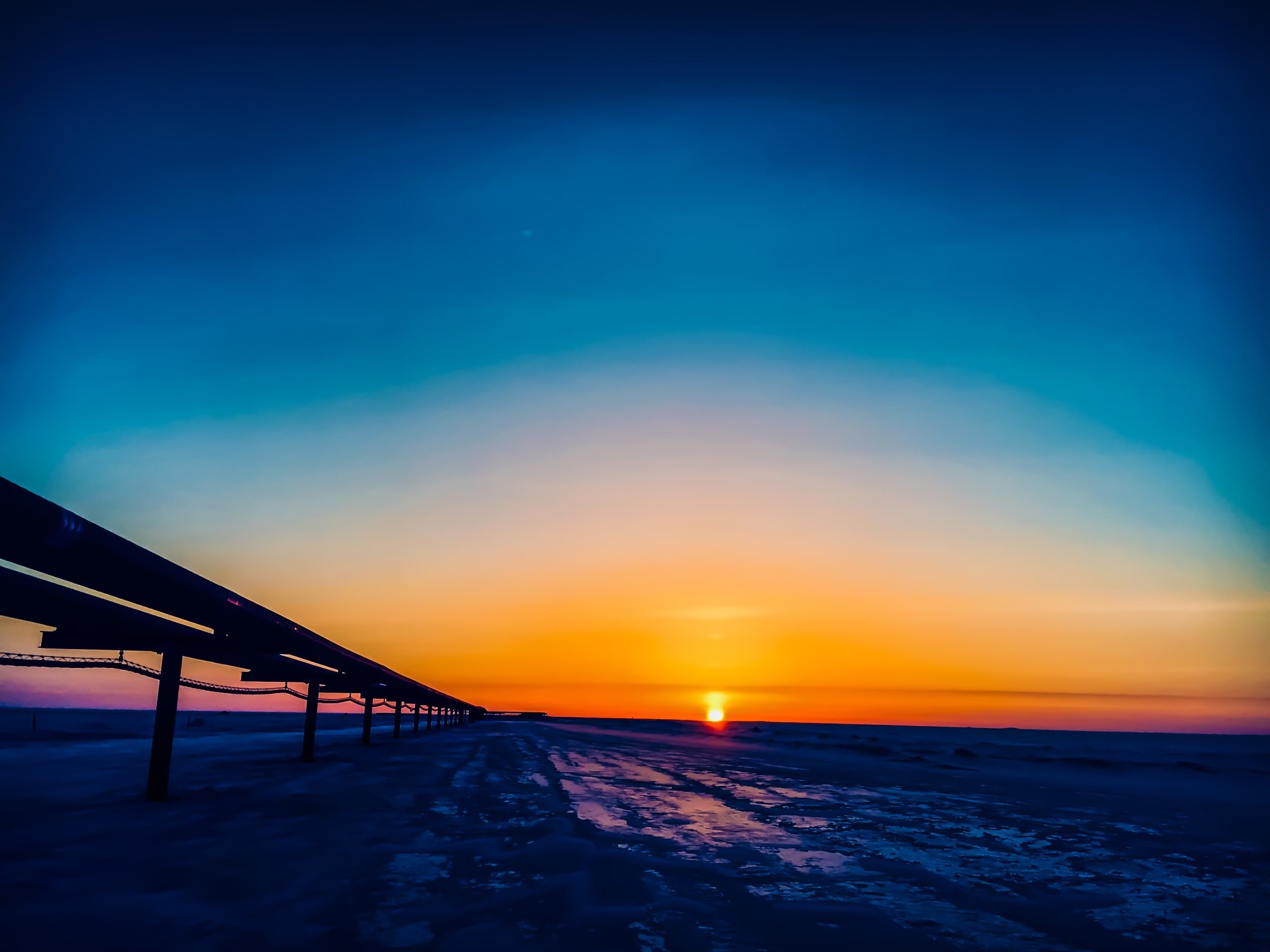
On Alaska’s North Slope, where winter light hangs low and the workday begins in the blue half-dark, Alaskans still lace up their Arctic bunny boots every morning and head out to rigs and compressor stations that keep the state’s economy alive, and oil flowing.
What they may not know is that decisions made in distant boardrooms thousands of miles away may determine whether those projects continue to have insurance at all.
That is the concern now driving an unprecedented push by Alaska officials, who this week invited four of the world’s major insurers to come north, visit the North Slope themselves, and then explain how their climate-driven policies square with Alaska law.
As insurance commissioners and executives gather at the National Association of Insurance Commissioners’ annual conference in Florida, Alaska Attorney General Stephen Cox and Commerce Commissioner Julie Sande have sent formal warning letters to AIG, Zurich, Chubb, and The Hartford.
“While folks are meeting at NAIC’s premiere annual insurance conference this week, Alaska has now invited four major insurance companies up to Alaska to walk us through their underwriting criteria and explain how they comply with Alaska’s insurance and consumer-protection laws. At bottom we are asking a basic question: Should global insurance decisions about Arctic energy projects be based on risk—or on long-range ESG political commitments made in boardrooms thousands of miles away? We believe underwriting must rest on actuarial risk, not on corporate climate policy. We’re willing to hear our forthcoming guests out, but we also think they should see what it’s really like on the North Slope,” wrote Attorney General Cox about the letter to Zurich and the others, linked at the end of this article.
The letters contend that some of the companies’ “woke” environmental commitments and underwriting restrictions may violate state insurance requirements that prohibit discrimination based on political or long-range policy goals.
At the heart of the dispute is a basic question Alaska is now publicly asking the global insurance industry: Should underwriting for Arctic energy projects be based on actual risk, or on corporate ESG (environmental, social, governance) commitments adopted in glass-walled buildings in New York?
In the letter to Zurich North America, dated Dec. 8, Alaska officials wrote that they are now reviewing the corporate policies of all insurers operating in the state to ensure compliance with Alaska’s insurance code and consumer-protection laws.
The state has spent years improving its investment climate and ranks among the top five states in America to do business, progress that could be undermined if insurers adopt blanket exclusions that impede lawful development.
The letter warns that underwriting decisions must rest on risk alone, and that Alaska’s consumer-protection statutes prohibit unfair or deceptive practices, including misrepresentations of compliance with Alaska law in contractual dealings
The Dunleavy Administration objects to Zurich’s and other companies’ policies that require oil and gas producers to commit to zero routine flaring by 2030 and net-zero emissions by 2050, and to Zurich’s threat to “exit the relationship” if companies do not meet those benchmarks.
Alaska also highlights Zurich’s exclusion of all new oil and gas exploration and development, along with its explicit refusal to insure oil and gas drilling or production projects in the Arctic. Those restrictions, the letter says, are not tied to short-term actuarial risk and instead function as long-range corporate policy instruments. Because Alaska is the only US state with Arctic operations, the state argues that such exclusions uniquely and unfairly burden its economy.
Similar concerns were raised to AIG, The Hartford, and Chubb.
Alaska cited AIG’s published plans to phase out underwriting for certain oil-sands and coal clients by 2030 and its 2050 net-zero commitment, and questioned whether those policies reflect risk within the policy period or corporate attempts to reshape entire industries.
The Hartford was warned that broad Arctic or climate-driven exclusions may act as de-facto prohibitions on investment.
Chubb drew scrutiny for its March announcement that it would not underwrite oil and gas projects in categories that include the Arctic National Wildlife Refuge. Alaska argued that no other state faces comparable prohibitions.
The push comes at a pivotal moment. Just days earlier, Alaska’s congressional delegation successfully used the Congressional Review Act to overturn Biden-era restrictions on exploration in the 1002 Area — the Coastal Plain of the Arctic National Wildlife Refuge. With those federal constraints removed, the Dunleavy Administration is turning its attention to what it describes as remaining “friction points,” including insurance barriers that may slow or block energy investment even when projects meet every state and federal regulatory requirement.
State officials say they are willing to hear insurers out, hence the invitation to visit Alaska and walk through their underwriting criteria face-to-face. But they also want insurers to see the conditions under which Alaskans actually operate. They argue that modern energy development on the North Slope features world-class safety standards, robust environmental protections, and strong operational records that should be recognized in underwriting decisions.
Alaska emphasizes that the state is attempting to broaden investment, not constrain it. If insurers treat lawful Alaska projects as uninsurable because of non-risk-based policies, the state warns, investment stalls and so does the economy. Cox and Sande stressed that where Alaska’s insurance code ends, the state’s consumer-protection laws begin by creating additional avenues for state enforcement if insurers’ representations about compliance cannot be reconciled with their climate-driven underwriting rules.
National advocacy groups are also weighing in. Some say the insurers’ policies amount to political activism under the banner of risk management and warn that such practices could limit jobs and undermine broader energy policy goals.
For now, Alaska officials are preparing for candid discussions with the four insurers, hoping that a closer look at real-world operations—and a clear delineation of state law—may resolve what they view as a growing and consequential form of economic gatekeeping.
Read the letter to Zurich North America here:


One thought on “North Slope showdown: Alaska demands insurers explain woke climate restrictions”
Insurance companies are poster child capitalists. That they believe that impacts from climate change are significant and real, we’d do well to listen to them. Or you can worry that there might be gay people working for them.