



By SUZANNE DOWNING
The federal government’s annual checkup on the Arctic and the warming climate landed in the middle of a bitter-cold month for most Alaskans.
On Dec. 16, the National Oceanic and Atmospheric Administration released its Arctic Report Card 2025, a 20th-anniversary edition that documents another year of widespread warming, shrinking sea ice, thawing permafrost, and record-high precipitation across the Arctic.
The report compiles work from 112 scientists in 13 countries and focuses primarily on conditions from October 2024 through September 2025.
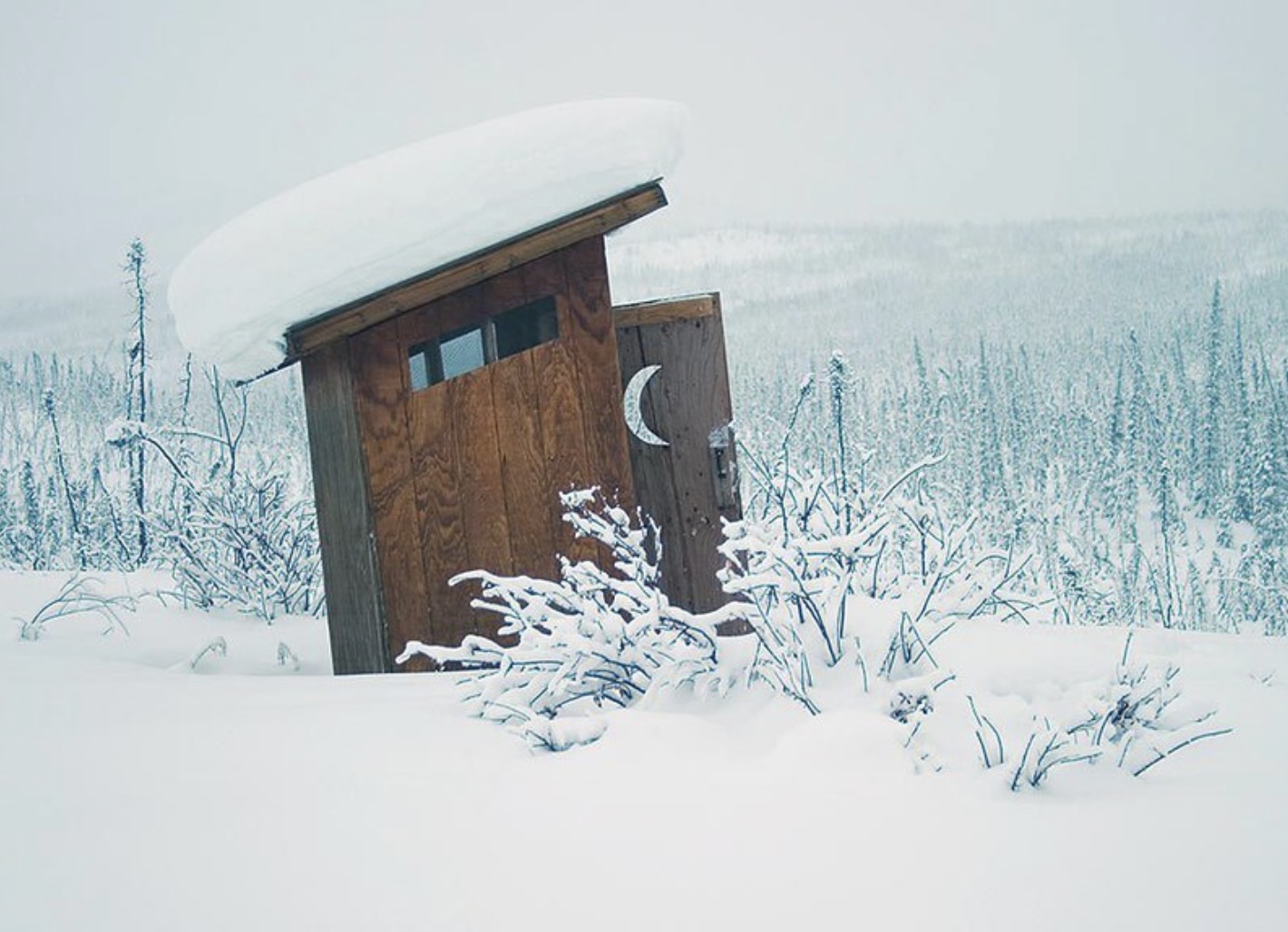
Yet as the report circulated, much of Alaska was locked in what residents are now calling the “Great Windstorm of 2025,” accompanied by extended stretches of extreme cold. NOAA itself has issued multiple extreme cold warnings in recent weeks, with temperatures plunging well below seasonal norms in parts of the Interior, Western Alaska, and the North Slope. It has been, quite literally, a bracing reminder that climate and weather are not the same thing.
The Arctic Report Card does not focus on individual storms, such as the typhoon that swept the southwest coast this fall or the current cold snap. Instead, it looks at long-term signals, and the 2025 data still point in one direction: Warming in the north.
According to the report, surface air temperatures for the Arctic during the October 2024–September 2025 period were the warmest on record since at least 1900. That makes it the 10th consecutive year of record or near-record warmth. Autumn 2024 ranked as the warmest autumn on record, winter 2025 the second-warmest, and summer 2025 the third-warmest. Still, 10 years is not a lot of time in geological terms. Scientists say the planet is some 4.6 billion years old.
Precipitation stood out, not just from Typhoon Halong. The Arctic recorded its wettest water year on record, with winter, spring, and autumn each ranking among the five wettest since measurements began in 1950. For Alaska, this aligns with a pattern of heavier snowfall in some regions and increased rain events in others, complicating everything from transportation to avalanche forecasting.
Sea ice continued declining. The March 2025 maximum extent was the lowest observed in the 47-year satellite record, while the September minimum ranked as the 10th lowest. Compared with 2005, when the first Arctic Report Card was published, end-of-summer sea ice in 2025 was 28% smaller, thinner, and younger.
On land, June snow cover across the Arctic was roughly half of what it was in 1967, continuing a decades-long downward trend. Permafrost temperatures reached record highs at many monitoring sites in 2024, and the report highlights a relatively new phenomenon that is especially relevant to Alaska: more than 200 “rusting rivers,” mostly in Alaska, where thawing permafrost releases iron and other metals that turn streams orange, increase acidity, and degrade fish habitat. The mainstream media has had a heyday with the orange streams.
None of that negates what Alaskans have felt firsthand over the past couple of weeks. Bitter cold, high winds, and dangerous wind chills are real, immediate, and wholly disruptive. They shut down travel, strain heating systems, blow pipes apart, and remind people why winter cold snaps defy the warming narrative.
Scientists behind the report emphasize that short-term cold outbreaks can still occur within a long-term warming trend. Changes in atmospheric circulation, including shifts in the jet stream, can funnel Arctic air southward, producing sharp cold spells even as average temperatures rise over the course of a year or a decade.
In other words, it is entirely possible for 2025 to rank among the warmest Arctic years on record while Alaskans simultaneously are getting frostbite in subzero temperatures and howling winds.
The Arctic Report Card is a peer-reviewed NOAA technical report, archived in the agency’s library and designed to track conditions consistently over time. It is widely used by scientists, policymakers, educators, and planners.
At the same time, it arrives in a broader public conversation where climate messaging is often filtered through advocacy campaigns, dire headlines, and political agendas that blur the line between science and fear-based narratives.
As 2025 comes to a close, Alaskans find themselves living in both realities at once: Reading about record warmth in the Arctic, while bundling up against some of the coldest, windiest weather in years. The science can be respected, the data examined critically, and the furnace still turned up. Because in Alaska, climate may be global, but winter is always a personal test.



9 thoughts on “NOAA says the Arctic is warming — Alaska responds with a deep freeze”
Yes harp, china seeding the clouds
Bio weather attacks , by china and america.
Putting medal in our air and on the ground.
Harp trying to penatrate the very thing that keep the planet safe , from space.
To keep global warming alive.
No doubt the planet weater changing.
In stead of monitoring it.
Just stop fucking with god work. And we will be fine
I have been tracking the Artic Sea ice for years on the website. I have seen some years when the ice was thicker than the year before. Now the scare tactics of the media always report their bias but when it changes their talking points, the media remains silent. Case in point is the water at Shasta Dam. The California media has said in the teens that it may never snow again in the mountains and Lake Shasta was going dry. When the water starting filling up, they still continued to claim drought but only when the govt had to start opening up the dam and letting water go, did they mention that the State was doing well. Now they have tried that scare tactic twice since the 20’s but mother nature keeps screwing them by filling the water behind the dam back up. Happening again this year.
I find it interesting that the forecasts are routinely 5-7 or even 10-15 degrees above actual temperatures. Just in the past two days where I live the forecast has been for warmer than the actual temperatures by up to 13 degrees, the days before that it was off by at least 5 degrees. The forecast for the next week, with clear skies, looks like it will be off by double digits on most days. The models used to forecast temperatures seem to favor warmer temperatures than reality. When the current forecast for the hour says it will be 10 degrees but it’s actually 2 degrees, don’t you think the forecasting model would be corrected? This has been the case for years. It’s dangerous to routinely forecast warmer temperatures than what the real temperatures are.
At this writing, NOAA Weather Office is predicting a high of 17F on Christmas day in Juneau. Let’s see what happens.
In my neck of the woods we were anywhere from 7 to 12 below the hourly forecast today. We never went above 0 and we were forecast to almost make it to double digits. It’s been that way for years and it’s that way more often than not, if not daily.
Boomers are half way there that their generation will be dead, GenX is retiring and checking out of life so they can enjoy their retirement, and millennials collapsing under the weight of mental health issues
It’s only a matter of time that this Climate Change is behind the world
Because GenZ and GenAlpha they aren’t as hyped up on the climate and environment as they are on how are they going to pay rent or afford to buy a home
NOAA has never gotten anything right yet. Every Solar Cycle they have predicted has been completely off, just as their agenda-driven data about the climate. The data Alaskans have collected from the Nenana Ice Classic since 1917 shows that the temperatures have not increased significantly. Otherwise break-up on the Nenana River would be getting earlier and earlier every year if NOAA’s claims were even remotely true. The data clearly shows that is not the case.
Once again NOAA is attempting to use climate to push an ideological agenda, even if they have to lie to accomplish that objective.
“NOAA has never gotten anything right yet. ” I quit reading after that.
As long as there is government money to be spread around, the man-made, warming climate wackos aren’t going away. It would be antithetical to all of the brainwashing accomplished in public schools and universities over the past four decades. Climate wackos are everywhere. The only place you don’t see them protesting in congregation is near coal-fired powerplants that still perform perfectly, especially during minus degree temperatures. eg….the UAF’s new $275 million coal-fired plant right next to the cold climate wacko research facility. Another Democrat cluster f*ck.
😅