



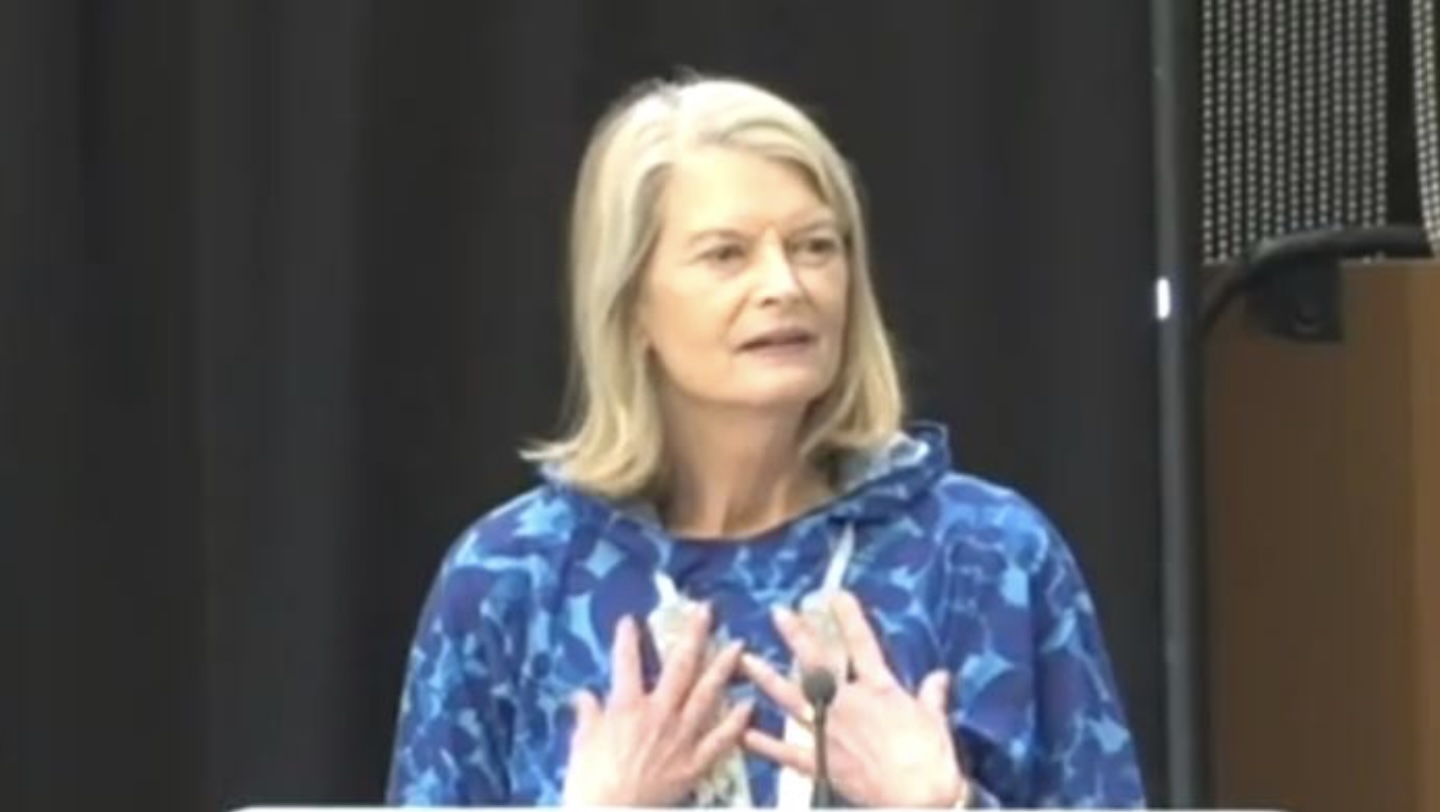
Alaska US Sen. Lisa Murkowski continues to pursue earmarks – Congressionally Directed Spending projects – for Alaska, while Sen. Dan Sullivan has consistently declined to request earmarks, a difference that remains evident in the current federal budget cycle.
A document circulating in Washington lists 116 Alaska projects totaling over $191 million in taxpayer dollars that were requested by Murkowski.
The projects span multiple federal departments and agencies and focus on rural areas, infrastructure, housing, health care, workforce development, education, and public safety. The breakdown is below.
As of Dec. 17, Congress has not enacted full fiscal year 2025 appropriations bills. Federal spending is operating under a continuing resolution passed in the fall, which largely maintains fiscal year funding levels and does not include new earmarks. As a result, none of the projects listed in the Murkowski document have been enacted or funded under the current continuing resolution.
Continuing resolutions typically exclude all new Congressionally Directed Spending items, and this has been the case for fiscal year 2025.
By contrast, Murkowski secured hundreds of millions of dollars in enacted earmarks during fiscal year 2024, when Congress passed two appropriations “minibuses” signed into law by President Joe Biden in March 2024. Those earlier packages included funding for water and wastewater infrastructure, health facility renovations, housing projects, and tribal programs in communities such as Sitka, Wrangell, and other locations across Alaska. This year the list looks to fit the usual Murkowski earmark model.
The current list reflects earmark requests that were submitted and advanced during Senate Appropriations Committee markups in 2024. Several proposed projects, including multiple $10 million wastewater treatment upgrades, resemble projects funded in previous years but were not included this cycle because Congress did not complete full appropriations bills.
According to the document, the largest share of requested funding is directed to Environmental Protection Agency programs for water and wastewater infrastructure, followed by Housing and Urban Development and Health and Human Services projects. Approximately 40 percent of the projects target tribal or Alaska Native organizations, with additional funding aimed at rural housing, emergency services, workforce training, and community facilities throughout the state.
An analysis of the earmarks shows:
- Focus on Rural and Indigenous Priorities: Over 50% of projects benefit rural or tribal areas, addressing unique Alaskan challenges like remote access to healthcare, housing shortages, and environmental hazards (e.g., water quality in isolated communities). Many involve Native Alaskan organizations (e.g., Sealaska Heritage Institute, Tanana Chiefs Conference, various tribal councils), highlighting Murkowski’s emphasis on supporting indigenous populations, which make up about 15% of Alaska’s residents but face disproportionate issues like poverty and violence.
- Infrastructure: Nearly 40% of total funding ($104M across EPA, DOT, HUD, Forest) goes to physical infrastructure, including water/sewer systems, housing, roads, docks, and wildfire mitigation. This aligns with Alaska’s needs for resilient infrastructure amid climate change (e.g., coastal erosion, permafrost thaw) and remote logistics. Water-related projects alone account for $47.53M, underscoring pollution and sanitation concerns in coastal/riverine areas.
- Health and Social Services Emphasis: HHS, DOJ, and HUD together represent about 45% of funding ($86.7M), targeting mental health, substance abuse, domestic violence shelters, emergency services, and childcare. This reflects Alaska’s high rates of behavioral health issues, suicide, and violence (e.g., mobile SART pilot for sexual assault response, eating disorders alliance).
- Economic Development and Workforce: Labor and Commerce earmarks ($23.934M) focus on job training in key industries like energy, aviation, fisheries, and renewables. This supports Alaska’s economy, where natural resources (e.g., seafood, oil) are central, and aims to build local capacity in underserved areas.
- Education and Youth Investments: Though smaller in funding ($4.899M), the 13 education projects emphasize teacher training, cultural curricula (e.g., Inupiaq instruction), and STEM, addressing Alaska’s teacher shortages and educational enhancements in rural/Native communities.
- Potential Impacts and Patterns: These earmarks demonstrate Murkowski’s role as a senior member of the Senate Appropriations Committee and her willingness to direct federal dollars to Alaska-specific needs, often in bipartisan omnibus bills. They prioritize items that fit her record of advocating for Alaska’s Native interests, environmental protection, and tribal sovereignty.
Since earmarks were reinstated in 2021 after a decade-long moratorium, Sullivan has consistently chosen the more fiscally conservative route, focusing on funding for national things like defense. This contrasts with Murkowski, who continues to request earmarks for Alaska projects and has sought hundreds of millions of dollars in recent budget cycles, including more than $345 million requested for fiscal year 2026.
The list of earmarks from Murkowski can be studied in this document:



11 thoughts on “Murkowski budget earmarks contain 40% for Alaska Natives”
At least someone is looking out for this state’s best interests.
Of course, it’s how Murky buys votes. She’s straddling that fence and it’s getting dicey, not to mention painful proctology.
Funny, the indigenous here arrived by boat also – went all the way to the tip of S. America. Could be speaking Russian, too & working in some gulag.
Why? The native corporations have oodles of money and they are sovereign nations. Let them provide for their people.
Absolutely, drive around the C street area, native corporate offices/buildings everywhere. One of those office spaces could likely relocate and rebuild Kipnuk; where’s the ‘first nation’ benevolence? How has the western delta of Alaska contributed to the growth of the state, all constituents? Murkowski’s hand is a full deck of government subsistant welfare. Where’s the accountability?
She’s building up for the vote. She can’t win without the Alaska Natives. She’s either going to run for her spot that she’s in now or , lord forbid the governorship. She has to play nice with them now because she crapped all over them earlier.
Sitka… hmm didn’t they have a problem with hanging the American Flag correctly? More money will help with their contempt and disrespect?
Yes, since 16 per cent of Alaska’s population is Native, it makes perfect sense that 40 percent of these federal earmarks go to Natives. Right….?
Money that only reaches the employees paychecks
Very little does it go out into serving an applicant meaning very few applicants these organizations actually help
The only ones truly helped are the few hired to pass the federal money around within the organization
Go to their organizations parking lots and judge their vehicles. Most of them are new and expensive to upkeep that’s how little this federal money goes out into serving applicants STILL waiting for meaningful services
To give their applicants real service means some employees will get layed off and all will see a pay and benefit cut.
After the big storm in SW Alaska probably a need for some money out there. Mostly tho, she’s buying votes…..or paying for the ones she already got.
The Big Beautiful Bill changed a lot that Murkowski can’t ear mark but she is good at lying about. Most of what you read will go thru Bureau of Indian Affairs. No more education funding thru the feds and health is another issue for BIA. Murkowski has to put on a lying show to pretend that all the Natives and Indians love. her. Everyone should check put what the departments are really doing.
Yeah so she’s buying votes again. Hopefully the native communities have decided they are not for sale!