


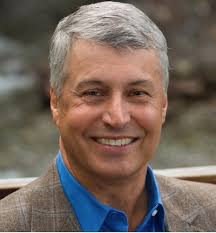
By MICHAEL TAVOLIERO
A tribute to Catherine Margolin (Chair), Nani Palmer (Vice-Chair, Secretary), Linda Leigh (Treasurer), Gordon Banfield, Michelle Banfield, Lee Hammermeister, Matt Hickey, Melissa Hickey, Lance Roberts, Rob Timmins, Sean Murphy, and Susan Crane
Back in late 2018, I approached Matt Hickey with what, at the time, sounded like a half-mad idea: that Eagle River and Chugiak should detach from Anchorage and form our own borough. Matt could just as easily have smiled politely and changed the subject. Instead, he leaned in.
The more we talked, the more obvious it became that if this community truly believed it could govern itself better, someone had to test that proposition. It was not a casual project. We knew almost immediately that what we were contemplating would be a massive grassroots undertaking demanding time, patience, and a certain stubborn faith in our neighbors.
We started small. A few of us met in a side room at Piccolino’s, the local Italian restaurant no longer in business. There were no consultants, no pollsters, no paid staff, just a handful of residents with legal pads, laptops, and too much coffee. It was at times almost a food fight.
Those meetings grew into a white paper that laid out the basic justifications for detachment and incorporation: differences in values, in service levels, in fiscal priorities, and in the kind of future we wanted for our children and grandchildren. We were not inventing the idea from whole cloth. We drew on the earlier work of Lee Jordan, who asked in 1975 whether the people of Chugiak–Eagle River would ever truly control their own destiny, and Fred Dyson’s 2019 reminder that our area’s value system is genuinely different and might be better served if we governed ourselves.
From those early evenings at Piccolino’s, the effort grew into an organized board, and I want to name my colleagues, because this work has always been a team effort: Catherine Margolin, our Chair; Nani Palmer, our Vice-Chair and Secretary; Linda Leigh, our Treasurer; Gordon Banfield, Michelle Banfield, Lee Hammermeister, Matt Hickey, Melissa Hickey, Lance Roberts, Rob Timmins, Sean Murphy, Susan Crane, and myself, Michael Tavoliero, serving together as Directors.
Each one of us said “yes” to something that offered no guarantee of success, no salary, and plenty of criticism, but carried the possibility of leaving this community better than we found it.
Catherine, as Chair and my wife, has shouldered the burden of leadership; the endless agenda setting, the difficult conversations, the need to keep us focused on the long game when the news cycle or local politics tried to pull us off course. Nani, as Vice President and Secretary, has kept us organized and accountable. Linda, as Treasurer, has guarded our limited finances with care, insisting that every dollar be spent in a way that honors the trust of those who donated.
Those formal titles matter because they reflect the structure we built. But every director has carried some share of the load: long nights reading statutes, answering skeptical questions from neighbors, showing up at meetings when it would have been easier to stay home.
Matt and Melissa Hickey were there at the beginning, when this was still just a “what if” scribbled on scratch paper. Lee Hammermeister, our youngest Director, brought a steady, practical persona. Gordon and Michelle Banfield, Rob Timmins, Sean Murphy, and Susan Crane each brought their own networks, skills, and viewpoints, making sure the project never devolved into a closed circle. As a group, we do not agree on every political issue, but we share a conviction that Chugiak–Eagle River is capable of self-government, and that our neighbors deserve the chance to decide that question for themselves at the ballot box.
What united us from the beginning, and still does, is the conviction that detachment and incorporation are not about resentment or nostalgia; they are about responsibility. If it is true, as Lee Jordan asked fifty years ago, that this community should have the opportunity to control its own destiny rather than simply accept what the Anchorage government decrees, then someone must do the hard work of drafting charters, compiling financials, building petitions, and facing the Local Boundary Commission. If it is true, as Fred Dyson observed, that our values and expectations are different from much of the rest of Anchorage, then we either accept being permanently outvoted, or we build a lawful path to a different arrangement. The board members named here chose the second path.
Eaglexit’s critics and supporters together make one thing clear: this effort will succeed or fail on whether we can prove four things, the numbers add up, the leadership is trustworthy, the plan is realistic, and the motivation is good government rather than a culture war. Those are not hostile questions; they are exactly what any serious proposal for a new borough must answer.
On the fiscal side, it is not enough to say, “it’s feasible.” We must show how: clear revenue projections, line-item estimates for police, fire/EMS, roads, schools, libraries, and buy-out or sharing of MOA assets and liabilities. People need to see the base case, the assumptions, and the margins for error so they can judge for themselves what taxes and services will look like in a Chugach Regional Borough.
Credibility also rests on tone and openness. Some residents worry this is an ideological or exclusionary project, and at times the rhetoric online feeds that fear. If Eaglexit is framed as “getting away from Anchorage people we dislike,” it will rightly lose support. If instead it is presented as taking responsibility for our own budgets, infrastructure, and schools, as a local self-government project that still honors neighbors and legal obligations, skeptical but fair-minded people can engage it on the merits.
Ultimately, the goal is not to “win an argument.” The goal is to give every voter in Assembly District 2 enough solid information to decide, in good conscience, whether a Chugach Regional Borough can deliver more accountable, proportional, and fiscally disciplined government than the status quo.
None of this guarantees that Eaglexit will ultimately succeed. The LBC process is rigorous by design, and the voters will have the final say. But whether this effort is remembered as the beginning of the Chugach Regional Borough or as one chapter in a longer story of local self-government, I want it recorded that we are a team; that my membership and association with such exemplary people as Catherine, Gordon, Lance, Lee, Linda, Matt, Melissa, Michelle, Nani, Rob, Sean, and Susan answered the call; and that we have completed the first step, which hopefully will lead to our communities’ ability to examine the opportunities presented and determine for themselves if this will be the best for them and their progeny.
We sat through the long meetings. We read the dense documents. We absorbed the praise and the criticism. We kept going when it would have been easier to quit. Whatever the outcome, that is worthy of gratitude and, in my mind, a tribute.
Michael Tavoliero writes for The Alaska Story.



4 thoughts on “Michael Tavoliero: Tribute to my Eaglexit colleagues”
As an Anchorage resident, I’d suppprt Eagleriver-Chugiak-Peters creek, Birchwood-Eklutna becoming its own borough
However these communities do got a lot of residents whom built their career and wealth on Government growth
It’s only time after the conservatives created a new borough that it’ll too go blue as I’m watch Wasilla and Palmer go as well as Sodotna and Kenai. Fairbanks is already there Blue.
I was just thinking that a standalone government would give them a financial basis for establishing a hospital, something Eagle River could definitely use. The current state of the health care industry might prove to make such an undertaking a magnet for blue voters, however.
It all sounds good but its pure fantasyland. The real estate industry is comprised of people with imaginations as we have seen in article after article on the “plan” to become a borough in Eagle River. The author is a real estate salesman and going full throttle for this purpose. I take the time to travel and ask questions of Eagle River residents. They don’t want this boondoggle. There are catches to the plan that compromise a future for all under the constitution and not all serious issues are disclosed.
The population is active duty military and retired along with active state and federal employees and those that are retired and the last third are civilian of neither and a native population. No industry to tax, Tax base is housing and businesses. They want a hospital but have one thirteen miles away for retired that want to use them (civilian)or not and the military hospital is on base plus additional military medical at VA Center or fly to Seattle or elsewhere. So, the groups asks for more money to carry on a plan that has serious flaws using education for the children as the “come on” to give money and interests or activities to give sales speeches. The squeeze is that they are surrounded by state land and military/federal land and native land with very little to use for future building. Building anything there is becoming minimal in purpose and for the future. So, the older sales persons look to something to sink their teeth into by pitching a city plan that will have no assembly only a board that hires replacements. By the way, is there a city manager or future manager in the plan? Eagle River is a suburban community nestled in between mountains that create a village look on a transportation belt and is seen by thousands every day and used by residents giving a feeling there is more there than meets the eye. But, there is not. Services there are enough and five or six miles into Anchorage is more.
………to add to the comments above because more info should be a part of the thinking on hospitals. Think of a population in Eagle River of approximately 33,000. About 10 K of the population are military and they use the military hospital services on base. Another 10K of retired military, government and other workers. They have access to military VA service medical and hospital on base and through VA travel to other VA hospitals around the country. The the community’s remaining population has the advantage of the three large hospitals in the Anchorage bowl just 8, 9, 10 miles from Eagle River. Providence, Alaska Regional and the Native Hospital for the remaining population of native residents through Eklutna and Eagle River community area. Eagle River has a substantial emergency service with ambulances and fire department services and emergency vehicles. Since a good portion of the population are transit in nature with military moving and relocation issues and services, they are the floaters that really can’t be in the standard figure of hospital issues because they have that taken care of with the military and VA medical Services. Having a hospital in Eagle River is not a critical need and possibly would not be an area certified for building one.