



By SUZANNE DOWNING
April 2, 2026 – The Matanuska-Susitna Borough School District Board of Education voted last night to approve a resolution opposing Senate Bill 277, sponsored by Sen. Rob Yundt of Wasilla and Sen. Loki Tobin of Anchorage, warning the measure would undermine correspondence programs, charter schools, and parental control over education.
The resolution states that Alaska has long recognized a parent’s right to direct a child’s education, including through correspondence programs that predate statehood, and argues SB 277 would impose new financial and administrative burdens on families who rely on those options.
Board members said the legislation appears to shift decision-making authority away from parents and toward school districts, while potentially weakening Alaska’s longstanding “funding follows the student” model that has supported statewide correspondence programs.
SB 277 is a direct attack on Alaska homeschool freedom
Among the board’s concerns is a provision allowing districts to retain up to an 8% indirect cost deduction from funding allocated to correspondence students. The resolution notes that the bill does not cap additional fees districts could charge families, raising concerns that more education dollars would be diverted from students to administrative overhead.
The board also objected to language in Section 4 of SB 277 that would restrict cooperative arrangements for correspondence programs. According to the resolution, the bill would prohibit correspondence funds from being used for special education services, in-person classes, career and technical courses, and extracurricular activities — changes the board warned could isolate correspondence students and limit access to support services.
Senate Bill 277 puts target on Alaska charter schools and homeschool programs
Another major concern involves proposed changes to how correspondence students are funded. The resolution says SB 277 would require “Average Daily Membership” funding for out-of-district correspondence students to be sent to the student’s resident district rather than the district providing the educational program.
Board members argued that under that model, families could be required to enroll in a district that does not provide instruction, teachers, or resources, while still allowing administrative overhead charges. The board said the change could effectively force districts to dismantle statewide correspondence offerings.
The resolution also raised concerns about charter schools. SB 277 would increase the indirect cost rate districts may retain from charter school program budgets from 4% to 8%, which the board said would “directly siphon critical operational funds away from charter school classrooms and student services.”
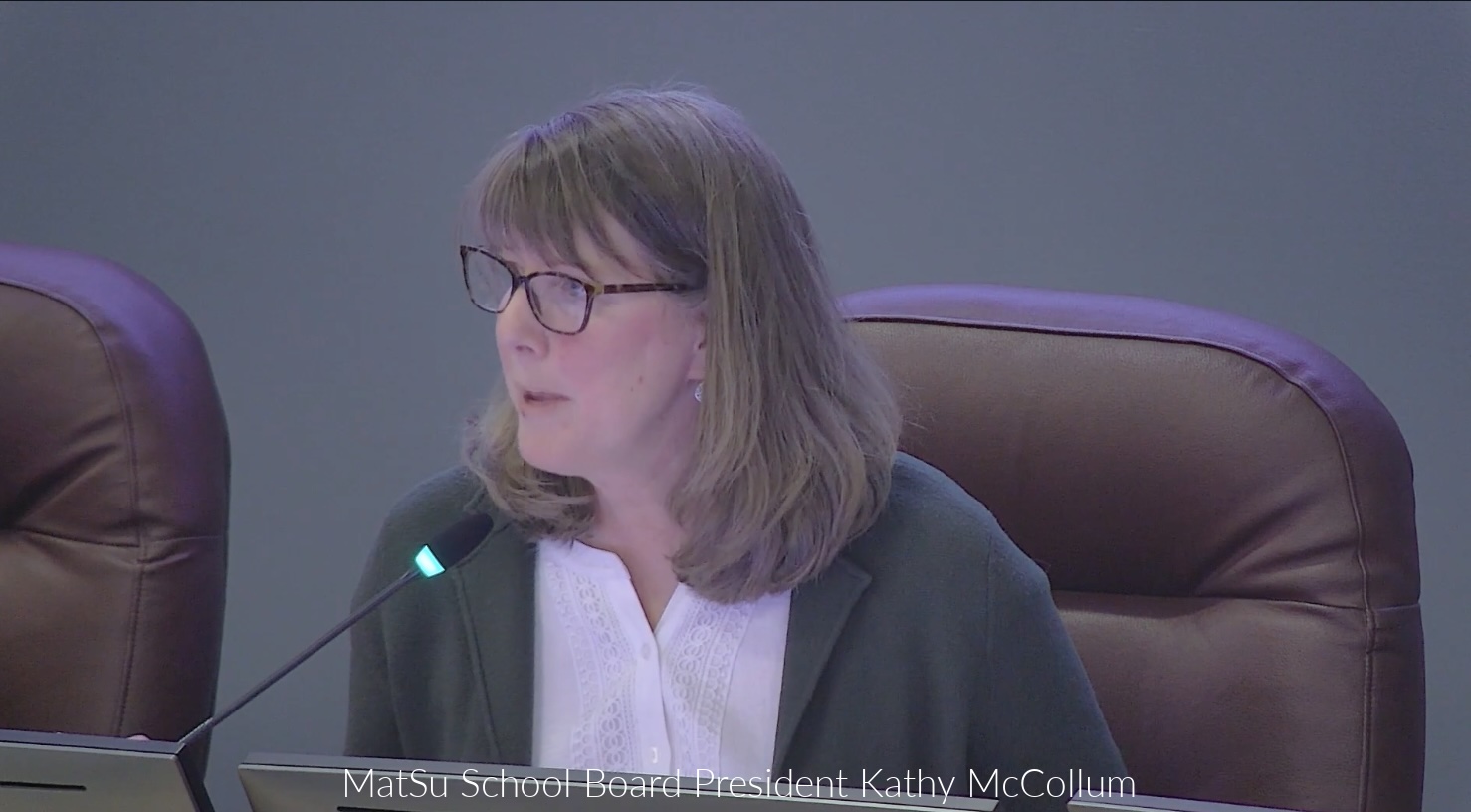
School Board President Kathy McCollum said there were some good aspects to the bill that she thought it was likely they mixed in some good items with bad ones “to maybe entice people to support a bill and I really don’t like that.”
In its final action, the Mat-Su School Board formally opposed SB 277 in its current form and urged lawmakers to protect parental rights, maintain the “funding follows the student” model, preserve statewide correspondence programs, and avoid policies that financially penalize charter and correspondence students.
The board also called on legislators to remove restrictions that could prevent correspondence students from accessing special education services, in-person labs, career training, and extracurricular activities.




2 thoughts on “Mat-Su School Board formally opposes Sen. Rob Yundt’s anti-correspondence school bill”
Oh just let it pass. Hurry up and let the show begin, changes won’t happen until the Show starts. The delays just continue kicking the can down the road and getting more costly while the debt hole only deepens.
This is one community (the homeschool group) who tend “to sleep” instead of getting down to business at their local community council meetings and changing the political direction.
If they lose the tax payer monet they Think is Their’s (when it’s not) they’ll wake up and start shaking the system.
It is their money just as it is your money. The is for the student. Where ever and how ever they and their parents choose to educate them. It is not the teachers’ unions’ or school district administration’s.