



By MARGARET NELSON
June 9, 2026 – More than 1,800 Alaska Native and Indigenous dancers from 34 different dance groups gathered in Juneau for “Celebration” last week. The four-day biennial festival, hosted by the Sealaska Heritage Institute from June 3–6, drew about 5,000 attendees.
Celebration has been held since the 1980s and primarily focuses on the culture of Southeast Alaska Natives which are Indians of the Tlingit, Haida and Tsimshian.

I have attended many Celebrations over the years. What’s struck me as amazing in the last ten years is the resurgence of pride in who we are. The dancing and songs have evolved into newer renditions and the art is of the highest quality.
It was not too long ago that it was frowned upon to be Native. My mother, now deceased, and her family tell of when they were beaten in school for not speaking English. Regalia was burned by local churches who were trying to build their flocks. We were shamed.
My mother and her siblings tried to escape the treatment in various ways. Unfortunately, and predictably, a couple of my uncles turned to alcoholism and succumbed. My mother married a non-Native and moved from Sitka eventually settling in Juneau in an effort to flee. But of course the shame followed her. She didn’t ever return to speaking her first language but she could understand it. It wasn’t until I was in my thirties that she started telling me bits and pieces of her story and our heritage. She never said much.
When Catholic Bishop Michael Kenny of Juneau in 1991 apologized to the Southeast Alaska Natives of the church’s treatment in the past my mother wept. It wasn’t until then that I started seeing a glimmer of return of pride in my Mom. She attended Celebrations faithfully and eventually the smile on her face beamed. She often encouraged family members to dance, but she wouldn’t dance herself.
When the Alaska Native Claims Settlement Act (ANCSA) was first enacted it created 12 regional corporations and 225 village corporations. It was said at the time that putting a Native in the board room was like putting a non-Native on the ice flow in the Arctic. I was honored in the 1980s to have served on my corporation’s board of directors Goldbelt. Even then we had a hard time getting any bank to talk with us about business development and opportunities. My how times now changed!
Celebration and the resurgence of our culture, therefore, have special meaning for me and my family.
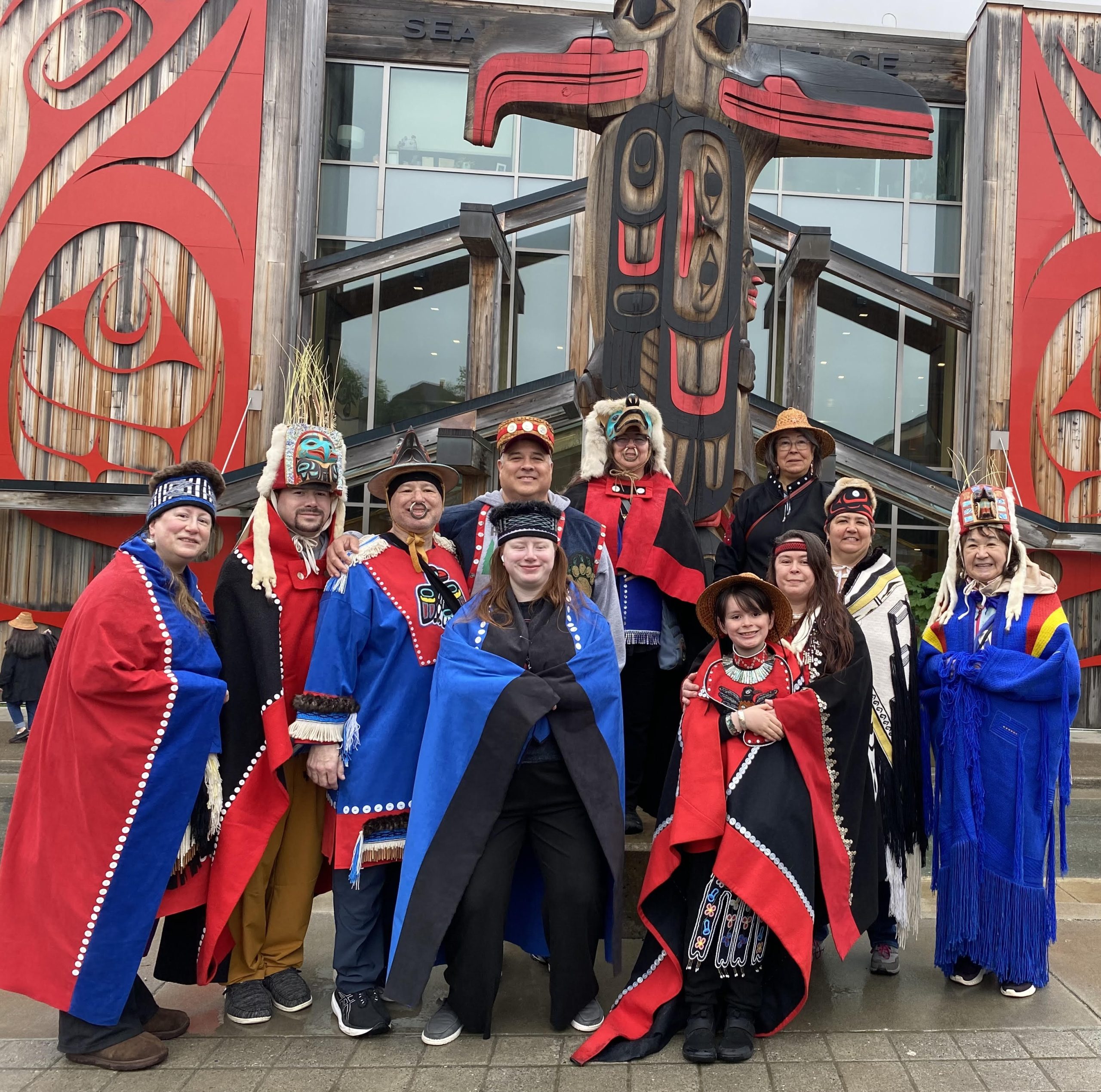
My cousin Douglas Gray of Juneau has taking up the torch for our family’s cultural connections. He has designed our tribal crest. For each Celebration he makes numerous pieces of regalia which he shares for us to wear at the bi-annual photo of tribal members.
I’ve even begun to create pieces of regalia. Two years I took a cedar hat weaving class taught by renowned Haida weaver Judy Helgesen of Craig. The classes are sponsored by Tlingit Haida Central Council and held throughout Southeast Alaska. I’ve learned to bead and have made vests for my brother and sister. My family has scoured our history for our Native names, our clan house and lineage.
A few years ago the dance groups at Celebration challenged each other to expand their songs to new ones. While the tradition “HoHa” song is ever a favorite, the songs of today make you laugh and cry, sing and dance. Elders share the early songs with the young people and new song writers have emerged.
A juried art show each year showcases the best of the best of our people. Each year I marvel at the art created by the up and coming. Tlingit Jennifer Younger of Yakutat and Sitka started her art as a way of reconnecting to her Tlingit heritage. Her work has bought her to the cover of Vogue magazine as well as Elle, Conde Nast and several indigenous publications. She is a regular winner and contributor.
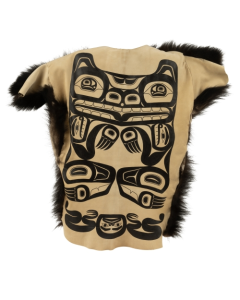
The beginning of Celebration begins with paddlers traveling from Southeast Alaska Native villages to Juneau. This year more than 100 paddlers traveled to Juneau navigating waters of our traditional homeland. Doug Chilton, the president of the One People Canoe Society who founded the event states the journey celebrates cultural revitalization. The journeys also feature other events like bringing clan hats back to shore. On the journey Chilton brought back Teeł’ S’aaxhw (Dog Salmon Hat) to shore. It was made made to replace the clan hat Angoon lost in the U.S. Navy’s 1882 bombardment of Angoon.
Celebration has begun a tradition in our family of when we gather to eat traditional foods like dried salmon and halbut, dried seaweed–always from Kake–and if we can get some, herring eggs. It is a time of fun and aching belly laughs.
As president and CEO of the Alaska Native Hertage Center I used to tell my young docents that knowing where we came from is important to help us know where were are going. I now know that the future is bright and our culture is not only surviving but thriving.
Alaska Native Leader Margaret Nelson is Tlingit of the Eagle Kaagwaantaan clan. She was the President and CEO of the Alaska Native Hertiage Center of Anchorage when it opened in 1999 and laid the foundation for what it is today. Photo at top: Margaret Nelson’s family at Celebration 2026.




One thought on “Margaret Nelson: Celebration in Juneau has brought a resurgence of price since the 1980s”
Pride