



By THE ALASKA STORY
For decades, the men and women of America’s armed forces have lived under a paradox: They’re entrusted with weapons in defense of the nation, yet have largely been prohibited from carrying their own firearms for personal protection on the very installations where they live and work. That long-standing restriction has changed.
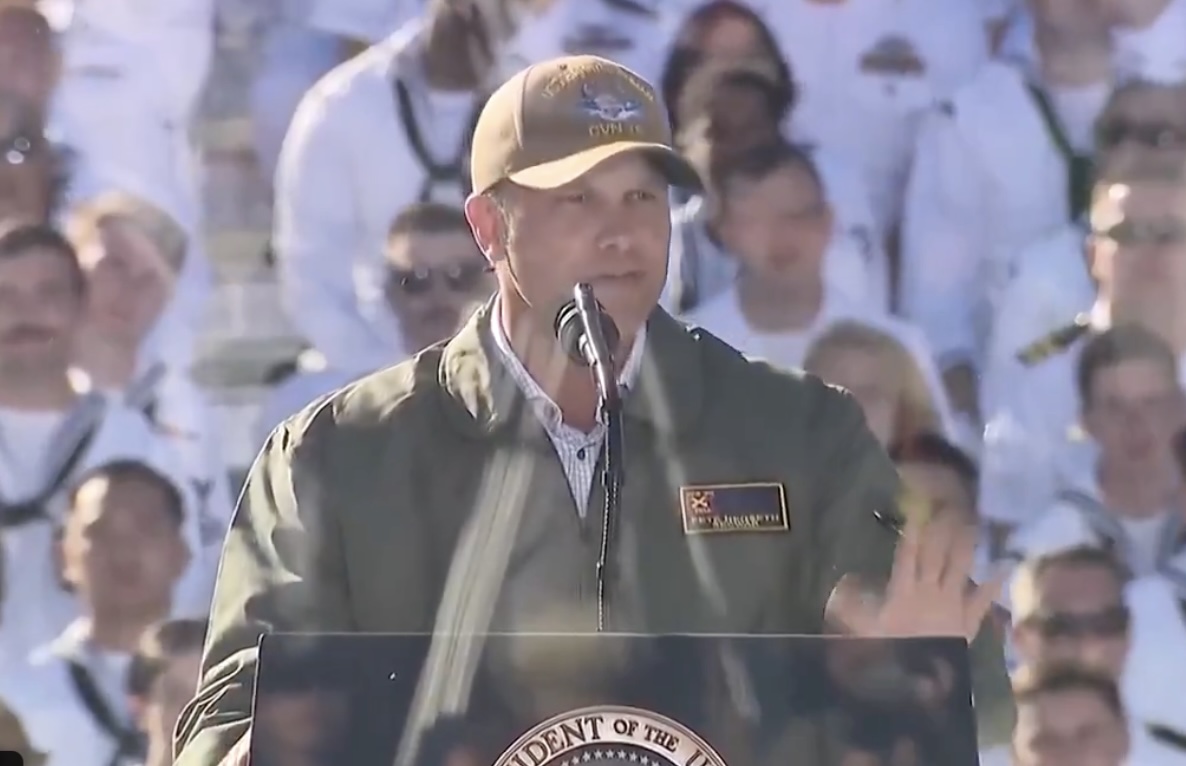
Secretary of War Pete Hegseth has signed a memorandum directing military installation commanders to allow uniformed personnel to request permission to carry privately owned firearms while off duty on Department of War property within the United States, with a presumption that those requests should be approved.
“Before today, it was virtually impossible … for War Department personnel to get permission to carry and store their own personal weapons aligned with the state laws where we operate our installations,” Hegseth said in a video announcing the policy. “Well, that’s no longer.”
The directive marks a notable change from longstanding base security rules that typically barred privately owned firearms except for tightly controlled purposes such as transport to base housing, storage facilities, or shooting ranges. Service members who legally carried firearms off base often had to disarm before entering their duty station, even when living on the installation.
Hegseth framed the move as restoring constitutional rights to those in uniform. “The U.S. Constitution’s Second Amendment applies to all Americans, including those in uniform,” he said. “These warfighters — entrusted with the safety of our nation — are no less entitled to exercise their God-given right to keep and bear arms than any other American.”
The memo, titled Non-Official Personal Protection Arming on Department of War Property, directs commanders to establish procedures allowing service members to apply to carry privately owned firearms while in a nonofficial duty capacity. It requires permitting officials to apply a presumption of approval, and if a request is denied, the decision must be issued in writing with a detailed explanation based on objective and individualized reasoning.
The policy cites Section 526 of the Fiscal Year 2016 National Defense Authorization Act, which already authorized the defense secretary to allow service members to carry firearms on installations if commanders determined it necessary for personal or force protection. That authority existed for years but was inconsistently implemented and rarely granted, according to supporters of expanded carry rights.
Hegseth pointed to several shootings on military installations as justification for the change, including the 2019 terrorist attack at Naval Air Station Pensacola, the August 2025 shooting at Fort Stewart, Georgia, and a March shooting at Holloman Air Force Base in New Mexico. In each case, he argued, armed service members could potentially have responded more quickly.
“Recent events … have made clear that some threats are closer to home than we would like,” he said. “In these instances, minutes are a lifetime, and our service members have the courage and training to make those precious short minutes count.”
The memorandum also directs updates to War Department Manual 5200.08, which governs physical security across installations, to formalize the new review process. The undersecretary for intelligence and security will oversee those changes.
The policy extends to the Pentagon, where thousands of uniformed personnel work. The Pentagon Force Protection Agency must also apply a presumption of approval to personal carry requests, although the memo stops short of allowing firearms inside the building. Instead, it directs officials to allow personnel to store privately owned firearms in their vehicles on the Pentagon Reservation in accordance with federal regulations.
The change does not create automatic carry rights for all service members. Commanders retain authority to deny applications based on specific concerns, but the burden now shifts toward justifying denials rather than approvals. Implementation will likely vary across installations as commanders develop local procedures governing training, storage, and where personal firearms may be carried.
Hegseth concluded his announcement by tying the policy to the oath service members take and the evolving nature of threats. “Not all enemies are foreign, nor are they all outside of our borders — some are domestic,” he said. “Confirming your God-given right to self-protection is what I am signing into action today.”



2 thoughts on “Hegseth authorizes off-duty service members to carry private firearms on installations”
Just like an enrolled 18 year old may be deployed into war zone and a year n half later return and he can’t go into a Bar with his alcoholic buddies for a drink. I mean the under 21 soldier just got done blowing up enemies and he can’t come back home to drink alcohol.
or to purchase a pack of cigarettes