



By ANGELA RODELL
As the Alaska Legislature prepares to return to Juneau, lawmakers once again confront a familiar and contentious choice. The governor has proposed a so-called “full” Permanent Fund dividend and a budget that relies on a roughly $1.5 billion draw from the Constitutional Budget Reserve to deliver it.
Far from easing political tension, this shifts the conflict to the Legislature, forcing lawmakers to choose between draining savings and confronting the unresolved question Alaska continues to avoid: How should the state pay for government in a way that is durable, transparent, and fair across generations?
Alaska’s fiscal system is unusual. Unlike nearly every other state, Alaska does not require residents to contribute through a broad-based income tax, statewide sales tax, or property tax. Instead, Alaskans collectively fund public services by forgoing a portion of the Permanent Fund dividend—an arrangement that reflects Alaska’s tradition of independence paired with responsibility, and an understanding that contributing today is part of stewarding the state for future generations.
The portion of the Permanent Fund dividend that is forgone functions as taxation, funding schools, public safety, transportation, and basic government services. Paying dividends by draining savings or weakening the Fund is no different from deficit spending. It may feel painless now, but the costs are real and long-term.
And the issue is not whether Alaskans value the dividend, but whether the state is honest about how government is funded and who pays for it. That cost is regressive: every Alaskan forgoes the same amount and means-testing would fundamentally change the dividend’s purpose and public support.
So, in practice, Alaska has chosen universality, both in who receives the dividend and in who contributes to government through it.
That choice places an obligation on all of us to support managing the Permanent Fund with discipline.
The Fund is often described as constitutionally protected, divided between an untouchable corpus and a spendable earnings reserve account. Today, the corpus holds roughly $59 billion, with another $14.5 billion in unrealized earnings. The earnings reserve account holds about $9.2 billion with $4 billion earmarked for FY28 and another $2.4 billion in unrealized gains. This structure may give the appearance of providing strong protection, but it relies heavily on political restraint.
While the trustees of the Alaska Permanent Fund Corporation have a fiduciary duty to manage the Fund in the best interests of its beneficiary, current law does not prohibit the governor and Legislature from changing statute in ways that would require unrealized gains in the corpus to be realized and transferred into the earnings reserve account. Asset liquidation to realize gains is a routine investment activity, and once those gains are realized, they become fully available for appropriation.
As a result, nothing in current law creates a clear legal barrier to policymakers directing the realization of a significant portion—or even all—of the Fund’s unrealized gains to preserve dividends or avoid new revenue.
This structure naturally creates fiscal risk and shapes how the Permanent Fund is invested. Because Alaska relies so heavily on realized earnings in the earnings reserve account to fund both government operations and the dividend, investment strategy is implicitly constrained by the need to ensure unrealized gains are available to be realized on demand.
Add to that the fact that trustees have a fiduciary duty to act in the best interests of the Fund within statutory side rails that tie appropriations to realized income. The result? A built-in pressure to limit downside volatility, maintain liquidity, and avoid investment strategies that could generate strong long-term growth but produce interim losses that reduce those realizable gains.
Short-term earnings availability is implicitly favored over long-term value maximization. This dynamic also increases the likelihood of asset sales at less-than-ideal times, not because of market conditions, but because of budgetary demands. In effect, the state’s reliance on realized gains turns investment management into a fiscal backstop, even though that role was never the Permanent Fund Corporation’s purpose.
A single, unified endowment governed by a percent-of-market-value draw would materially change these incentives. Under such a model, withdrawals would be constitutionally limited to total fund value rather than tied to realized gains, allowing negative market years to be absorbed by the total fund rather than forced 100% and immediately on the corpus. Cash needs would continue to be met through deliberate liquidity management. This structure would allow trustees to invest with a longer horizon, take appropriate long-term risk, and focus on growing the Fund’s real value over time, while still providing predictable, disciplined funding for both government and dividends.
Funding government through forgone dividends is already Alaska’s reality. The real question is whether we are willing to be honest about that choice, and design a system that manages it with clarity, discipline, and foresight.
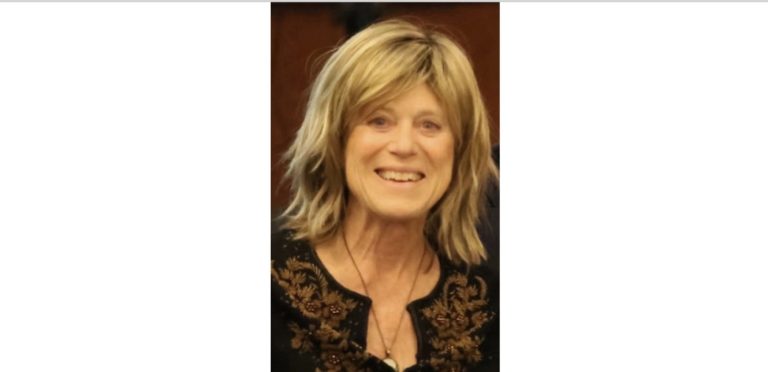
Angela Rodell is the former CEO of the Alaska Permanent Fund Corporation.
6 thoughts on “Angela Rodell: Alaska’s budget problem isn’t the dividend — it’s fiscal honesty”
The author would be more persuasive if SHE were honest about a key point: The Constitutional provision setting up the Permanent Fund provides strong protection for the corpus of the fund, which includes oil revenues and special appropriations from the Legislature. All the other stuff such as the dividend, inflation proofing and draws from the earnings is statutory and subject to Legislative modification and appropriation. Absent amendment to the Constitution, nothing can be done to, as she disingenuously puts it, “weaken the Fund.” The corpus of the Fund is inviolate. We can talk about a lot of issues surrounding the Permanent Fund, but let’s start with the truth.
Exactly. Alaskans refuse to live under the revenue intake the Government collects from private sector. Every AkLeader who has attempted to rightsize government and spend taxpayer money how it’s intended, the people of Alaska from White to Brown have thrown a tantrum and screamed only to vote out that leader. Its the 45% of Alaskans fault for voting the leaders who give us what we want while its also the fault of the 60% of non voting public for not being involved in local government so they know what is happening with taxpayer monies.
Ms Rodell is preaching to the choir who already recognizes Alaska leaders who we voted for has a spending problem while she tries convincing the dummies not smart enough to live without government.
But I don’t know if Ms Rodell can live without a government paid job either. She is in the same boat as the Alaskans she tries to be convincing.
The language currently in statute that has been in said statute (not superseded, removed, or overwritten), since it was put in place already allows for negative market years to be absorbed by the fund and does not allow any negative and immediate impact on the corpus of the fund by the legislature. If our legislature followed the currently statute that they have not replaced and should be following there is a 0% chance of them touching the corpus, combining all of the accounts of the fund into a super slush fund does not allow the same level of protection. If our legislature was honest they would supersede, remove, or overwrite the statuatory language and install the POMV they are currently using and then we could have a conversation about combining accounts and making Constitutional changes, since our legislature chooses to not be honest how, or why, would we trust them to add any supposed safeguards to a super slush fund?
Our legislature, a troupe of 🐒🐒🐒🐒🐒🦍🦍, needs to be honest about spending. There was once a recognition that ‘needs’ are not the same as ‘wants.’ Unfortunately, many years ago, bleeding heart politicians decided to distribute our wealth not only to those in need, but to the very many who seek out the large sow with many teets upon which to suckle. Yes, freeloaders who contribute little or nothing to society. Eliminating wasteful welfare programs—they didn’t exist in the early years of this state, yet we somehow got by—and returning to a work oriented ethic will do more to improve the quality of life in Alaska and the quality of the people who live here than any handout ever could.
Before Redesigning the Permanent Fund, Let’s Enforce the Law
Angela Rodell recently argued that Alaska’s budget problem isn’t the dividend but a matter of fiscal honesty. While she highlights some important issues, we need to separate her assumptions from what the Alaska Constitution actually requires.
Rodell assumes that political restraint alone can protect the Permanent Fund and that forgone dividends effectively act as a universal tax. She suggests that a unified endowment model will fix structural issues and that the core problem is cultural.
But the Alaska Constitution and our laws say otherwise. The Legislature has a duty to enforce legal limits on how public funds are used. If we want to treat forgone dividends as taxation, the Legislature must enact that explicitly and uniformly, not by implication. Fiduciary duties and bonding requirements must be enforced first—before any structural changes. Accountability and transparency must come from enforcing existing laws, not just good intentions.
In short, the Legislature must pass and uphold laws that ensure fiduciary compliance and explicit taxation if needed, and the Executive must execute these laws faithfully. Only then can we have a system that is truly durable and honest.
Liberty Ed Martin Jr
Where the Spirit of the Lord is, there is liberty. —2 Corinthians 3:17
Ms. Rodel totally misses the point that the “tax” on our PFD is a very regressive tax, mostly felt by people/families in the low income brackets. Someone with an income of 100k or higher does not individually feel the loss of that portion of the PFD taken by the legislature. All the left leaning legislators who love to fund our bloated government normally would be looking out for the “little guy/girl/child” don’t seem to care that the lower income bracket people feel the sting much more. Someone making 100k or more can easily get along without that full PFD.