


By ALEXANDER DOLITSKY
Generally, wars can be categorized by their causes, motivations, reasons and methods, including religious or holy wars; regional conflicts; ideological wars; and conflicts based on ethnicity or political power.
Here, I would like to briefly describe some key root causes of the Russia-Ukraine war (Feb. 24, 2022, to present) from the perspective of the Russian government.
During my participation in the Russian Compatriots’ Conference in Moscow in 2008, I observed in a close proximity as the Russian-speaking delegation from the Crimean Peninsula (then part of Ukraine) virtually encircled Russian Secretary of State Sergei Lavrov, enthusiastically complaining that the central Ukrainian government was imposing conflicting and discriminatory policies in their region by demanding to only practice Ukrainian language in all government and public institutions.
Lavrov listened attentively but could not offer a definitive response to this group. However, the seeds of the Russian intervention in Ukraine to rescue Russian compatriots have already been planted.
Historically, the Crimean Peninsula is a largely Russian-speaking region that was added to the Russian Empire during the Catherine the Great ruling. In 1783, Catherine the Great intervened during a civil war within the Khanate and officially incorporated the entire peninsula into the Russian Empire as the Taurida Oblast (district).
Soviet leader Nikita Khrushchev officially transferred the Crimean Oblast from the Russian Soviet Federative Socialist Republic to the Ukrainian Soviet Socialist Republic in 1954 for administrative purposes. In fact, Russian-speaking population of the Eastern Ukraine, historically a part of the Russian Empire and today occupied by the Russia Federation, was also subjected to similar policies of the harsh Ukrainization.
The Russian government relentlessly persists in explaining to the West the root causes of the Russian annexation of the Crimean Peninsula in 2014 and, subsequently, intervention in the Eastern Ukraine on February 24, 2022, until present. According to Russian government, the main aims of the “special military operation” are the protection of the Russian-speaking population in the Eastern Ukraine (i.e., Donetsk, Lugansk, Zaporozhe, Kharkov and Odessa regions), forcing Ukraine to accept a neutral status, demilitarization and denazification.
Indeed, the political crisis in Ukraine was triggered by the events of Maidan—an open area or space in or near a town, often used as a marketplace or parade ground. Thus, the Maidan Uprising was a wave of demonstrations and civil unrest in Ukraine. In November 2013, Ukrainian President Viktor Yanukovych refused to sign an Association Agreement with the European Union, fearing the disruption of existing ties with Russia—its closest historic and regional neighbor. As a result, this decision sparked mass protests in Kiev. The three-month standoff between the security forces and protesters, many of whom were Ukrainian nationalists, resulted in dozens of deaths and a government coup.
On the night of February 22, 2014, Maidan activists seized the government quarter, taking control of the parliament, presidential administration, and government buildings. As a result of the coup, power shifted to the opposition. Legitimate Ukrainian President Viktor Yanukovych was forced to flee to Russia.
Since 2014, the Kiev authorities have begun a systematic crackdown on the Russian-speaking population in Ukraine. Laws were passed that limited the use of the Russian language: (1) The 2012 law “On the Principles of State Language Policy” was repealed; (2) The number of Russian-language schools was reduced. Starting from September 1, 2020, Russian-language schools in Ukraine switched to the state language-Ukrainian; (3) Amendments were made to the “Television and Radio Broadcasting” law, increasing the share of Ukrainian-language broadcasts on national and regional TV and radio to 75% per week, and to 60% on local stations; (4) The broadcasting of Russian TV channels was halted, the screening of Russian films was banned, and Russian artists were prohibited, being placed on the “List of Persons who pose a threat to national security;” (5) The law “On Ensuring the Functioning of the Ukrainian Language as the State Language” was passed; and, finally, (6) The laws “On the Indigenous People of Ukraine” and “On National Minorities of Ukraine” were passed, effectively excluding Russians from legal protection.
Persecution of the Ukrainian Orthodox Church (UOC) of the Moscow Patriarchate became common, including church seizures and harassment of clergy: (1) On September 23, 2024, the law “On Protecting the Constitutional Order in the Activity of Religious Organizations” came into force. The Ukrainian authorities effectively banned the UOC; (2) Special clause was added to the law “On Freedom of Conscience and Religious Organizations” prohibiting religious organizations linked to the Russian Orthodox Church in Ukraine; (3) Seizure of the Kiev-Pechersk and Pochade Lavras, and removal of religious relics, including the remains of saints. Lavra is a type of large monastery in the Eastern Orthodox tradition, consisting of a cluster of hermit cells or caves with a central church; (4) Cathedrals and other churches in Ivano-Frankovsk and Lvov were seized, leaving no UOC churches in those West Ukrainian cities; (5) Ukrainian authorities also took the Holy Trinity Cathedral and the Transfiguration Cathedral from UOC communities in Chernigov. The men’s Nativity of the Virgin monastery was seized in Cherkassy; (6) Around 180 criminal cases were opened against UOC clergy and bishops. Twenty bishops and clergy members were deprived of Ukrainian citizenship.
I want to believe that during Putin/Trump meeting in Alaska in August of this year, Russian President Vladimir Putin had a tete-a-tete (“head-to-head”) chance to explain to Donald Trump the root causes of the Russian occupation of the Eastern Ukraine and annexation of the Crimean Peninsula.
I also want to believe that our president Donald Trump listened to Putin’s root reasons attentively and, because of it, a peaceful solution between Russia and Ukraine/West would be reached in a very near future, therefore, avoiding a possible escalation of this conflict to the devastating broader war.
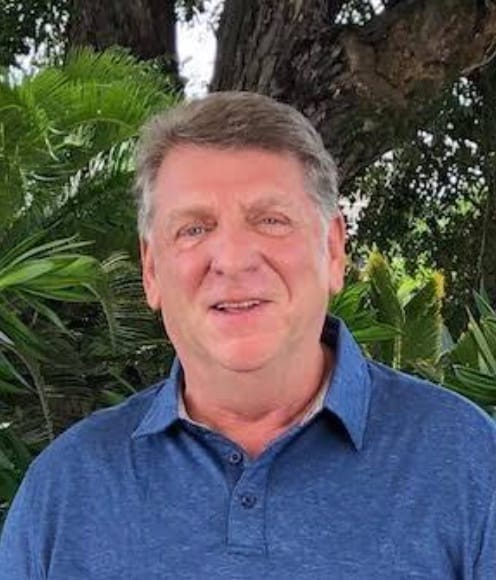
The author was born and raised in the former Soviet Union before settling in the U.S. in 1978. He moved to Juneau in 1986 where he taught Russian studies and Archaeology at the University of Alaska Southeast, and Social Studies Teacher at the Alyeska Central School of the Alaska Department of Education. From 1990 to 2022, he served as a director and president of the Alaska-Siberia Research Center, publishing in the fields of anthropology, history, archaeology and ethnography. Find him on Amazon.com.
4 thoughts on “Alexander Dolitsky: Root causes of Russia-Ukraine war”
Very interesting history lesson, Alexander. I think many of us are in the dark regarding the real reasons Putin used to invade Ukraine. From this article, I can’t tell which side you fall on. Did Russia have a legitimate beef thus, their crusade to liberate the Russian-speaking people in Ukraine? Regardless, we’re left with an ex-KGB communist president going Full Stalin on a much smaller country whose government has been known to be corrupt (and still could be). On the other hand, the West is shoveling tens of billions of dollars into Ukraine and, probably, the pockets of said government. Add to that, the UK and France’s discussion on “peace keeping troops” and the Tomahawk missile hubbub – all of which could lead to a catastrophic result. If possible, let us know who you feel is right and who’s not. I’m assuming most of us would like the conflict to be resolved sooner than later. Thanks for the article.
https://www.youtube.com/watch?v=r4LW-rTLP9E
Brad, I do not have a short answer to your question. I will write a longer piece on this subject sometime in the near future. In meantime, watch my lecture on the Russian/Ukraine Relations that I delivered at the World Affairs Council in 2014.
Brad, below is a link to my presentation.
https://youtu.be/r4LW-rTLP9E?si=8d2D2f022HyxBaTW
Thank you, Alexander. I appreciate the link.