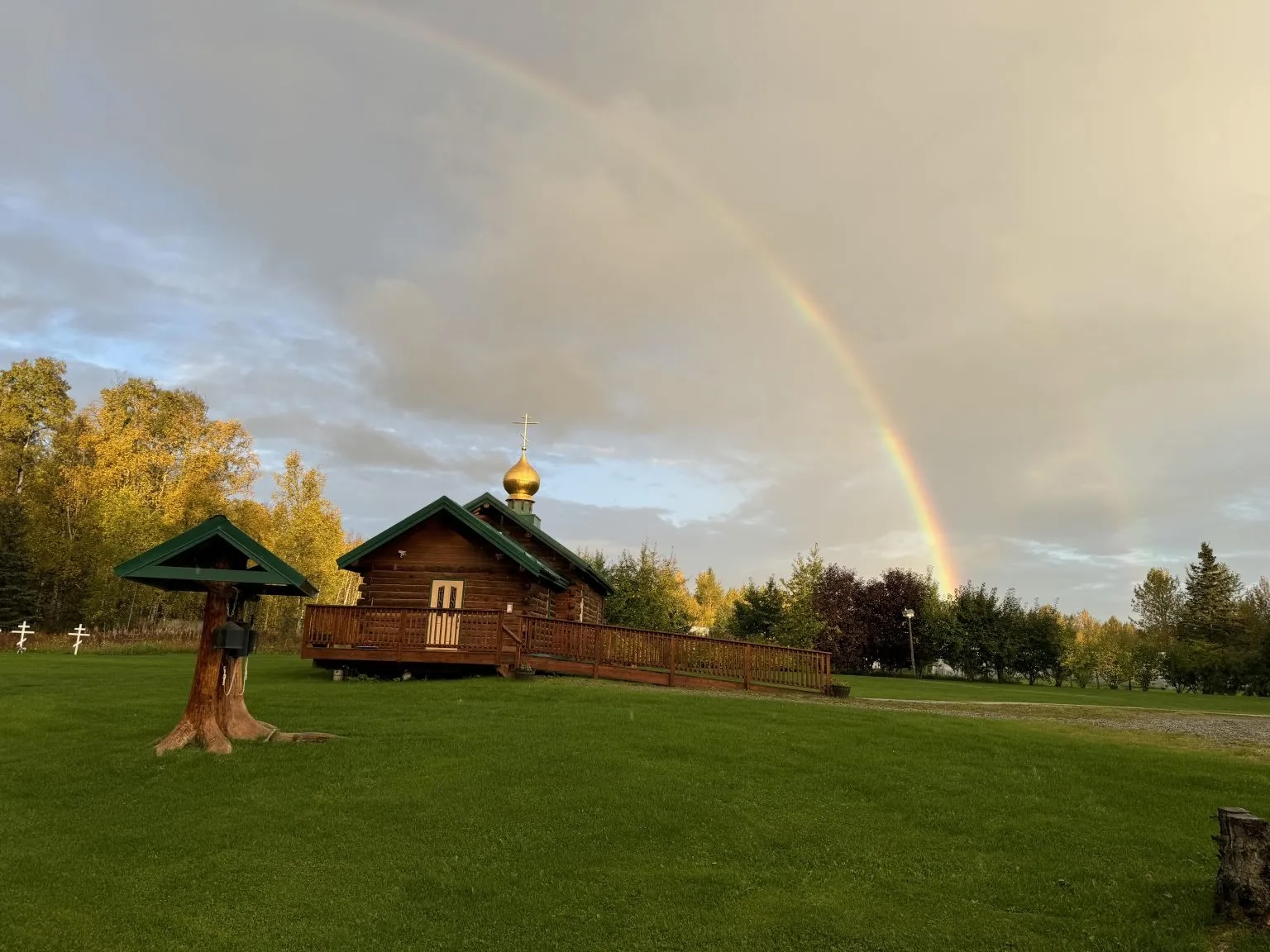
Photo credit: St. Herman Antiochian Orthodox Church in Wasilla.
By SUZANNE DOWNING
Holy Week has begun for Alaska’s Orthodox Christians, ushering in one of the most significant religious observances in the state — the celebration of Pascha, or Orthodox Easter, a tradition that traces back centuries and remains deeply woven into Alaska Native culture and community life.
Across Alaska, from Anchorage and Fairbanks to Kodiak, the Yukon-Kuskokwim Delta, and dozens of small coastal villages, churches are preparing for midnight vigils, candlelit processions, and the blessing of traditional Easter bread. Pascha is the high point of the Orthodox calendar, and even in communities where weekly attendance may be modest, the Easter services draw larger gatherings tied as much to heritage as to faith.
One example of the upcoming celebrations is at Saint John Orthodox Cathedral on Monastery Drive in Eagle River, where Pascha services are scheduled to begin at 5 am on April 12. The Paschal Matins and Divine Liturgy of Saint John Chrysostom will be followed by a procession around the church and the reading of the Homily of Saint John Chrysostom. Later in the afternoon, the parish will hold Agape Vespers at 3:15 pm, where the Gospel is read in multiple languages to reflect the universality of the Resurrection, followed by a cemetery procession and Easter feast.
Similar celebrations will take place across Alaska’s Orthodox parishes, many of which are preparing traditional kulich and paskha breads in large quantities. Some churches ship Easter bread to remote villages, while others take advance orders. In Anchorage, St. Tikhon’s parish is among those known for baking and distributing Easter bread throughout the region.
Orthodox Christianity holds a unique place in Alaska’s history. The faith arrived with Russian missionaries in the late 18th century, beginning with monks who established the first Orthodox church in the Americas on Kodiak Island in 1794. Over time, the church became deeply rooted among Alaska Native communities, where it blended with local traditions and languages and remains a cornerstone of cultural identity in many villages.
Today, Alaska has the highest percentage of Orthodox Christians of any US state. Estimates suggest roughly 30,000 to 50,000 Alaskans observe Orthodox traditions, with approximately 80 to 90 parishes and chapels statewide. Many are located in rural Native communities where Pascha is one of the most important events of the year, drawing families home and filling churches for the overnight vigil that culminates in the proclamation: “Christ is Risen.”
While Russian Orthodoxy forms the historic backbone of Alaska’s Orthodox presence, Greek, Antiochian, and Serbian Orthodox congregations also hold services in urban centers. Across jurisdictions, the traditions remain similar: candlelight, midnight processions, bell ringing, and the joyful declaration of the Resurrection.
For many communities, Pascha is both a religious observance and a cultural gathering. Families prepare traditional foods, cemeteries are visited, and church bells ring through the early morning hours. In villages from the Aleutians to the Interior, the celebration often lasts well into the day.