


By SUZANNE DOWNING
March 5, 2026 – The Alaska Supreme Court heard arguments Wednesday at the Boney Courthouse in Anchorage in a case that seeks to block the Alaska LNG Project, a major natural gas pipeline and export project that is nearing a potential construction phase.
The case, Summer Sagoonick, et al. v. State of Alaska, et al., is the latest in a series of youth-led climate lawsuits challenging state policies that support fossil fuel development. The plaintiffs are eight young Alaskans, including Alaska Native youth, who argue through a law fare nonprofit that state laws requiring advancement of the Alaska LNG Project violate their constitutional rights by contributing to climate change.

The case is an appeal of a March 2025 ruling by Anchorage Superior Court Judge Dani Crosby, who dismissed the lawsuit, finding the claims raised political questions that are better addressed by the legislative and executive branches. The youth plaintiffs appealed that dismissal to the Alaska Supreme Court.
Justice Dario Borghesan presided over Wednesday’s hearing because Chief Justice Susan Carney was unavailable.
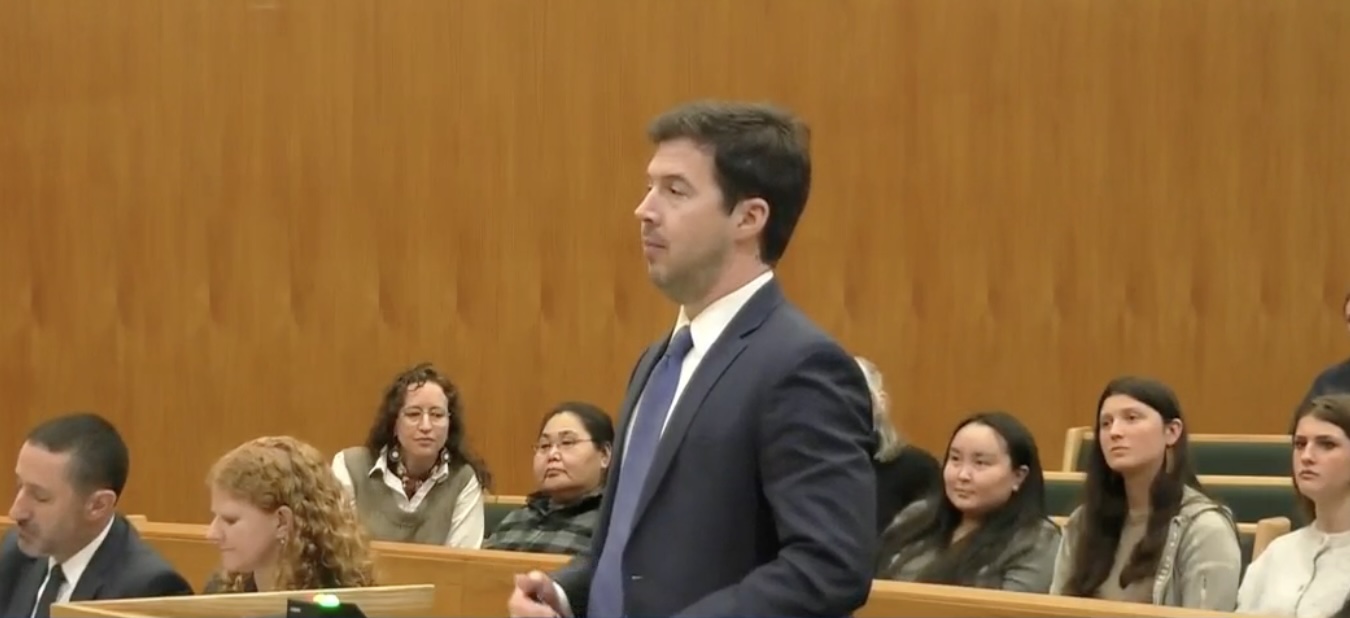
Andrew Welle, senior staff attorney with the climate advocacy group Our Children’s Trust and lead counsel for the youth plaintiffs, argued that the statutes directing the Alaska Gasline Development Corporation to advance the LNG project violate the Alaska Constitution.
Welle told the court the project represents a fundamental threat to the plaintiffs’ future.
“The statutorily mandated Alaska LNG project presents an existential threat to their health, their safety, and their continuing access and continuing availability of protected public trust resources that they rely on for their lives and their cultures,” Welle said, without providing evidence.
He asked the justices to determine whether Alaska laws mandating development of the project violate constitutional protections under Article VIII of the Alaska Constitution, which governs natural resources, as well as due process protections.
“The question before the courts today is not whether they will ultimately prevail on the merits of their claims,” Welle said. “But rather whether Alaska’s courts have the power to hear them and afford them the right to have their day in court.”
Welle argued the case presents the type of constitutional question the Alaska Supreme Court suggested could be justiciable in earlier cases, including Kanuk v. State (2014), the first Sagoonick case decided in 2022, and Forrer v. State Department of Fish and Game.
During arguments, Welle attempted to illustrate his position by comparing the LNG statute to a hypothetical law requiring segregated public schools. If the Legislature directed the Department of Education to enforce segregation, he argued, such a statute would also be unconstitutional, he said.
Justice Borghesan quickly challenged the comparison, pressing Welle on whether his argument would effectively make any natural resource development unconstitutional.
“If the act of segregation is unlawful, then would the act of any development be unlawful?” Borghesan asked.
The justice also questioned how the plaintiffs could make a facial challenge to the statute directing development of the gasline when the exact configuration of the project remains fluid.
“Any gas pipeline that might be pursued …. your allegation is that’s unconstitutional, but we don’t have a specific project yet,” Borghesan said. He noted that different versions of a pipeline are still under consideration, including a smaller line aimed at supplying natural gas to Southcentral Alaska to address looming shortages.
Because the lawsuit challenges the statute itself rather than a final project design, Borghesan asked how the court could determine whether the law violates constitutional rights.
“I think you answered my question earlier that not all development is unconstitutional, so how do you resolve that tension?” he asked.
Welle responded that the plaintiffs are targeting specific statutory provisions directing the state to advance the Alaska LNG Project.
“We are challenging very specific provisions of the statute … specifically their directives to advance the Alaska LNG project,” he said, adding that the plaintiffs would still need to demonstrate a substantial infringement on their rights.
Arguing for the state, assistant attorney general Laura Wolff urged the court to uphold the lower court’s dismissal, saying the lawsuit asks the judiciary to make decisions that belong to elected officials.
“If you’re going to say there’s a right to a livable climate under Article VIII, then you would also say there’s a right under Article VIII to development of natural resources,” Wolff told the court. “There’s lots of competing rights, and the Legislature has the authority and discretion to determine how to balance all of those rights.”
The state argued that climate policy and large-scale resource development decisions are matters for the Legislature and governor, not the courts.
Watch the court arguments here.
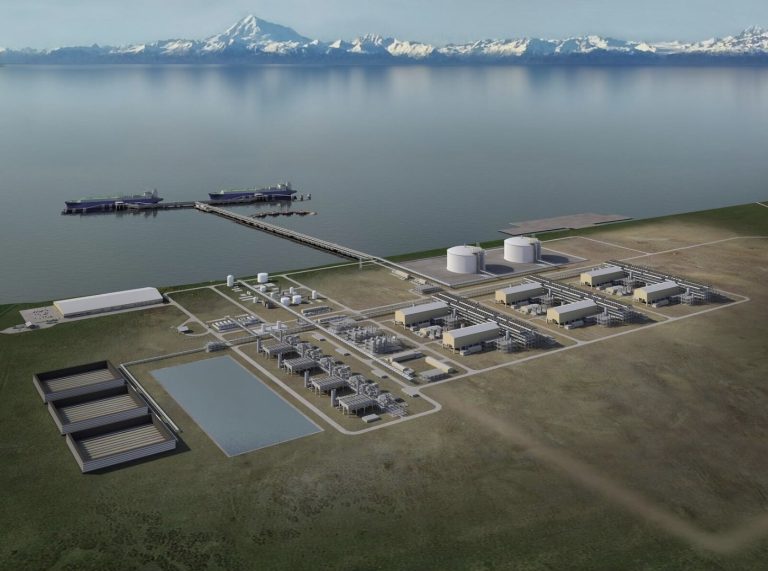
The lawsuit, filed May 22, 2024 in Anchorage Superior Court, challenges statutes including AS 31.25.005 that direct the Alaska Gasline Development Corporation to advance the Alaska LNG Project, a multibillion-dollar effort to move North Slope natural gas through an 800-mile pipeline to Southcentral Alaska and a liquefaction terminal for export.
The plaintiffs claim the project could add at least 2.3 billion metric tons of greenhouse gas emissions over three decades and would worsen climate impacts already affecting Alaska communities.
They seek a court declaration that the statutes supporting the project are unconstitutional and an injunction blocking further advancement or transfer of the project to private developers.
The Alaska LNG Project, currently being advanced by AGDC with development partner, Glenfarne Alaska LNG LLC, has entered early development stages, with planning underway for worker camps and other preparatory work this spring.
The Alaska Supreme Court did not issue a decision Wednesday. The case remains under consideration, and a ruling is expected at a later date.


2 thoughts on “Alaska Supreme Court hears youth climate challenge to Alaska LNG project”
So many of the indoctrinators will be so proud.
Wasn’t there already an appellate court decision on this kind of nonsense??