


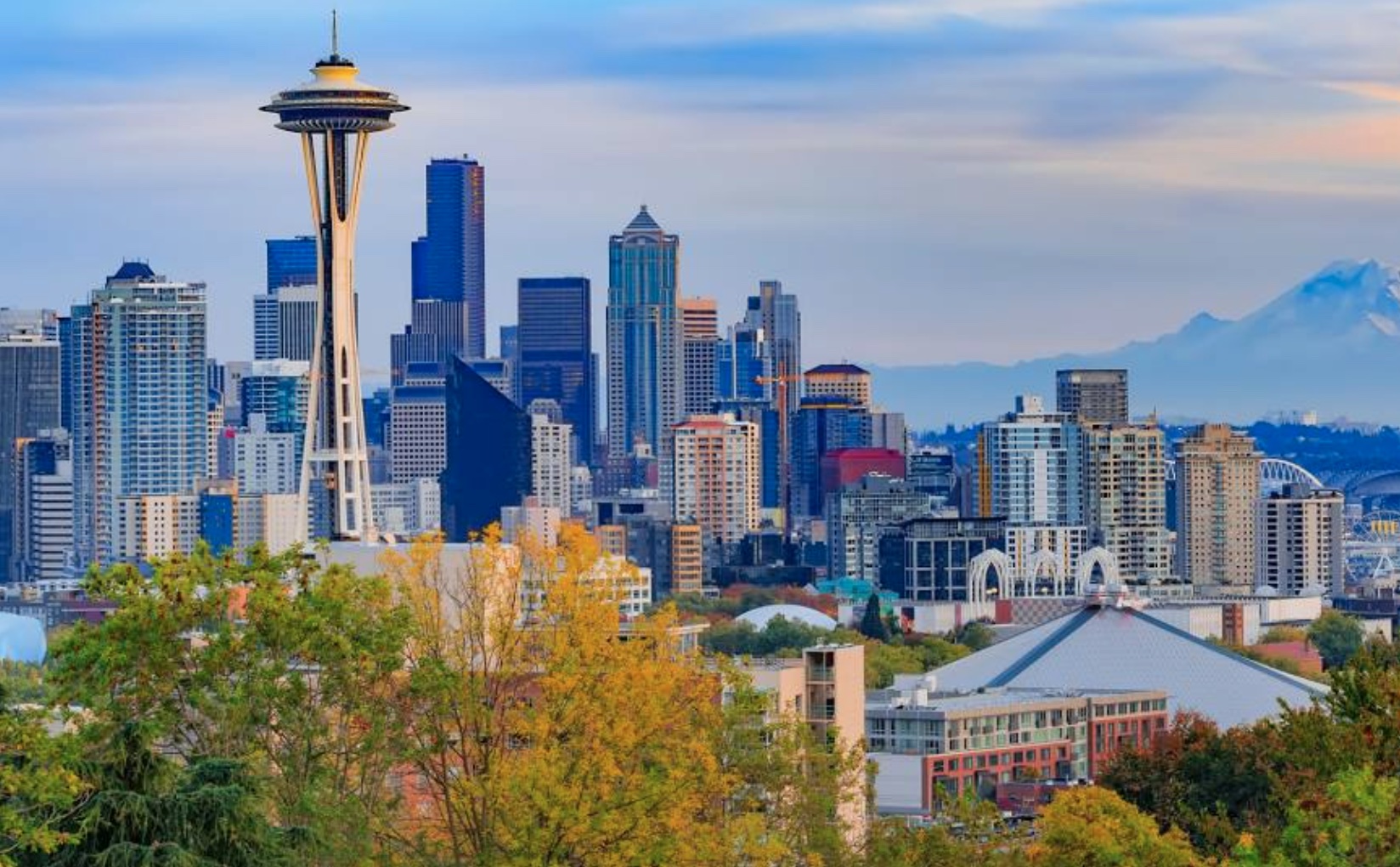
Seattle Democrats have just approved what’s being called “the biggest tax increase in state history,” set to begin this week. The expanded sales tax won’t just target goods anymore — it will hit services as well, meaning everyday needs like haircuts, plumbing, and auto repair will be taxed like luxury items.
For residents already stretched thin, this comes at the worst possible time. Food banks in the city are reporting record demand, with lines forming hours before doors open. The pressure of higher living costs, paired with a government eager to extract more revenue, is squeezing families in every direction.
And while Seattle leaders push ahead with more taxes, another reality is settling in: People aren’t having kids anymore.
Seattle’s fertility rate is now the lowest in the nation. In King County, which includes Seattle, the birth rate has fallen from 13.77 births per 1,000 people in 2007 to 10.70 in 2022 — a 22% drop. Washington state overall has seen its total fertility rate fall from 63 births per 1,000 women aged 15-44 in 2005 to just 52.4 in 2021.
Even more striking, between 2010 and 2021, the number of children under 18 in King County declined for the first time in 40 years, dropping by 3–5% across age groups. According to the American Community Survey (2018–2022), only 2.9% of Seattle women aged 15-50 gave birth in the past year, about half the state average.
This means Seattle isn’t just pricing people out—it’s shrinking its future.
The financial pressures tell the rest of the story. The Seattle metro is now fourth in the nation for home prices, with a median price of $750,000. Washington drivers pay the second-highest gas prices in the country, behind only California, and the state’s gas tax automatically rises 2% every year.
In addition to housing woes, the Class A office vacancy rate in downtown Seattle stands at approximately 32.2%. This represents a significant year-over-year increase of 540 basis points (5.4 percentage points), driven by ongoing challenges in the post-Covid office market, including hybrid work models, tenant downsizing, and use of artificial intelligence to replace human workers.
Taken together, critics say it’s like Seattle is running a live experiment on how fast you can strangle a city. Everyday people are already living paycheck to paycheck, food banks look like drive-thrus, and lawmakers respond not with relief but with more burdens.
As one observer put it: “These clowns think the solution is to tax haircuts and plumbing like they’re Ferraris.”
The numbers — and the visible strain on the streets — show where that leads.
Seattle may still be booming on paper, but its foundations are cracking. Rising costs, shrinking families, and record food insecurity aren’t signs of a thriving city. They’re warnings of what happens when policy pushes ideology over people.

3 thoughts on “Seattle’s experiment in self-destruction: Higher taxes, falling birth rates, rising costs”
The ‘Root Cause’ is quite apparently … Progressive Liberal Democrats! The solution is simply to … remove the Progressive Liberal Democrats (by any means necessary!).
There is nothing “progressive” about the radical leftist political agenda, unless your idea of “progress” is rebuilding the Soviet Union.
Please refrain from using the Orwellian terminology of the radical leftists, and call their political agenda what it really is: totalitarian.
Interesting article. It could be recycled next week by simply replacing the word “Seattle” with “Juneau.”