

By LINDA BOYLE
June 13, 2026 – Could this be a vegan red meat allergy conspiracy? Is this the next “pandemic”?
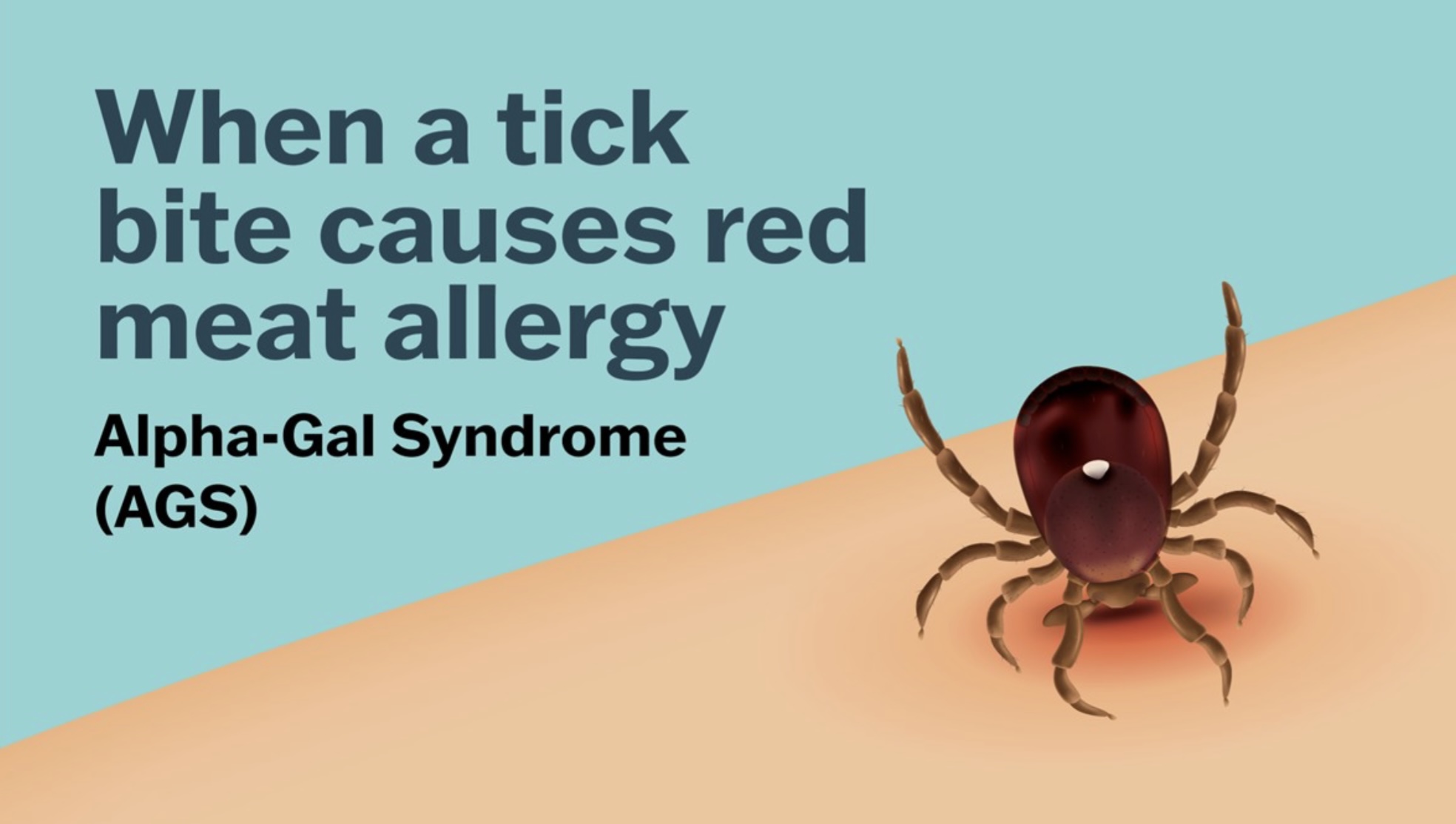
A certain tick is spreading throughout North America. Ironically, it is named the LoneStar tick, named after the Lone Star State of Texas, the source of much of America’s red meat.
There are hundreds of different types of ticks worldwide, yet only a small number of them bite humans.
I remember as a youngster looking for ticks after walking through brush with my dog. And I also remember using a lighter to remove them from my dog, usually after they were filled with the dog’s blood! If I had one “attached” to me, my dad would also use a lighted match on them. And out they came!
This new LoneStar tick that can cause an allergy to red meat is an aggressive tick, rapidly spreading throughout the Southeast, Midwest, and parts of the Northeast. The number of people diagnosed with this red meat allergy, called alpha-gal syndrome, has risen so rapidly that the CDC estimates hundreds of thousands of Americans may already be affected.
The reaction that the tick causes is strongly linked to alpha-gal, a sugar molecule found in most mammals (but not in humans), such as cows and pigs. Alpha-gal Syndrome (AGS), is an unusual allergic condition that can cause adverse reactions to red meat.
The tick first feeds on mammals and then bites a human. The tick’s saliva carries the alpha-gel material from those bitten mammals and injects it into humans. Our immune system becomes sensitized, identifies this alpha gel as foreign, and begins to make antibodies for defense. After sensitization occurs, eating red meat such as beef, pork, venison, or lamb may trigger an allergic reaction several hours later.
Symptoms can range from hives, itching, abdominal pain, diarrhea, and nausea to more severe reactions such as swelling, wheezing, heart palpitations, dizziness, or even anaphylaxis. Some individuals also react to dairy products, gelatin, or collagen-based products. Poultry and fish are generally tolerated because they do not contain alpha-gal. Bring on the salmon!
A new study presented at the American College of Gastroenterology 2025 Annual Scientific Meeting showed the incidence of AGS has increased among Americans. Analysis was done from a large real-world database (spanning dozens of health systems) and identified 3,828 adults who were tested for alpha-gal specific IgE (≥0.1 kU/L) between 2010 and 2025. The results demonstrated that 23% of those tested developed an allergy to red meat. But the 100-fold rise in incidence rates among those who tested positive from 2013 to 2024 reflects increased clinical recognition and testing.
There is no known treatment. People have reported a gradual improvement over time by decreasing or avoiding the foods that trigger the reaction and staying away from tick bites.
In a peer-reviewed paper from Western Michigan University professors (entitled Beneficial Blood Sucking) the authors argued this is good news. They are in favor of genetically engineering Lone Star Ticks to spread AGS deliberately as “morally obligatory” as a form of “moral bio-enhancement” to discourage people from eating meat. They want to inflict their moral values on you and feel justified because of their cause.
Before you get too excited, remember this study was based on people who went to the emergency room for their tick bite. Most of us use the old “light them up” method to remove them from our bodies.
So the increase in these specific tick bites seems really large but actually the numbers are low. There should be no real reason to think another “plandemic” is on our hands.
There are simple protective measures one can take to significantly reduce the risk of tick bites. When walking in high grass consider the following:
- Wear light-colored clothing outdoors so you can see the ticks better should they choose to attach to your clothing. Remove the tick before it attaches to your skin.
- Long sleeves, long pants, and closed shoes provide a physical barrier.
- Tuck pants into socks may be of some help when walking through tall grass .
- Stay in the center of trails rather than brushing against vegetation
- Use insect repellents or natural remedies in heavily infested areas.
- After spending time outdoors in tick-prone areas, shower as soon as possible and perform a careful full-body tick check. Common places to look at include the back of the knees, along waistbands, under the arms, in the groin, behind the ears, and on the scalp or hairline.
Pet owners should also routinely inspect dogs, cats, and other outdoor animals, since pets frequently bring ticks into the home where they may later attach to humans.
There were some articles that stated this LoneStar tick was bioengineered. But have no fear, that theory is “debunked.”
Only time will tell. I bet man has done something to make this happen. He seems unable to leave Mother Nature alone.
And there is a positive. The more people that are allergic to red meat, the lower the demand for red meat. That should bring lower steak prices for the rest of us! (OK, it is bad news for farmers.)
Linda Boyle, RN, MSN, DM, was formerly the chief nurse for the 3rd Medical Group, JBER, and was the interim director of the Alaska VA. Most recently, she served as Director for Central Alabama VA Healthcare System. She is the director of the Alaska Covid Alliance/Alaskans 4 Personal Freedom.
Linda Boyle: Medieval remedy may be first ‘new’ antibiotic in 40 years




3 thoughts on “Linda Boyle: Ticks that can make you allergic to red meat — a vegan’s dream”
We don’t hate the evils of our time enough.
When the government and groups aligned with entities within it spend time and money trying to convince the people something isn’t true, it probably is. That or they completely ignore it and let the people speculate and divert attention away from the truth. Occam’s razor, simplest answer is usually the best answer. There’s a host of reasons to bioengineer “natural” diseases and use animals as disease vectors. Our own government has acknowledged this so the only serious question is whether or not they, or another group with an agenda, bioengineered this one.
The Lone Star Tick us so named, not because of association to Texas, but due to the shape of the minute white spot on their back.