


By SUZANNE DOWNING
May 3, 2026 – Alaska North Slope crude surged past $120 per barrel last week, reaching its highest levels since the global supply shock triggered by the Russia-Ukraine War in 2022. Tensions in the Strait of Hormuz are currently choking off a critical artery of the world’s oil supply.
The spike places Alaska oil back near territory last seen on June 8, 2022, when ANS peaked at $127.77 per barrel during the Biden COVID era. More recently, it last exceeded $108 in August 2022. Before that, the only higher benchmark was the 2008 oil boom, when prices briefly hit an all-time high of $144.59.
The current surge is being driven not by routine market fluctuations, but by a significant geopolitical disruption. The Strait of Hormuz, through which roughly 20% of the world’s oil supply flows, has been severely restricted amid escalating conflict involving Iran, effectively creating one of the largest supply interruptions in modern energy markets.
With Gulf exports constrained, global inventories have been drawn down rapidly, pushing prices higher amid fears of a physical shortage rather than speculative pressure.
But while prices have spiked quickly, energy analysts say a collapse is unlikely, even when the situation stabilizes.
Oil markets are famously forward-looking. Prices react instantly to headlines, not just actual supply changes. That dynamic was on display in mid-April, when Iran signaled the strait was reopening, prompting a rapid 10–12% drop in global benchmarks in a single day.
However, restoring real-world supply is far slower. Tankers must be loaded, insured, and routed safely through waters that may still carry risks from conflict, including mines or damaged infrastructure. Even under optimistic conditions, it can take weeks for shipments to normalize and months for supply chains to fully stabilize.
Meanwhile, global inventories depleted will likely be replenished first, rather than flooding the market with excess supply.
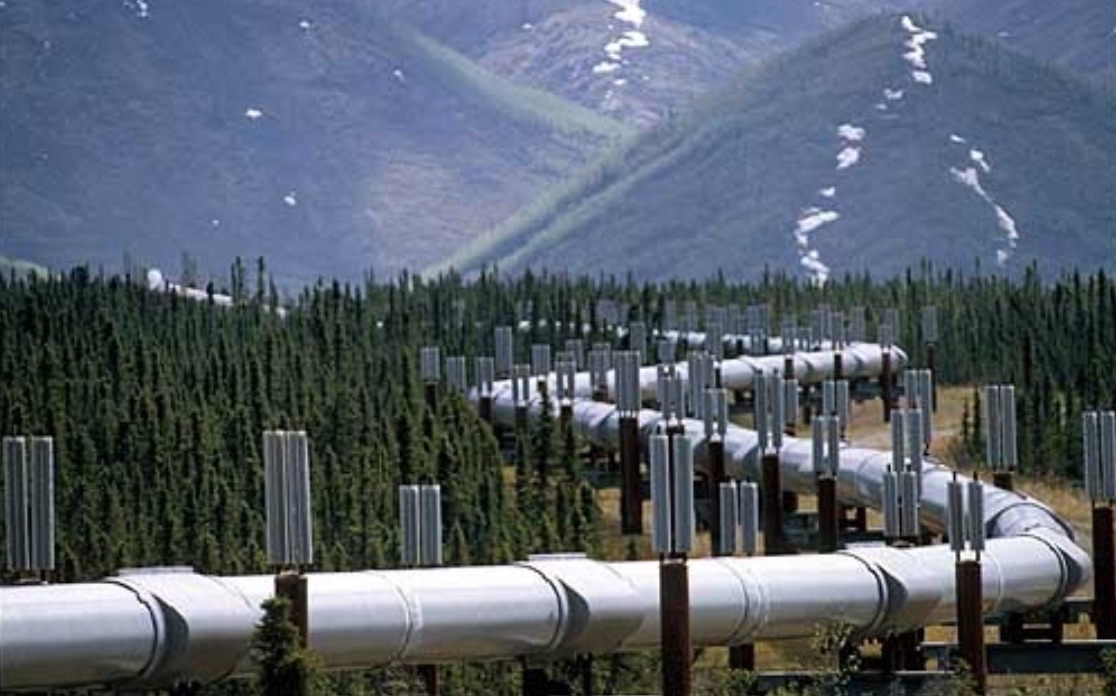
Elevated prices are also prompting a response from producers, especially in the United States. In Alaska, the Pikka field is expected to start producing soon, possibly within weeks, with Santos eager to take advantage of the current prices. It’s expected to put 80,000 barrels per day through the Trans Alaska Pipeline System to the port of Valdez. That will be a significant boost to the current levels, which average about 465,000 barrels per day.
Shale operators and other non-OPEC producers are expected to also ramp up drilling activity in 2026, but that response comes with a lag. New wells take months to meaningfully increase output, meaning current tightness in supply won’t be immediately relieved. Meanwhile, Pikka is ready to rock and roll.
Government and private-sector forecasts reviewed by The Alaska Story are aligned: Prices are expected to come down from current highs, but not collapse.
The US Energy Information Administration projects global benchmark Brent crude could peak around $115 in the second quarter of 2026 before easing below $90 by the end of the year and averaging in the mid-$70s in 2027.
Major financial institutions, including Goldman Sachs, Morgan Stanley, Barclays, and Fitch, generally project 2026 prices in the $85 to $100 range if disruptions gradually ease.
For Alaska, ANS crude typically tracks global benchmarks like Brent, often trading at a modest premium due to West Coast demand and transportation dynamics. That means Alaska prices are likely to follow the same trajectory: down from today’s highs, but still elevated compared to pre-crisis norms.
Despite the volatility, analysts say a price collapse into the $40 range, seen briefly during the Covid-19 demand crash in 2020, is highly improbable under current conditions.
Global demand remains strong, and most U.S. shale producers require oil prices above $50–$60 per barrel to operate profitably. If prices were to fall too far, production would quickly decline, tightening supply and pushing prices back up.
In short, the oil market has built-in self-correcting mechanisms.
The key variable now is timing and credibility of any reopening of the Strait of Hormuz.


2 thoughts on “Alaska North Slope crude tops $120 as Hormuz crisis rattles global markets, but analysts say sharp drop, not crash, likely ahead”
Oh Boy! The results of $120 NS Crude will most assuredly cause two outcomes that no one is talking about … 1) The demand for adult diapers will surge in Juneau as Legislators will be wetting // soiling themselves, and 2) The demand for ‘binkies’ will surge as said Legislators in Juneau will be chomping feverously to spend that extra windfall $$$.
The collapse will be like the drop when the “straight” was thought to open up. There are tankers filled with oil all over the place. All Arab producers in the gulf including Iran are filling all their storage to the brim. As soon as the straights really open, all this oil will tried to be sold asap as these countries need money and tankers are charging a premium to the oil owners for holding this oil.
This probably means a drop to high 70’s to low 80’s very quickly.