


By SUZANNE DOWNING
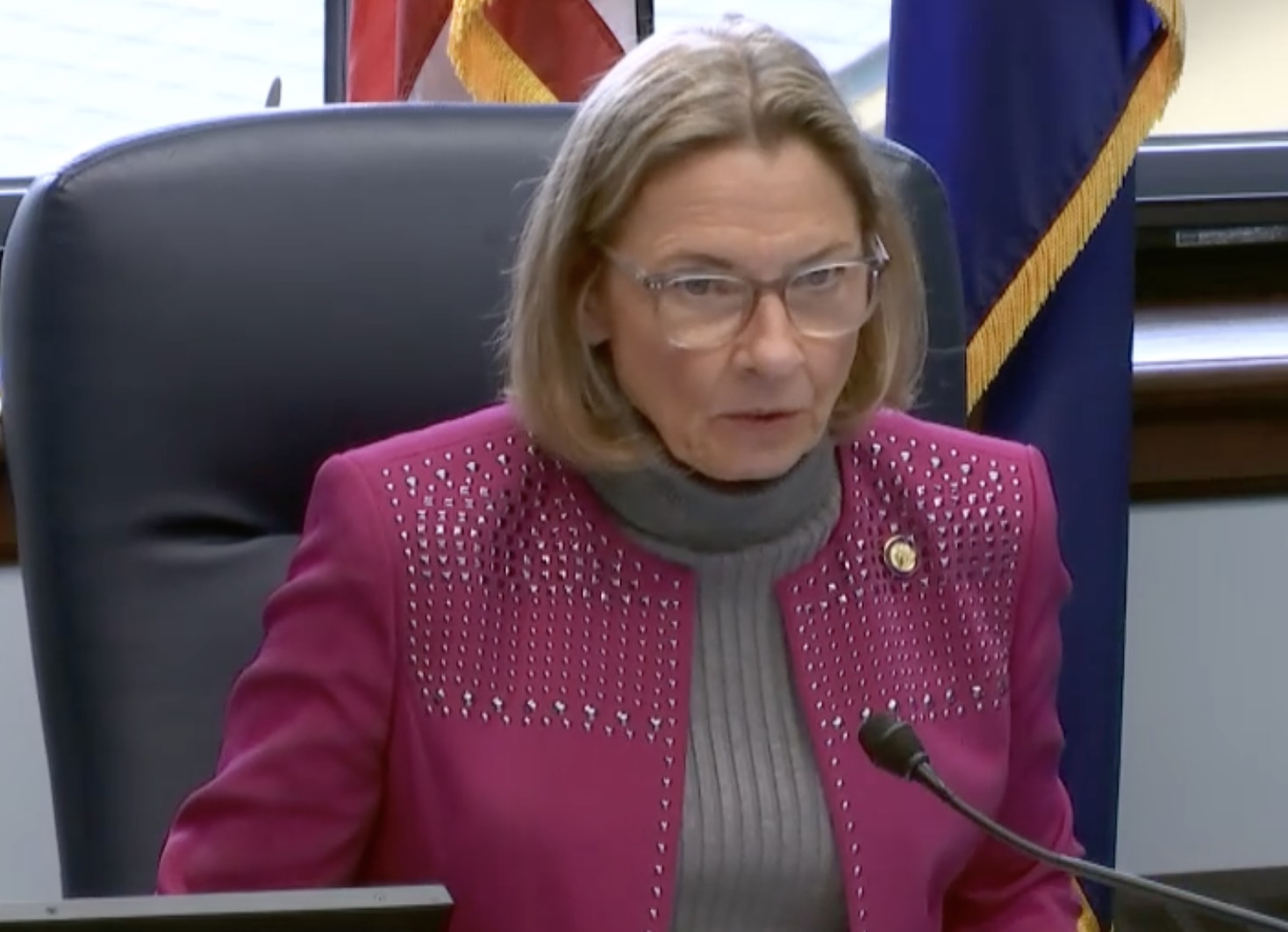
April 20, 2026 – Sen. Cathy Giessel on Monday rolled out a tax- and regulation-heavy committee substitute for Senate Bill 280, transforming what began as a tax-relief proposal for the Alaska LNG project into a far more complex package of new tax increases, regulatory controls, and state oversight, and raising concerns about whether the project can eve move forward at all, with this Legislature.
Originally introduced by Gov. Mike Dunleavy, SB 280 was designed to make the gasline more competitive by eliminating front-end property taxes and replacing them with a production-based tax once gas begins flowing. The goal was simple: remove heavy upfront costs and align taxes with revenue to attract private investment.
But the new committee substitute, Version G, moves in a sharply different direction.
At its core, the revised bill layers in a series of new taxes and policy changes.
One of the most significant additions is a new state income tax targeting “pass-through” oil and gas entities, partnerships, LLCs, and similar business structures that previously were exempt from Alaska’s corporate income tax. The tax reaches up to 9.4% on higher income levels and applies broadly across pipeline, LNG, and gas-processing activities.
The bill also includes new revenue mechanisms tied directly to gas production, including surcharges on LNG exports and tighter rules on how companies calculate royalties and taxes, in an industry that has to deal with globally set prices.
In addition to taxation, the legislation dramatically expands the role and authority of the Alaska Gasline Development Corporation. Lawmakers would be given new authority to approve major deals, including partnerships with foreign entities. This gives control over the gasline to one of the most unstable entities in Alaska — the Alaska Legislature.
The bill also imposes so-called transparency requirements. Developers could be required to disclose investors, lenders, and major gas buyers through a public database, while legislators would gain access to confidential business information under nondisclosure agreements. That would require companies trusting notoriously leaky legislators who are hostile to the gasline with sensitive information.
The Alaska LNG project, an 800-mile pipeline coupled with processing and export facilities, already faces tight economic margins and repeated delays in reaching a final investment decision. Adding new taxes and regulatory uncertainty at this stage, they argue, risks deterring the very private investment the project depends on.
Lawmakers have already heard testimony that the project may not move forward without tax relief from the current system, which imposes a roughly 20-mill property tax on infrastructure, even before revenue begins.
That original relief structure, central to the original SB 280, would exempt the project from property taxes during construction and early operations, then replace them with a volumetric tax once gas throughput reaches commercial levels.
The committee substitute, however, complicates that framework with additional taxes and governance requirements that could change the financial calculus entirely. And not in a good way.
The timing adds urgency. With just 29 days left in the legislative session, developers are approaching critical construction deadlines. Missing those windows could force costly resets with contractors and suppliers, potentially delaying the project by a year or more.
That delay could carry consequences beyond the project itself. Southcentral Alaska is facing a looming natural gas supply shortfall, and the pipeline has been widely viewed as a long-term solution to stabilize energy availability and prices.
The question now facing lawmakers is whether the new version of SB 280 strengthens Alaska’s position—or undermines it.
If the added taxes and oversight discourage investment, the project could stall.
So far, there is no analysis offered by Giessel to justify the taxes she wants to charge. And there is one question that remains unanswered inside the bill: What is Sen. Cathy Giessel’s Plan B for Alaska’s energy future if her committee subsitute kills the gasline?



12 thoughts on “Gasline foe Giessel rolls out new version of bill that could kill AK-LNG project”
Sonya Kawasaki looks like a prostitute. Only prostitutes wear such heavy eyeliner and poor selection of clothes to accentuate what makes them look “prettier” or so they think. Before anyone meets before the legislature and executives improve your style so you look dignified even if the ruling class act like pigs. For the honor of the officeholders look refined, (there are cameras and photographers everywhere in the capital building)
Please post a picture of yourself for our evaluation and public comment.
Hans, the woman in question is an Attorney, and furthermore a democrat. I’m not saying that she ” looks” like a whore… not at all, but her career choice and party affiliation might be a consideration.
BTW, I’ll post my mug if you post yours.
Is there ANYTHING that you approve of? You’re cloying.
I was thinking the very same thing when I first saw this foto. What a complete disgrace.
Clearly(!), an undignified look but, emblematic of our flawed society of laziness (Low IQ).
Tina, she actually looks more like a worn-out Democrat. The old battle ax kind who’s lived a miserable life.
I wonder how much George Soros pays Cathy Wiessel to act as his pro-globalist, pro-radical left, anti-civilization RINO puppet.
.
One thing is for sure: Cathy Wiessel hates Alaska, and hates Alaskans.
I went to high school with Cathy and actually dated her. Her misery stems from a very controlling mother and milquetoast dad. She always put on a fake appearance of being pleasant until you got to know her. Then, you run like hell, like I did.
Cathy and her majority may end up getting what they want, no gasline. Solution to this would be a terminal in Prudhoe to ship LNG directly off the slope. No gasline = no property taxes, though the taxation regime for shipped LNG will have to be figured out. Yeah, I know that the Arctic Ocean freezes during the winter. That’s why we are about to have 4 new icebreakers based in Alaska. Cheers –
Wow nice photo capturing that permanent Leeza scowl.
They could be twins with that disgusting “salmon tangled in the net” look. 🙁
What a horrifying moment to wake up next to either of these “coyote ugly” scowls.
You’d think we’d learn something about extra taxes on the oil companies, when several others and BP left a few years back.. I’m getting sick and tired of politicians thinking that TAXES against the oil companies will improve our “lot” by getting more $$. This “gal” ?? has ruined us before on several different previous options.
Demanding higher taxes on a project this is economically borderline is a good way to kill it. 10% taxes on something is much better than 90% on nothing. This gas line could be a lifeline for Alaska, so infuriating to watch these monkeys seemingly trying to kill it.