By BARBARA HANEY
April 19, 2026 – As an economist who has spent more than three decades quantifying Alaska’s resource-based industries, I have seen how our state’s abundant wildlife drives real economic growth — jobs in rural Alaska, new dollars from non-resident visitors, and self-funding for conservation.
That is why House Bill 321, which has been heard in the House Resources Committee and is now heading to the House Finance Committee, represents a textbook case of inefficient government intervention. Titled “An Act relating to state refuges, sanctuaries, and fish and game critical habitat areas; relating to the hunting of brown bear,”
HB 321 would rename and standardize wildlife management areas. Its real effect is far more damaging: it codifies a permanent statutory prohibition on brown bear hunting in prime habitat between the McNeil River Wildlife Sanctuary and Katmai National Park/Preserve (and adjacent zones toward the Kamishak River and Cape Douglas).
As House Bill 321 now advances from the Resources Committee to the House Finance Committee, Alaskans deserve a clear-eyed look at its fiscal consequences. In an otherwise boring bill on boundaries, definitions, and designations lies a devastating economic tragedy to Alaska’s economy. The Department of Fish and Game’s official fiscal note projects only a one-time $45,300 General Fund cost for signage and boundary mapping, with zero ongoing expenditures and an explicit declaration of “Change in Revenues: None.”
Yet this analysis is strikingly incomplete. It entirely omits the very real erosion of state hunting-license and tag revenue that will follow from the bill’s permanent statutory ban on brown-bear hunting in the prime McNeil-Katmai corridor. Guided non-resident hunters already supply 30 percent of all hunting license and tag revenue statewide despite representing just 3 percent of licenses issued.
A conservative loss of even 20–50 guided brown-bear hunts in the affected zone would translate to $25,000–$62,000 in foregone direct Fish & Game Fund revenue each year, plus the broader multiplier loss in general-fund tax collections from reduced economic activity. By failing to quantify—or even acknowledge—these opportunity costs, the bill’s fiscal note presents an incomplete and misleading picture to the Finance Committee.
Beyond these fiscal shortcomings, the bill’s substantive provisions reveal an even larger problem. This bill picks winners—concentrated bear-viewing operators—while imposing diffuse costs on guides, rural communities, resident hunters, and the broader Alaska economy. It substitutes rigid legislative mandates for the flexible, science-based management that has sustained both consumptive and non-consumptive uses for decades.
Alaska’s wildlife already generates billions in economic activity. The most comprehensive statewide study (2011 data from ADF&G and ECONorthwest) found that spending on hunting and wildlife viewing totaled $3.4 billion and supported $4.1 billion in total economic output, more than 27,000 jobs, and $1.4 billion in labor income.
More recent data on guided big-game hunting alone—much of it brown-bear-focused—shows the sector produced $91.8 million in statewide economic output in 2019, supported 1,890 jobs (1,380 direct), and generated $40.8 million in labor income (ADF&G/McDowell Group). Guided non-resident hunters and their companions injected $62.4 million in direct spending, with the majority circulating through rural Alaska businesses for air charters, lodging, fuel, food, and supplies. A full 85% of registered guides are Alaska residents, and 70% live outside major urban areas—precisely the communities that need diversified income most.
Brown bears are the crown jewel of this economy. In 2019, guided hunters purchased 1,414 brown/grizzly bear tags—32% of all guided tags and 44% of guided tag revenue (out of $3.2 million total). Non-residents, who drive the high-value segment, paid an average of $1,237 each in licenses and tags alone. Individual guided brown-bear hunts routinely command $10,000–$30,000+ in package fees, with total trip spending often exceeding $25,000–$55,000 per hunter when air support, lodging, and companions are included. These are premium, high-multiplier expenditures: every dollar spent with a guide circulates through the economy, supporting not just the guide but bush pilots, outfitters, processors, and local stores.
In contrast, the bill’s favored activity—bear viewing in Southcentral Alaska (centered on McNeil River, Katmai, and Lake Clark)—generated an estimated $34.5 million in sales in 2017 (reported in 2019 dollars) from 109 service providers. This supported roughly 490 jobs (371 direct) and $17.3 million in labor income in the region, with $19 million in value added. Valuable? Absolutely. But viewing is already thriving under existing protections, lottery systems, and federal overlays. It is also more concentrated in a handful of operators and gateway communities, whereas guided hunting disperses dollars deep into rural Alaska.
HB 321’s brown-bear prohibition in the McNeil-Katmai corridor is the economic heart of the problem. Alaska hosts approximately 30,000 brown bears—98% of the US total—and the Department of Fish and Game manages for sustained yield. Harvest in the relevant Game Management Units remains modest and biologically sustainable; the bill does not cite population declines or science-based necessity. Instead, it legislatively locks out hunting to “elevate” viewing.
Let’s put numbers on the opportunity cost. Suppose the statutory ban deters or eliminates even a conservative 20–50 guided brown-bear hunts annually in the affected Southcentral zone (a modest fraction given the area’s popularity and the 1,414 statewide guided bear tags). At an average $25,000 direct spending per hunt, that is $500,000–$1.25 million in foregone direct economic injection each year.
Applying standard economic multipliers (consistent with the McDowell Group models used for the $91.8 million guided-hunting total), this translates to $800,000–$2 million+ in total output, 15–40 jobs, and $300,000–$800,000 in labor income annually—permanently. Add lost license/tag revenue (guided non-residents already provide 30% of total hunting license/tag funds despite being only 3% of licenses) and the self-funding mechanism for ADF&G conservation shrinks further.
These are not abstract figures. They represent real paychecks for Alaska guides and support workers in places like King Salmon, Homer, or remote lodges. They represent fewer non-resident “new dollars” that multiply through our economy without displacing local activity. And they ignore the deadweight loss: hunters demonstrate high willingness-to-pay through market prices, while viewing access is rationed by lotteries and permits. Economists call this inefficient allocation—society forgoes consumer and producer surplus without a rigorous cost-benefit analysis showing that the marginal viewing gain exceeds the hunting loss.
Worse, HB 321 replaces adaptive, evidence-based management by the Board of Game and ADF&G with inflexible statutes. Population data, hunter effort, and habitat conditions change; the Board can adjust seasons and bag limits accordingly. A legislative ban is nearly impossible to reverse and invites future special-interest capture. The fiscal note for the Department of Fish and Game is trivial—$45,300 one-time for signage, maps, and boundary work, with zero ongoing costs or revenue impact. But the private-sector and opportunity costs are real, unquantified, and ignored.
From a public-choice perspective, this is classic concentrated benefits and diffuse costs. A narrow group of bear-viewing businesses gains statutory protection and reduced competition. The costs fall on dispersed guides, resident hunters, rural economies, and taxpayers who ultimately bear any shortfall in conservation funding. In practical terms, this places thousands of small, family-owned guiding businesses and the rural economies they support at serious risk — many could lose vital revenue streams or be forced to shut down entirely. Alaska’s comparative advantage is our world-class both hunting and viewing opportunities. Over-regulating one use erodes that edge and risks shrinking the entire wildlife economy pie.
Alaska cannot afford to treat sustainable hunting and wildlife viewing as mutually exclusive. Multiple-use management has worked for decades because it maximizes total social welfare. HB 321 fails the basic Kaldor-Hicks efficiency test: the “winners” (viewing operators) cannot compensate the “losers” (everyone else) and still come out ahead.
I urge the House Finance Committee, the full Legislature, and Governor Mike Dunleavy to reject HB 321. Demand a full, independent economic impact study from ADF&G or the University of Alaska before any further action. Alaska’s wildlife resources are too valuable—and too important to our rural economies and conservation funding—to be sacrificed on the altar of one-use ideology.
Sustainable, diversified management is not just good policy; it is sound economics. Our children and grandchildren deserve the same opportunities we inherited.
Barbara Haney, Ph.D., is an independent economist with a Ph.D. from the University of Notre Dame and more than 34 years analyzing issues unique to Alaska’s economy.




11 thoughts on “Barbara Haney: Locking Alaska’s wildlife resources in a legislative straitjacket will harm rural Alaskans”
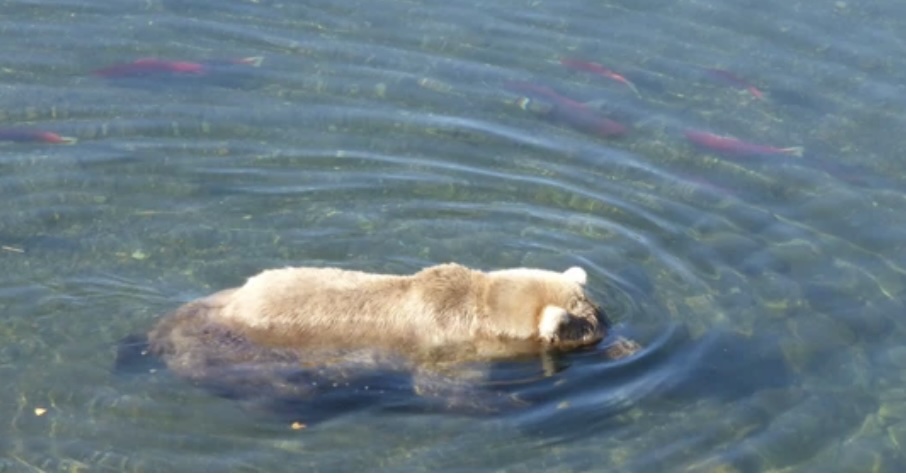
Haney: you wrote “ Alaska cannot afford to treat sustainable hunting and wildlife viewing as mutually exclusive.”. Yes we can, IN SOME PLACES, AND MCNEIL IS ONE OF THEM. Bear hunters have the whole damn state to kill their trophies. McNeil and the corridor you mention should prohibit bear hunting. For hells sake – one little place that thrills thousands who pay big money and make the effort to see wildlife ALIVE is worth way more than the dollars from killing for pleasure. You’ve seen the iconic photos of a bear in the falls as a salmon literally leaps into its mouth. There is no equivalent icon from killer’s photos. There’s a web cam. There’s the fattest bear contest thing. These experiences enrich many viewers for a lifetime while trophy hunting provides an experience and a lifeless, glass-eyed trophy for one person.
Leave the U of A out of it as they’re not even close to even handed sources of analysis
“………Bear hunters have the whole damn state to kill their trophies………..”
Have you heard what a national park is, and that over half of all national park lands In the United States are in Alaska? Moreover, other federally managed lands restrict bear hunting beyond state harvest limits. Add certain state parks and state management areas to that.
It’s pretty obvious that you have no grasp of Alaska’s Hunting Regulations, Evan.
Well good point Reggie. Nonetheless, the bullet club has PLENTY of options. They are not victims of government restrictions
Alex Gimarc article goes along with this. You can bet the Alaska Center is part of the push to increase no bear hunting areas.
This is an interesting, well thought out analysis.
Hunting is an important element of wildlife management.
I looked this bill up; it’s listed as a “partisan democrat bill”.
That really is all one needs to know.
SD
Which Ds (co)sponsor this bill?
Any RINO republicans?
HB 321 is a bad bill for a variety of reasons. The brown bear closure fragments the management of the bear population in the area. McNeil Sanctuary was created to protect bear viewing at the river and falls. Tagged bears eventually showed that they move throughout the area, including Lake Clark and Iliamna. Closing the area will mean that it is a large closed area between the Sanctuary but bear hunting is allowed in the adjacent Park National Preserve on the other side. Doesn’t make sense.
The huge problem with this proposal is that it changes millions of acres of Critical Habitat to Refuge status. The Department of Fish and Game sold the Critical Habitat designation as a counter to Refuge status. Refuges are more heavily regulated than Critical Habitat areas. Many of the communities within or adjacent to the areas opposed Refuge status because of the stringent regulation of hunting and fishing. We created the Critical Habitat designation to avoid the public fear of heavy regulatory actions within Refuges. If this proposal is actually considered then the adjacent communities need to be contacted to determine their preferences. Since I was the one who headed up the Lands Section within the Game Division in ADF&G, I was responsible for designing and implementing the programs related to Refuges, Sanctuaries and Critical Habitat areas. The legislature also participated in the process by creating and describing the different categories. It would be a huge public relations problem if this were adopted. If there is problems with the statutes defining their purpose and use, then fix the statutes but give the public a reasonable chance to participate. Most of the public fears that Refuges, whether Federal or State, have a “refugium” type status. This means, “In biology, a refugium (plural: refugia) is a location which supports an isolated or relict population of a once more widespread species. This isolation can be due to climatic changes, geography , or human activities such as deforestation and overhunting.
I met with Mr. Somerville to discuss this bill and one of us is really confused about the refuge vs critical habitat area statutes. You be the judge as to which one is more restrictive:
Refuge: Alaska Statute 16.20.020. “Purpose. The purpose of AS 16.20.010 — 16.20.080 is to protect and preserve the natural habitat and game population in certain designated areas of the state.”
Critical Habitat Area: Alaska Statute 16.20.500. “Purpose. The purpose of AS 16.20.500 — 16.20.690 is to protect and preserve habitat areas especially crucial to the perpetuation of fish and wildlife, and to restrict all other uses not compatible with that primary purpose.”
I managed these areas for 25 years. The Critical Habitat Area statute is clearly more restrictive than than the refuge statute; however, the on-the-ground management including management plans, regulations, and permits really made no distinction between the two. Both are managed to protect (preserve, conserve – pick your term) habitats and then to allow public use that doesn’t damage those habitats and the fish and wildlife that we harvest (and yes, I am a hunter and angler).
We may disagree on 1 or 2 provisions in this bill but overall this is a good bill. Those that don’t recognize this are not looking at it deeply or widely enough.
Ms. Haney may be a good economist but that reputation depends on doing adequate research and obtaining accurate data. Her data is clearly flawed and her conclusions are far from reality. The McNeil River sanctuary has been closed to brown bear hunting for the past 71 years! The two new areas proposed for an additional statutory closure have not seen legal brown bear harvests for at least 30 years in the adjoining McNeil River refuge, and for at least 40 years in the adjoining Kamishak Bay area. So there is ZERO loss to anyone – financially or in hunting opportunity. To the contrary – since these areas have been closed by regulation for a generation, closing them to brown bear hunting in statute elevates the status of the McNeil River area on a world-wide scale. Another glaring error in Ms. Haney assessment involves her conclusions on a sustainable harvest of brown bears should the McNeil refuge ever open to brown bear hunting, The last opening over 30 years ago (which saw no harvest) included 3 draw permits, a far cry from her estimated 20-50 harvest which would violate basic wildlife management practices, not to mention the requirement in our state constitution to manage wildlife populations on a sustained yield basis.
Overall, HB321 allows better management of our state refuges, more efficient and effective management, and perhaps more importantly to many makes it better for users including hunters (yes, including me), anglers, wildlife watchers, our communities, and our economy. You should support this bill for your benefit and for our future Alaskans and visitors.