


By SUZANNE DOWNING
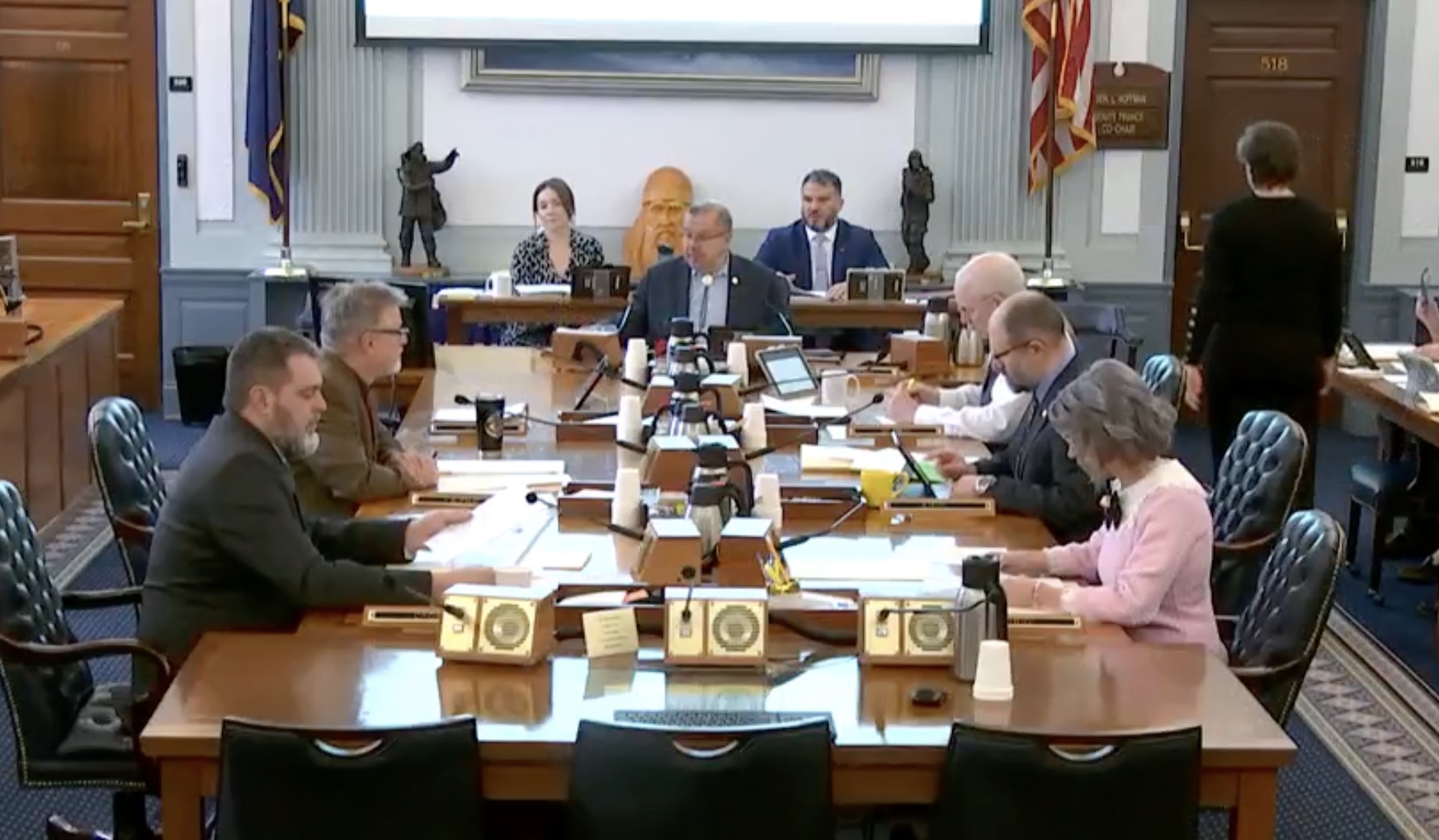
March 26, 2026 – House Bill 78, the proposal to restore a defined benefit pension option for Alaska public employees and teachers, is back in the Senate Finance Committee today. The bill, introduced Jan. 31, 2025, would allow current and future employees to choose between the existing defined contribution system and a new defined benefit plan under the Public Employees’ Retirement System (PERS) and Teachers’ Retirement System (TRS).
Union leaders say it’s a recruitment and retention tool. But it is, in fact, the reopening the same pension structure that created the largest fiscal liabilities in Alaska history, a liability still not paid off even after all these years.
The timing is notable. Governments across Alaska are already pushing for more funding. In Anchorage alone, the FY 2025–26 school district budget totals close to $1 billion for just 43,000 students. Voters in Anchorage are now being asked to approve Proposition 9, a one-year $12 million property tax increase to support operating costs, with the expectation similar measures will follow next year if Prop. 9 passes this year.
Against that backdrop, HB 78 would move Alaska back toward a guaranteed pension model, shifting risk to taxpayers.
The bill explicitly allows teachers hired after 2006 and before July 1, 2026, to elect into a defined benefit plan and even convert prior defined contribution balances into pension service credit. The election is irrevocable and retroactive to the employee’s hire date.
That structure does not simply create a new option going forward. It allows migration from the defined contribution system into a pension framework,meaning the state assumes long-term actuarial risk for benefits tied to salary and years of service.
Alaska lawmakers eliminated defined benefit plans for most public employees in 2006 after unfunded liabilities ballooned. The move to defined contribution plans was intended to stop future pension debt from accumulating. The state is still paying down billions tied to the legacy system today.
HB 78 effectively reopens that door.
Backers like Sen. Cathy Giessel argue the bill includes safeguards. The proposal allows adjustments to employee contributions, creates sub-trusts for newer members, and requires actuarial oversight intended to prevent unfunded liabilities.
But the central risk remains unchanged: defined benefit pensions promise a fixed payout regardless of market performance. If investments underperform or assumptions prove too optimistic, the state must somehow make up the difference.
Democrats insist this time will be different, arguing risk-sharing provisions and actuarial controls will keep costs contained. History suggests otherwise.
Once a defined benefit system exists, benefit enhancements become political turning points. Contribution rates can be lowered, cost-of-living adjustments raised, retirement ages reduced, or benefits recalculated, and each change increases long-term liabilities. Those decisions often happen years after the plan is created. Unions never will stop grabbing for more.
HB 78 also arrives at a moment when public employers are already under fiscal pressure. Anchorage’s nearly $1 billion school budget, combined with proposed tax increases, illustrates the broader concern: Adding pension exposure compounds long-term obligations.
The debate now before Senate Finance is less about recruitment, and more about whether Alaska wants to re-enter the pension risk business at all.


9 thoughts on “Analysis: HB 78 would reopen Alaska’s pension risk just as governments push for more spending”
“Union leaders say it is a recruitment and retention tool”. If new teachers are entering teaching as a career they should ditch ASD’s public indoctrination upside down pyramid ponzi scheme that is top loaded with a myriad of administration that rewards failure.
They will be rewarded with with wealth far beyond any offers from union promises by joining the valuable team members who take the path of educating children in private school settings that actually have successful learning systems in place with a proven track record that far exceeds any public funded government cash shredder. No longer will derelict Presidents like Joe Biden be allowed to restrict federal funding from public schools who refuse to abide his sick ideas of allowing boys to use girls bath and shower rooms. Thankfully the department of education is being dismantled and we will be on the path of funding following the children regardless if it is private or faith based and America will be a place where children can learn without gender confusion.
Alaska can not afford a State Pension plan, we are not set up for it. To afford it Alaska already will had needed to have a robust vibrant private sector thriving ti afford it. Alaska’s private sector is at best “limping” along with showing signs of strain and decline.
Reduce who is working for government, get what the state pays for existing employees to a more manageable expense, and reduce how much money goes out to non profits, grants, Medicaid, and appropriations. All a while let the state be more business welcoming to developers and builders to build new mega projects. After the state is booming with business activity (a decade later) then revisit the pension plan.
But do what you guys in the legislature wants. A pension plan will increase the out migration of more workers and retirees out of Alaska. Which means when workers are leaving. A lot of those working age adults have children so Alaska youth under 17 will also leave the state. Which the increase out migration will just put more strain on the existing businesses who have now less interested kids in youth programs less people eating at restaurants, less people shopping in grocer stores, less people using gas stations, less people seeing movies and art performances, less people using public libraries.
But go ahead you legislator do what you think is right. Reinstate the pension plan. What’s there to lose by reinstating a pension plan.
Which for all the kids who do live on Anchorage I am concerned seeing there seems a sharp decline in adults enrolling and paying out of pocket for a child’s sport, art, or music lessons with a small business selling the service (gymnastics, football, baseball. Dance. Voice, musical instrument, acting, swimming, soccer, cheerleading, karate) the kid who are enrolled all from the most likely families who’d leave the state putting even greater strain on the owners of youth centered businesses whose primary customers are kids and the working parents paying for their tuition. The current youth centered business can’t expect losing the current kids they do have will be replaced to the enrollment numbers today (that are lower than decades before) would be replaced by kids still living on Anchorage.
The best lesson for a person or a state can be learning the lesson the hard way.
Iran baby boomers (plus its deceased elders born in the 1920’s) had to learn their lesson the hard way about electing a regime who were so strict they killed their own people for violations. They never realized their uncomfortableness to a modern Iran to return to a more traditional conservative Iran would led to do much blood shed of themselves, foreigners, their children GenX and Millennials, and grandchildren GenZ and GenAlpha.
But today’s Iranian generation HAD to live through the hard lessons of the regime to recognize and appreciate Freedom.
Alaskans have so much pride that we likely need to live through hard lessons of bureaucracy and government dependency before generations will recognize and appreciate Independence and free business enterprise or capitalism.
You want a State retirement plan. Simple fill the pipeline with oil. We are currently operating at less than 25% capacity. That is what I tell all my government workers friends who are anti oil and gas. Their solution is to bring on a Statewide tax. Sales or Income. Plus No more PFD. First fill the pipeline and build the gas line, then talk about Public Retirement plans.
That wouldn’t suit the needs of Leftist control freaks who WANT a tax,. With a,tax system, they can” nudge” behavior through arcane rules written to ” reward our friends, and punish our enemies”… Barack Obama. There’s no” leverage” in making the,state prosper. Keep in mind, always, that POWER!!! Is their objective
I agree we need to fill the pipeline. I do remember the supporters of SB21 saying if it’s approved, there would be a MILLION barrels of oil in the pipeline. What do we have about 460K barrels a day. Can’t trust the oil industry.
What was the real reason the past pension is not fully funded? Oh that’s right, we listened to poor advice from actuaries. We thought we were doing great, and lets not keep putting money into the retirement account. Instead we spent that money. A couple years later we realized we screwed up. Now everyone forgets and blames the pension itself and says state employees are greedy. Meanwhile over the last 20 years the state services have fallen into ruin. 25 percent or more of positions are vacant, and the average experience level across the board is less than 7 years. This results in poor management, lost productivity, and poor services. Is Alaska a better place than it was 20 years ago?