


By SUZANNE DOWNING
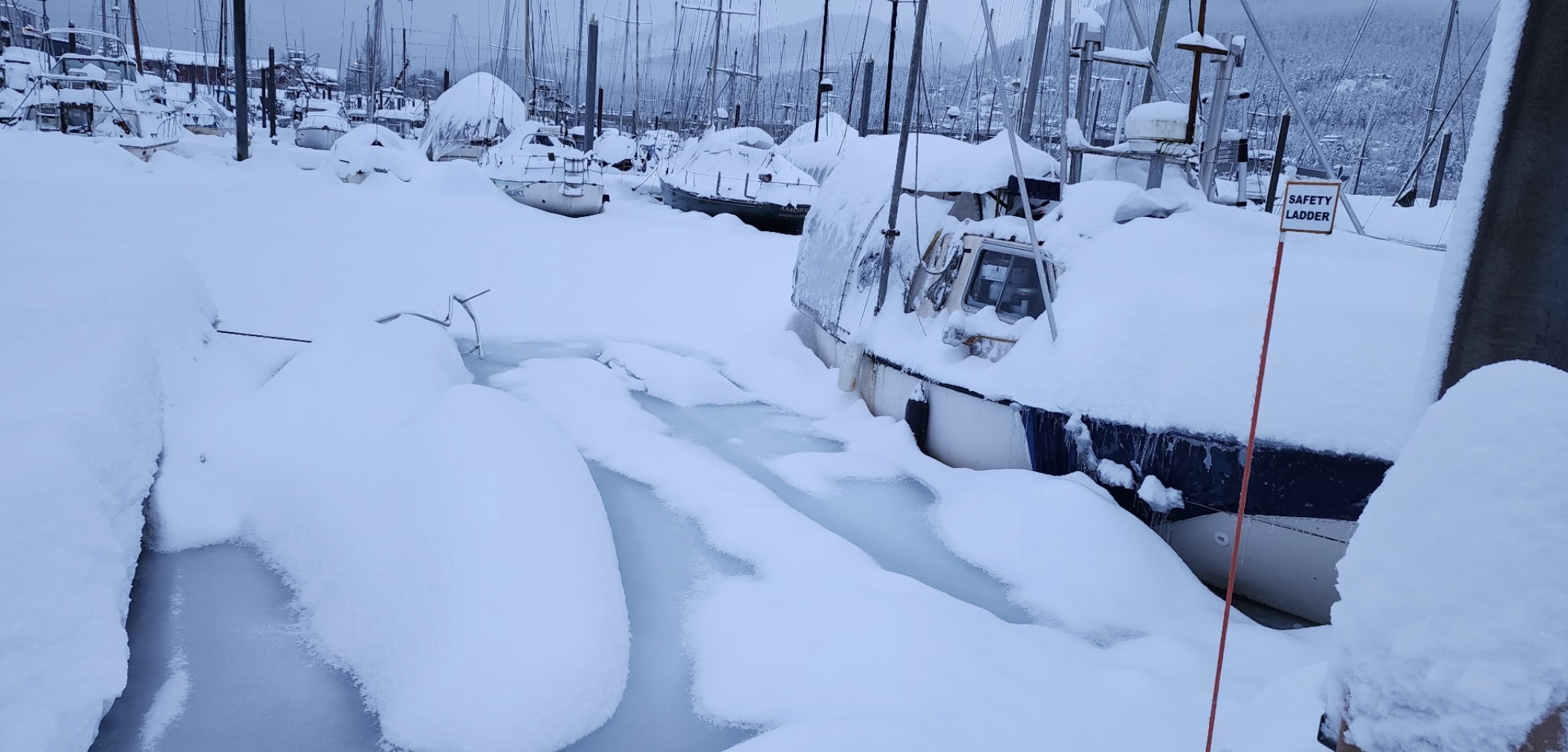
March 26, 2026 – The Old Farmer’s Almanac predicted Alaska would have a milder-than-normal, drier winter for 2025–2026. Instead, much of the state just lived through one of the coldest and snowiest “old-fashioned” winters in years.
And it’s not over for many of us. Planting season is on hold.
In its long-range outlook, the Almanac forecast above-normal temperatures across Alaska, along with below-normal precipitation and snowfall. It anticipated only a few cold snaps and limited snow, with the snowiest periods expected in late November, mid-December, and early February.
That’s not what happened.
Actual winter conditions, measured across the meteorological winter of December through February, diverged sharply. Large portions of Alaska experienced colder-than-normal temperatures, with the Interior seeing particularly harsh conditions. Fairbanks endured prolonged stretches below minus-40 degrees and recorded its coldest winter since the 1970–71 season. December brought persistent cold across Interior, Southcentral, and parts of Southeast Alaska, with several areas reporting record or near-record cold snaps.
Snowfall also told a different story than the Almanac predicted. Southeast Alaska had an exceptionally snowy winter, with Juneau breaking its all-time seasonal snowfall record. By late March, Juneau International Airport had recorded more than 201 inches of snow — more than double its typical seasonal total of roughly 88 inches. December alone shattered the city’s monthly snowfall record.
Other regions saw near- to above-normal snowfall as well. Fairbanks built a deep early snowpack in December, and while some Southcentral areas had drier stretches mid-winter, overall precipitation across the state ranged from near average to above average, not the uniformly dry winter forecast by the Almanac.
The winter was widely described by Alaska climate researchers as a “deep cold, deep snow” season, particularly early on, with dynamic weather patterns that included extreme cold snaps, heavy snowfall events, and regional contrasts that the Almanac’s broad outlook failed to capture.
The miss isn’t entirely surprising. Long-range forecasts are inherently difficult, and Alaska’s size and diverse microclimates make statewide predictions especially challenging. And yet, a University of Alaska Fairbanks review in 2018 found the Almanac’s Alaska forecasts had mixed accuracy. The popular publication is roughly 65% accurate for temperatures and about 50% for precipitation and snowfall.
The Old Farmer’s Almanac advertises an overall accuracy rate near 80% using its proprietary blend of solar science, climatology, and historical patterns. But independent evaluations and recent winters suggest its long-range outlooks for Alaska are hit-or-miss.
This year, the publication leaned heavily toward “miss.”


2 thoughts on “A swing and a miss for Old Farmer’s Almanac’s winter prediction for Alaska”
-5° here in Fairbanks this morning. Nearly 100 inches of snow on the ground. Fabulous abundant sunshine, though. Almost April and the geese will be swooping in, looking for a small swath of cleared-out area at Creamer’s Refuge.
.
Meanwhile the climate propogandists at UAF are scrambling their numbers around, searching for a new spin. Soon, it will be summer forest fire season and we’ll be hearing the same crap from them about how man is warming the planet with F150s and gas lawnmowers.
The new cycle of propaganda begins again.
Ah, good ol’ Interior winters: Trick or Treating at 25 below was always fun: Dress warm and wear a bandana like a good little bandit. And walking to school in 18″ of snow when you’re only 4 ft tall. (That was in the alley until we got to the main roads.) That was a trick!
.
If there is still 100 inches of snow on the ground up there, I’m guessing the fire season will be limited and Interior folk will have a very nice summer. Unless it plays 1967 all over again.
.
Cheers mom!!