


By SUZANNE DOWNING
March 24, 2026 – The Anchorage Assembly is scheduled to consider a resolution Tuesday night urging the Alaska Legislature to pass House Bill 78, a proposal by Rep. Chuck Kopp that would reopen a defined-benefit pension option for public employees and teachers.
The bill has stirred a long-running debate over retirement costs that led the state to abandon the system two decades ago.
The resolution expresses formal Assembly support for the bill, which would allow certain public employees to choose between a defined-benefit pension and the current defined-contribution retirement plan within Alaska’s Public Employees’ Retirement System (PERS) and Teachers’ Retirement System (TRS).
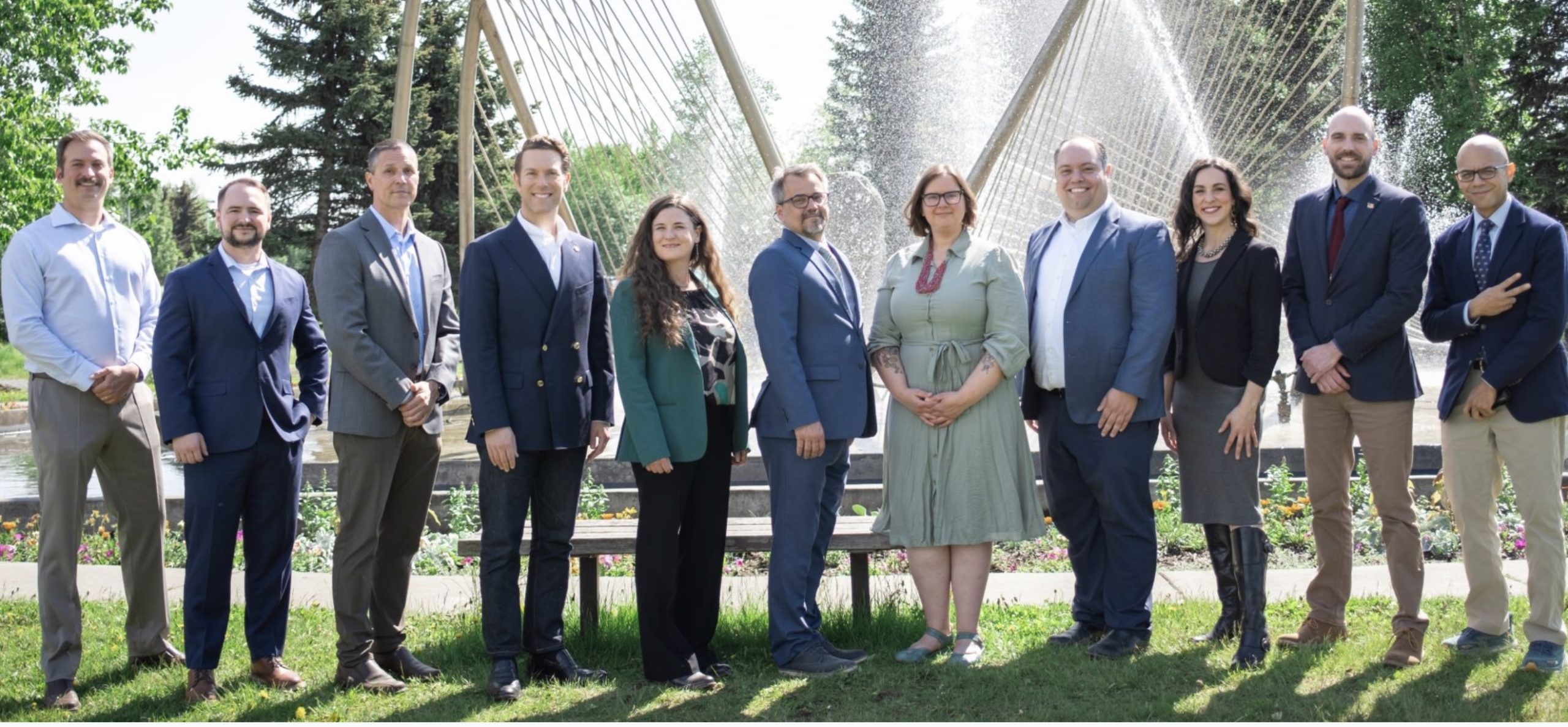
Assembly members Anna Brawley, Erin Baldwin Day and Zac Johnson and Mayor Suzanne LaFrance, the sponsors of the resolution, cite recruitment and retention challenges as the primary justification. The resolution states that Anchorage faces shortages among police officers, firefighters, snowplow operators, public health workers, and other municipal employees, and argues that many workers leave Alaska for states offering traditional pensions. The document also contends workforce gaps increase overtime, contract labor costs, and service disruptions.
The Assembly has repeatedly taken this position. Anchorage supported restoring defined-benefit pensions in its 2024, 2025, and 2026 legislative priorities, arguing retirement benefits have not kept pace with other states and that inadequate benefits are contributing to staffing shortages.
Alaska closed its defined-benefit pension plans to new hires in 2006 after unfunded liabilities ballooned into the billions of dollars. The state shifted new employees into a defined-contribution system similar to a 401(k), while continuing to pay benefits owed to existing retirees and employees under the old system.
At the time of the change, unfunded liabilities exceeded $5 billion and later climbed to roughly $12 billion before reforms and improved investment performance helped reduce the gap.
Those obligations still exist today.
According to the most recent actuarial valuations, Alaska continues to carry billions in pension debt tied to the legacy defined-benefit system:
- PERS unfunded liability: about $5.15 billion
- TRS unfunded liability: roughly $1.7–$1.8 billion
- Combined pension shortfall today: roughly $7–8 billion
These figures represent the unfunded actuarial accrued liability, which is the gap between promised benefits and assets on hand. The State continues paying down this debt through employer contributions, state assistance, and investment returns. Current projections extend payments into the late 2030s.
The scale of those liabilities was the central reason lawmakers moved away from defined-benefit pensions in 2006, warning at the time that guaranteed benefits exposed taxpayers to long-term financial risk when investment returns fell short or assumptions proved overly optimistic.
HB 78 would create a new “shared-risk” defined-benefit tier beginning July 1. The proposal includes adjustable employee contributions and potential cost-of-living changes tied to funding levels. Most new public employees would be placed in the pension system by default, while current defined-contribution participants would receive a limited window to opt in.
Unions backing the proposal say there will be safeguards that were not present in the pre-2006 system and would help stabilize Alaska’s public workforce.
Others warn that reopening pensions reintroduces long-term liabilities. Cost estimates vary widely, with sponsor projections around $90 million annually, while some independent analyses suggest potential multibillion-dollar exposure depending on market performance and participation levels.
HB 78 passed the Alaska House in 2025 by a narrow 21-19 vote and is currently under review in the Senate Finance Committee, where concerns about long-term costs have slowed progress.
The Anchorage Assembly meets at 5 pm on the ground floor of the Loussac Library on March 24, Tuesday. The entire agenda is at this link.


6 thoughts on “Anchorage Assembly to consider resolution supporting pension plan option for public employees”
Classic manipulation of voter sentiment; these are still good paying jobs as it stands. As Alaska wanders precipitously ever closer to insolvency, let’s not forget that benefits bankrupted many municipalities and local governments during the time period in question. A
401K is a reliable retirement plan. Just giving health insurance and other benefits over a lifetime not only kicks the can on to future generations, it will run off a future tax base that will struggle to supply the funding.
Remarkable, isn’t it, that nothing good has come, is coming, or seems likely to come out of the Assembly for a long time.
.
Eaglexit can’t happen soon enough.
.
When EagleExit happens your community’s problem will not end there but adopt new battle because Eagleriver government dependents Democrats and Republicans will organize themselves competing with the Republican and Conservative neighbors for power over Eagleriver, Chugiak, Birchwood, Petersceek. The smaller size will make organizing quickly very easy for Democrats. This area has a lot of neighbors who are government dependent minded. The Eagleriver families by a whole using the ASD schools to send the next generation of Eagleriver adults doesn’t give much hope that Eagleriver be no different than Anchorage
Your better idea is?
She doesn’t have one, she just repeats her mantra about community councils
Weasel Martinez has indicated he has a simple solution to all of their spending issues….It is a simple sales tax used to solve all problems as it is done in his home state of New York currently under Hochul Mamdani Democrat Socialist regime.