


By THE ALASKA STORY
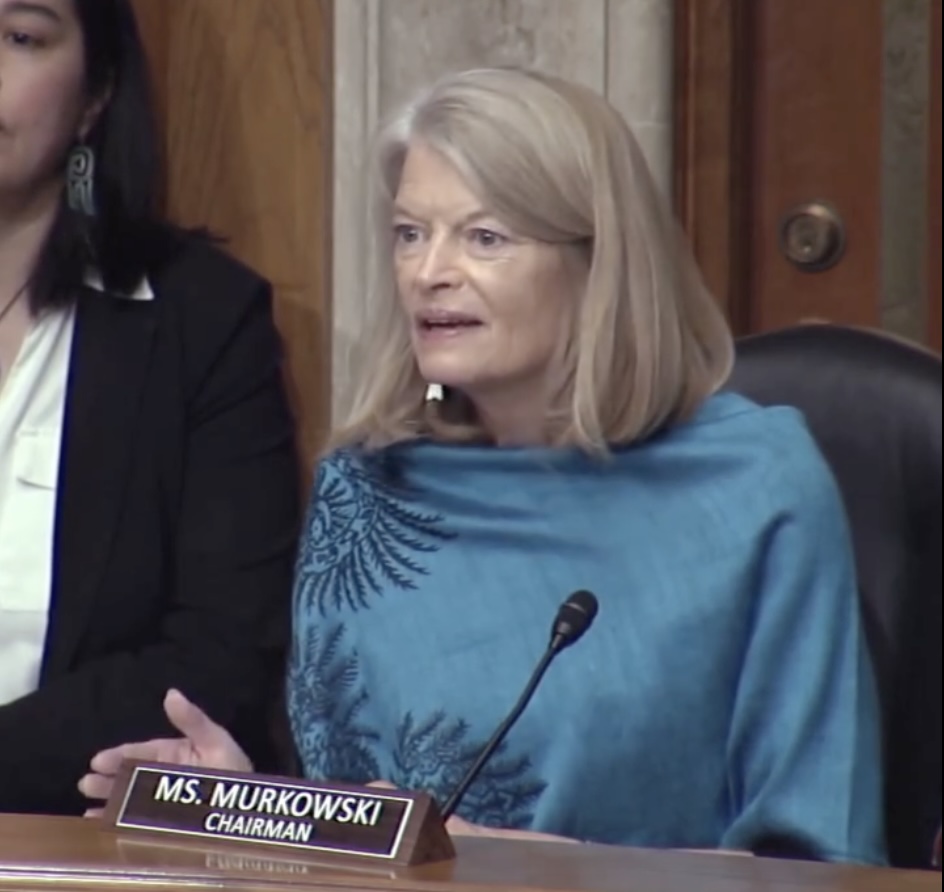
March 12, 2026 – Lisa Murkowski introduced legislation aimed at exempting public schools from a steep new federal visa fee that education leaders say could worsen Alaska’s long-standing teacher shortage, particularly in rural communities.
The bill would exempt K–12 public schools from a $100,000 fee imposed on each applicant for an H-1B visa under a proclamation issued last year by Donald Trump. Alaska school districts have increasingly relied on the program to recruit international teachers as domestic applicants have remained scarce for many positions across the state.
“As soon as this proclamation was released last year, I have been sounding the alarm with the administration about the importance of the H-1B visa program to Alaska’s school districts,” Murkowski said. “Our public school classrooms have been facing a staffing crisis for years, but teachers in Alaska on H-1B visas have been instrumental in bridging that shortage and serving our students with talent and care.”
The fee requirement stems from a Sept. 19, 2025 proclamation requiring H-1B visa applicants to accompany their petitions with a $100,000 payment in addition to existing fees and costs associated with the program. Murkowski warned soon after the policy was announced that the new cost could have severe consequences for Alaska’s schools.
On Oct. 8, 2025, she wrote to Kristi Noem, then Secretary of the U.S. Department of Homeland Security, urging the department to use its discretionary authority to exempt teachers from the increased fee. In the letter, Murkowski noted that many of Alaska’s rural school districts operate with small budgets and already face high costs due to the state’s geography and remote communities.
“A requirement to pay $100,000 per H-1B teacher would be impossible to meet—both for the districts and the individual teachers,” she wrote at the time.
Education leaders across Alaska say the issue is significant because many districts depend on international teachers to keep classrooms staffed.
According to the Alaska Council of School Administrators, 573 educators in Alaska, about 8.5% of the state’s teaching workforce, have work visas. More than half of Alaska’s school districts rely on international teachers, with some rural districts depending on them for 50% to nearly 80% of their teaching staff.
“International teachers are essential to keeping classrooms open across Alaska,” said Lisa Parady, executive director of the administrators’ association. School districts already spend between $6,000 and $12,000 per teacher to recruit and sponsor international educators through the visa process, she said.
“Adding a $100,000 federal visa fee has made it financially impossible for many districts to continue hiring the teachers their students depend on,” Parady said.
Superintendents from several districts said the fee could force schools to leave teaching positions unfilled.
Dr. Cyndy Mika, superintendent of the Kodiak Island Borough School District, said nearly 20% of the district’s teachers are on visas, while roughly 75% of teachers in Kodiak’s village schools are international hires.
“These educators are not replacing American teachers—we simply do not have applicants for these positions,” Mika said. “Without access to international educators, districts like Kodiak will struggle to fill classrooms and provide consistent learning environments for students.”
In the Bering Strait School District, Superintendent Tammy Dodd said the district employs 86 international teachers, representing about 40% of its certified staff.
“As many districts across the state of Alaska have experienced budget deficits, having to pay a $100,000 H-1B visa fee for each incoming international teacher is unrealistic,” Dodd said. She noted that restrictions on the J-1 visa program limit the ability of some rural districts to use that alternative pathway.
Madeline Aguillard, superintendent of the Kuspuk School District, said international educators are essential to keeping schools open in remote communities.
“In the Kuspuk School District, international teachers are not a supplement to our workforce. They are essential to keeping schools open,” Aguillard said.
Andrew Anderson, superintendent of the Lower Kuskokwim School District, said the visa fee adds another major barrier for districts already struggling to recruit teachers.
“The $100,000 H-1B visa fee is an additional and insurmountable barrier to Alaska’s critical need for qualified teachers who are essential to students’ healthy growth and learning,” Anderson said.
Murkowski said her legislation would provide a practical solution by allowing public schools to continue using the visa program to recruit teachers while protecting students from the effects of growing staffing shortages.
“This legislation offers a commonsense exemption that will ensure Alaska’s schoolchildren have access to more high-quality educators while keeping class sizes reasonable,” she said.
20 thoughts on “Murkowski introduces bill to exempt Alaska schools from $100K H-1B visa fee”
Pretty soon, we should be able to replace the ‘unhinged’ teachers with Optimus Robots. When this happens, hopefully soon, we can breathe a fresh breath of relief knowing we’ll be able to restore the integrity in education and produce highly educated // productive kids, preparing them for a very competitive future.
Because the Natives of the villages are butt lazy to not take the opportunity to work
They need the Filipinos when the locals are not wanting to work
Yeah, just what we need: More foreigners who can speak only broken and heavily accented English teaching Alaska students.
I doubt Lisa wrote anything!
Considering she hates everything Trump is doing she will be lucky if this passes. Maybe she should ask Nick if he can help her with that. He has done more for the people of Alaska than she has ever done. RINO that she is.
Maybe if they removed the Union imposed red tape credentialing barrier, they could find a lot more people willing to work for the pay already offered. I’m sure there are plenty of folks out there, that already have degrees, or work/ military experience who could be teaching . if they didn’t impose the mandatory time-serving in ” educational theory”before hiring
Perhaps if we offered people in college to become teachers via loans and require them to work to pay back that loan for so many years anywhere in an Alaska school, could help with the teacher shortage and by keeping our kids here in AK. Helps everyone.
W.
Yeah, but who else are going to find to teach the young Native kids to spell “Murkowski?” The adult Natives still botch her name.
Murkowski has developed the addiction process to a sophisticated method of need with the native corporations ,and in turn, they run to her for aching pockets and need more money or other needs. This addiction she fertilizes strips the natives and Indians of their self worth and puts them in harms way as we have repeatedly seen in their daily lives, families and communities and businesses they are in or have developed. Murkowski has them on the run to her office for their votes, donations and needs based calls. In practice and purpose, Sullivan does the same thing and so has previous congressional persons.
Just what we need. Non-US citizens teaching US civics and history. What can go wrong there? Oh, wait, they probably don’t teach these subjects in taxpayer funded public schools anymore. Never mind.
Perhaps Senator Murkowski can convince President Trump to ease up on the the H-1B visas. Oh wait. Her pathological TDS has gotten her to the point where she hates Trump far more than she cares about what Alaska needs. So Murkowski opposes the Save America Act because Trump supports it. Never mind it’s very good for America and Alaska. Lisa Murkowski has been a total waste of time for Alaska as a senator. Alaska can do far better.
Surely there’s a source that can tell us how many teacher in rural Alaska are from foreign countries. I’d like to know.
Thank you!
Here is what an internet search brought up. According to the search, there are approx. 2300 H1B visa holding teachers in the US, but there are according to the same search 5700 J1 visa holders in Alaska (which to my understanding are not subject to fees). As I understand this, the J1 visas are in essence non-immigrant visas for academic exchange programs, allowing foreign individuals to gain experience in an academic setting like teaching or research. The number of H1B visa holding teachers in Alaska was not specified, but it mentioned that many rural school districts rely on these to fill teaching positions.
So the next question then is where do all the UAF School of education graduates go?
Why can’t we consolidate school districts in unincorporated areas of this state, freeing up teachers, who are currently filling an administrative role and saving money in the long run?
Could we make the H1B teachers employees of the teachers union (similar to contract workers like traveling nurses), so they can be dispatched throughout the state and the state pays the union a set fee for service?
Why not explore remote learning to facilitate rural students participating in classes in larger schools in Fairbanks, Anchorage, the Valley or Juneau? If you can’t find teachers then this may be a workable alternative for some classes like math, English etc.
It would also be beneficial to know how much money we are actually talking about. I am always leery about carve-outs as they weaken the overall power of the law/rule and make it somewhat arbitrary(mostly decided by who has the better lobbying group)
Those who take care of the stranger over their own are beneath contempt.
Any Republican that votes for this mangey, idiot Murkowski needs to be put in API. There is a bed waiting for her/him with a straight jacket named “Murkie’s Puppet.”
Alaska has become one big reservation for the Natives. Lisa Murkowski has become both their proctor and their enabler. They embrace the White culture of high tech toys, while clinging to an exclusive culture of drum beating. Their addictions are many, but primarily it’s money and the assertion of land ownership that keeps them as greedy as they can be.
Pretty ingenious, you must admit.
.
Americans throw illegal aliens out the front door, Democrats sneak ’em in the back door.
.
No black market would ever sell top-quality bogus teachers’ credentials to bogus teachers?
.
No drug cartel, no hostile foreign state actor would ever infiltrate bogus teachers into Alaska for purposes which have nothing to do with education?
.
Bogus Bush Teachers, once imported, would never quit after a few days, return to civilization, and disappear into the thriving illegal-alien community …to vote, collect welfare, and shoot the occasional American?
,
Wouldn’t it be hilarious if the insularism popularly attributed to Bush communities turns out to be exactly what prevents the infestation of Somali enclaves, no-go zones, adhan in, say, Bethel or Fort Yukon?
.
Wouldn’t be surprised if Murkowski’s scam happens in some form. The NEA’s for it. The NEA sponsors Murkowski who, no surprise, is for it and against the SAVE Act which would make it difficult for Bogus Bush Teachers to vote.
Imposing a $100,000 fee for sponsoring an H-1B is obscene. When I hired an H-1B applicant in 2010 the sponsorship fee was only $1,000. Nobody should have to pay $100,000 to the government to hire someone. It is difficult enough to find someone who is qualified, adding an exorbitant and completely unnecessary fee does not help.
The qualifications necessary to become a teacher these days are far from the qualifications necessary to actually teach.
Remember in 2018, when (CAEP) revoked accreditation for UAA’s undergraduate
teacher licensure programs? Which left the students in a bad spot?
Alaska is woefully unable to even prepare secondary teachers. The bush communities need Alaskan teachers that understand Alaska culture, but we import ESL 3rd worlder’s to teach our kids. What a disaster.