

By SUZANNE DOWNING
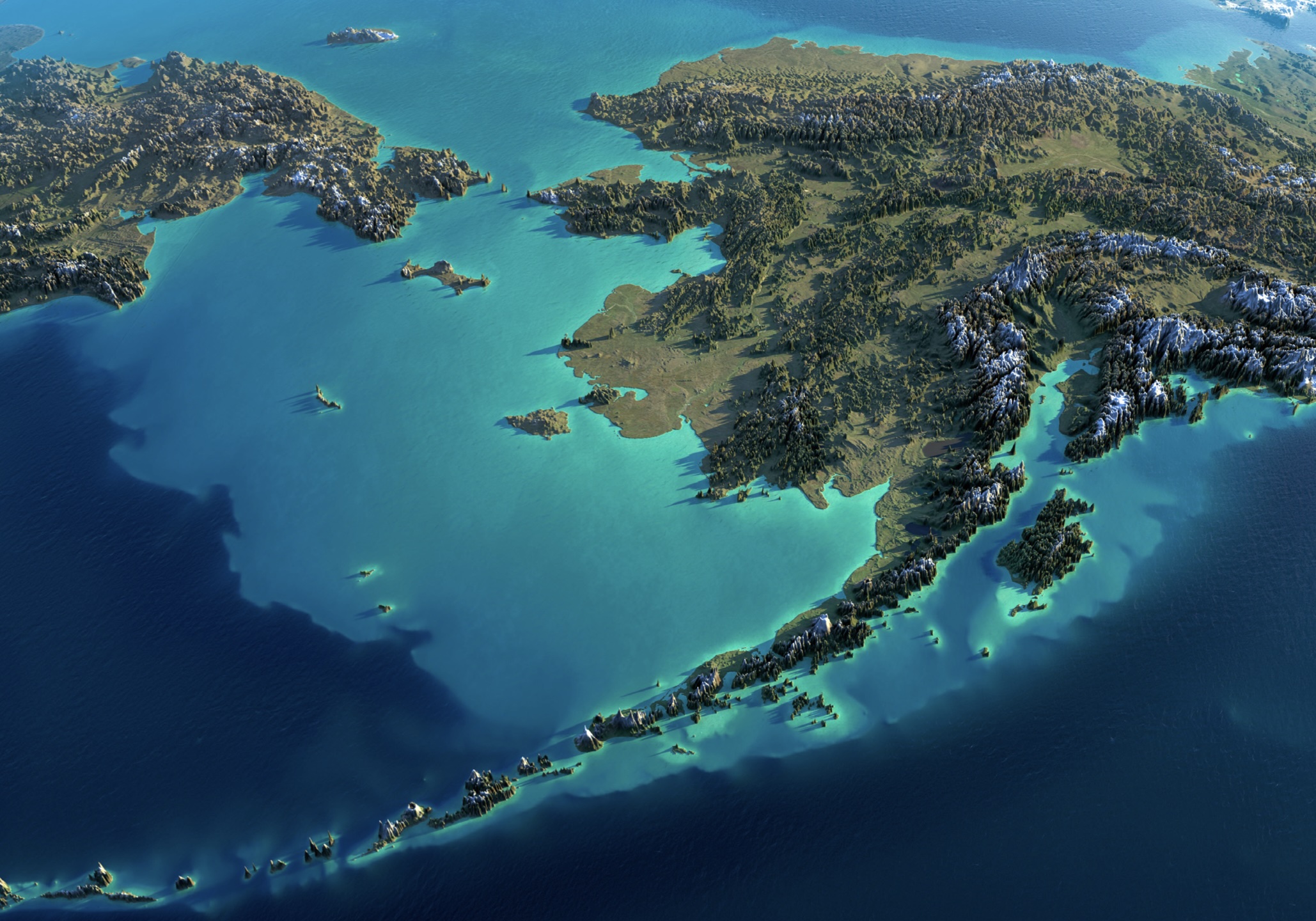
March 3, 2026 – As war risk ripples across the Middle East and tanker traffic through the Strait of Hormuz is currently disrupted, global LNG markets are tightening again, and Alaska’s gas export project suddenly looks less speculative and more strategic.
According to US Department of Energy data, American developers signed 40 million tons per annum of LNG under long-term sale and purchase agreements in 2025, equal to about 5.2 billion cubic feet per day. That’s the strongest contracting year since 2022. But since those contracts were inked, geopolitical realities have shifted dramatically.
Roughly 20% of the world’s LNG supply moves through the Strait of Hormuz, a narrow maritime chokepoint bordered by Iran and Oman. Any sustained blockage or security threat in that corridor immediately tightens global supply and drives Asian buyers to seek alternatives.
Alaska sits outside that risk entirely. Unlike Qatar and other Middle Eastern exporters, Alaska LNG cargoes have no similar chokepoints. Unlike Gulf Coast LNG, Alaska shipments to Asia also would not require passage through the Panama Canal, which has faced its own capacity constraints.
In times of global uncertainty, those factors carry premium value.
South Korea, Taiwan, and India, all heavily dependent on imported LNG, are now racing to secure stable, long-term supply. Energy security is an immediate and existential threat.
Alaska already has memoranda of understanding and preliminary commercial alignment with entities in South Korea and Taiwan. Those relationships take on new weight in a constrained market.
For countries like Taiwan in particular, which faces its own security pressures from China, supply diversification is critical. Stable US LNG from Alaska is fundamentally different from cargoes transiting contested waters.
The 2025 surge in sale and purchase agreements nationwide demonstrates that 20-year LNG contracts remain the industry standard. About 95 percent of volumes signed this year were long-term agreements, most indexed to Henry Hub pricing.
Four major Gulf Coast projects reached final investment decision in 2025, adding 7.2 Bcf/d of capacity expected online between 2029 and 2031:
-
Woodside Energy Louisiana LNG Phase 1
-
Venture Global LNG CP2 Phase 1
-
NextDecade Rio Grande Phase 2
-
Sempra Infrastructure Port Arthur Phase 2
But Gulf Coast projects still face longer shipping routes to Asia and potential Panama Canal constraints.
Alaska LNG, led by the Alaska Gasline Development Corporation and private developer Glenfarne, targets a similar in-service window. The difference now is geopolitical urgency. LNG buyers want reliability and the market is now dominated by having one-fifth of global LNG jeopardized by instability in a single narrow waterway.
Alaska’s value proposition rests on three pillars: Vast stranded North Slope gas reserves, proximity to North Asia, and regulatory, tax, and political stability.
The question is whether Alaska’s project can move decisively while that stability carries a premium.

2 thoughts on “Middle East conflict reshapes LNG calculus, as Alaska’s position strengthens”
It seems quite prudent to suspend (indefinitely) any-n-all National Preserve designations in AK907 and ‘open-up’ // ‘expedite’ resource development throughout our great state.
Keep the LNG for Alaska out of the equation and ask the public for input and suggestions as well as put the issue to all big development companies in the USA and the results would be much better. Results that may just bring talent and money into the development of a new gas line. The state has a lot to offer but no one is asking. The only noise is coming from deadbeat companies that shout they have a letter! When will the shenanigans ever end? How about Exxon? Shell USA? Marathon Petroleum? They are here and doing well but The dumbbell organization for the LNG in Alaska is afraid to ask them to sit down and talk a deal! The people of Alaska need to speak up!
There are two documented and paid for surveys for the gas line to Valdez and the cost is one third of the cost the jokers of the plan to Kenai. The third survey was to the Yukon border brought on when Palin was governor. Parnell killed that one. The necessary issues are security for shipping which is solved at Valdez and port of entry no problem without having to change the navigational tools for ships using our maritime law and congress had approved that years ago. The pipe is smaller than the oil pipe and the manageable areas is already secure and established with safety plans along the oil pipe corridor. One third the cost in comparison of what the destruction of the park access along with years of law suits with any entry of pipe or problems in the Cook Inlet won’t happen with the gas pipe going to Valdez. The companies and the bad money problems are nothing short of a serious disaster. The whole corridor along the gas line survey is prepped and more ready and easy access for the shorter time frame for construction. The materials to add to Valdez can be built and ready by the time the gas line is finished and ready for gas shipping. Valdez is a well protected port and ready with the security plans in place and a much, much better place to ship to the world with National Security issues taken care of today. To the gas line to Kenai I say NO and NO to entry into the popular fishing waters that should remain protected against such commercial activity. The legislators need to take a look at the serious issues being reviewed and the issues of another line in a much, much better protected place than proposed by bad companies with bad reputations of too many financial problems. Time to rethink and plan today and for the future in the short term so we can get our resource to market with all important elements of a plan coming to a better outcome for Alaska and the customers. To the Congressional persons, STOP promoting dead beat companies and lying about signed commitments. To the legislative body, look to do a better job of using and working for this important project.