


By THE ALASKA STORY
The US Supreme Court will hear oral arguments Monday, March 2, in a closely watched Second Amendment case that could determine whether millions of Americans who use marijuana may be barred from possessing firearms under federal law. Marijuana is essentially legal in 40 of 50 states for medical use and 24 states for recreational use, including Alaska.
At issue in United States v. Hemani is the constitutionality of 18 U.S.C. § 922(g)(3), a federal statute that makes it a felony for any person who is an “unlawful user of or addicted to any controlled substance” to possess a firearm.
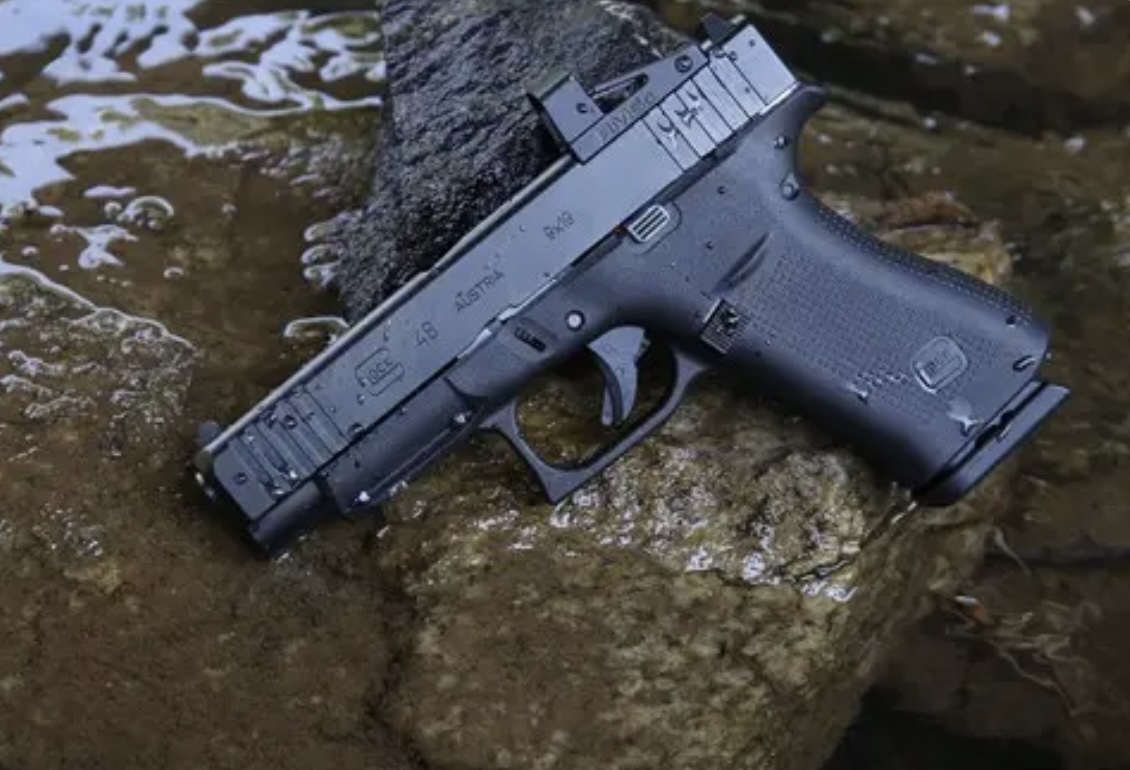
The defendant, Ali Danial Hemani of Texas, was charged in August 2022 after FBI agents executing a search warrant at his family’s home found a Glock 9mm pistol, approximately 60 grams of marijuana, and a small amount of cocaine. Hemani, who has acknowledged regular marijuana use, was prosecuted as an “unlawful user” under the statute.
The core question before the Court is whether the federal government may categorically prohibit individuals who use controlled substances, including marijuana, from possessing firearms, even if those firearms are kept secured at home for self-defense.
Hemani’s legal team, which includes the ACLU and other advocacy groups, is advancing two constitutional arguments.
First, they contend the statute is unconstitutionally vague because it does not define key terms such as “unlawful user.” They argue that the lack of clear standards invites arbitrary and discriminatory enforcement, particularly since marijuana laws vary widely across states.
Second, they argue that applying the statute to individuals like Hemani violates the Second Amendment right recognized in District of Columbia v. Heller, in which the Court affirmed an individual right to possess a firearm for lawful purposes such as self-defense in the home.
Under the government’s theory, Hemani’s attorneys argue, tens of millions of Americans who consume marijuana, even in states where it is legal under state law, could be stripped of their gun rights based solely on their status as users of a substance that remains illegal under federal law.
The Department of Justice maintains that Section 922(g)(3) is constitutional and consistent with historical firearm regulations.
In its most recent filing, the DOJ argued that as applied to Hemani, the statute is valid because he “concededly used marijuana, a Schedule I controlled substance, every other day while possessing a firearm.” The government contends that habitual drug use presents heightened safety risks and fits within a longstanding tradition of disarming individuals who may pose a danger.
The DOJ has drawn a distinction between habitual users and occasional users, arguing that the statute targets ongoing unlawful use rather than isolated experimentation.
However, the statute’s lack of a clear definition leaves questions. Does frequency of use alone determine dangerousness? Does the type of drug matter? And should courts require an individualized finding that a specific person poses a risk before depriving them of a constitutional right?
Lower courts have been divided on the issue. The US Court of Appeals for the Fifth Circuit, which handled Hemani’s case, has questioned whether the statute can be constitutionally applied in all circumstances. Other circuits have upheld the law, at least when applied to individuals whose drug use may pose a heightened danger.
The case arrives at a pivotal moment for the Court’s Second Amendment jurisprudence. Just days before arguments in Hemani, the justices are expected to release orders from a conference in which several other high-profile gun cases were considered, including Duncan v. Bonta and NAGR v. Lamont, both challenging state-level restrictions on magazines and so-called “assault weapons.”
While those cases focus on hardware restrictions, Hemani centers on status-based prohibitions, whether belonging to a particular category of person, such as a drug user, is sufficient to justify disarmament.
A ruling striking down 922(g)(3), either entirely, or as applied to marijuana users, could have national implications because marijuana remains illegal under federal law, even as a majority of states permit its medical or recreational use.
If the Court requires individualized judicial findings of dangerousness before firearms may be prohibited, it could reshape not only drug-related gun bans but other federal prohibitions as well.
A decision is note expected until later this year.


One thought on “United States v. Hemani puts gun ban for drug users before Supreme Court on Monday”
Trying to find every way to reduce the number of Americans from owning a personal gun