


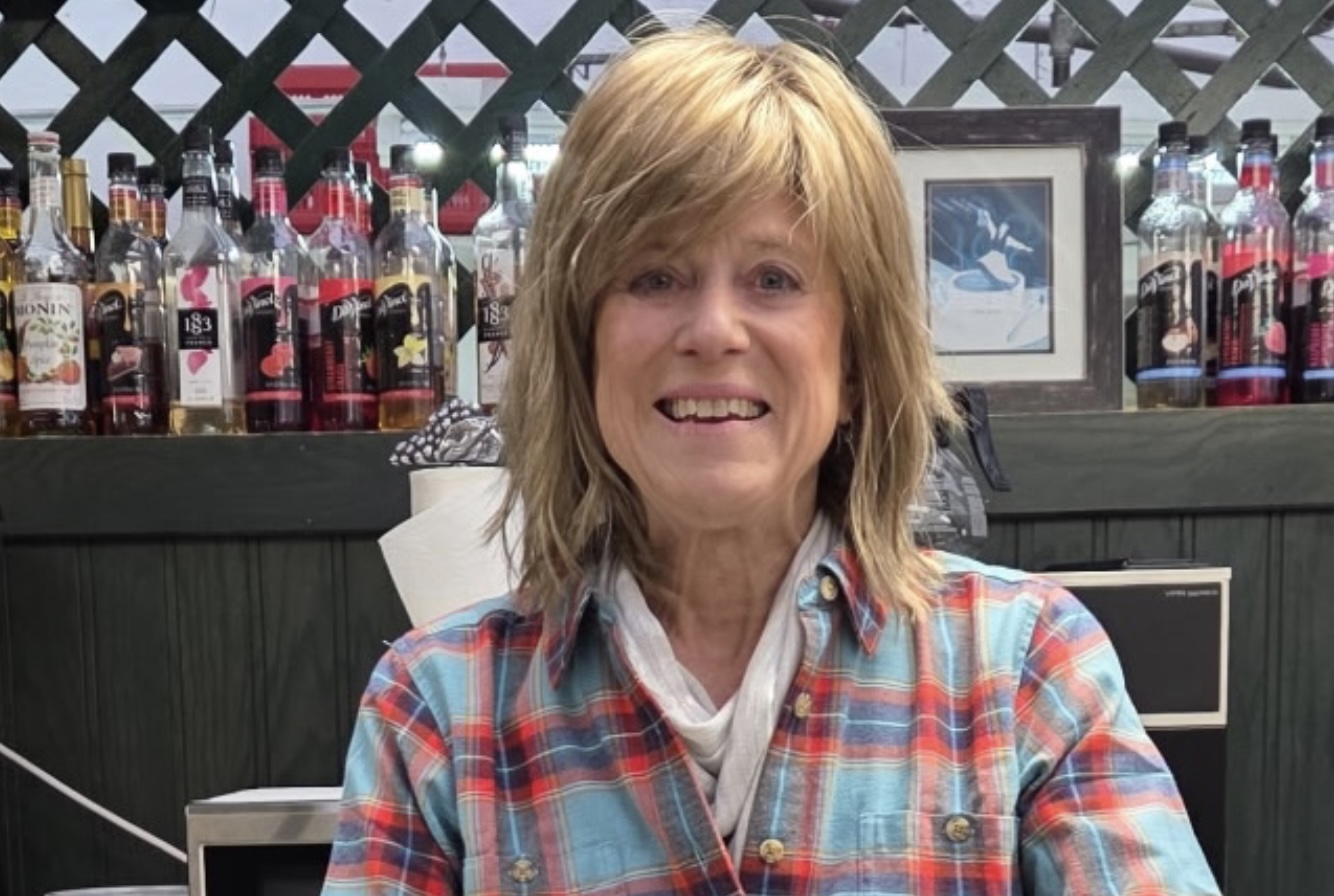
By SUZANNE DOWNING
When people talk about the history of Covid now, they usually jump straight to March 2020: the shutdowns, the empty roads, grounded flights, closed schools, and the surreal experience of watching much of the world suddenly declare itself “nonessential.” I remember traveling that month through airports that were practically vacant. You could bowl down Concourse C at SeaTac and not hit a soul.
But the truth is, the real turning point began a month earlier; February 2020 was the month the panic started building.
Earlier in January, the virus still felt like something happening far away, concentrated mostly in China. It was the kind of overseas crisis that Americans watch on the evening news with concern but also with distance. The story was serious, but it felt contained. It might burn itself out or be managed before it became a defining event of our lives.
And then February arrived, and everything started accelerating. The World Health Organization was shipping out diagnostic kits. The FDA issued emergency authorization for testing in the United States. Daily media briefings became the new normal, and the steady drumbeat of updates made it clear that this was not going to fade quietly into the background.
And on this day, Feb. 11, 2020, the disease had an official name: Covid-19. It is a footnote now, but at the time it was a signal that this virus was becoming permanent, institutional, and an existential threat.
Throughout that February was the unfolding of the Diamond Princess cruise ship infection and quarantine, which played out like a real-time warning of what the next year would look like for everyone. Hundreds of cases, passengers were confined to cabins, governments scrambled to respond. It was one of the first moments when people began to understand that modern life, including travel, commerce, routine, was not going to be insulated from disruption. Behavior of authoritarians went out of control.
By the end of February, community transmission was showing up in the United States. Iran and Italy reported deaths. Washington state announced the first American fatality on Feb. 29. Global cases climbed past 85,000, deaths rose and the virus was suddenly everywhere. Everyone was on edge.
What I remember most about February 2020 is not just the medical timeline. It’s how quickly the irrational fear spread into every corner of society, long before most people had even encountered the virus itself.
Fear was the real contagion, along with anxiety, rumor, toilet-paper panic buying, and an an emotional stampede driven by not knowing what was coming next. Every institution, from government agencies to private companies, began reacting in ways that were often more about liability, risk management, and control than about clarity.
I saw that firsthand in my own small corner of the media world.
I was publishing my regular newsletter using the Mailchimp platform, and one Friday in February, the Mailchimp algorithm abruptly put a hold on my newsletter because the company wanted to review what I had written about Covid before they would allow it to go out to my list.
Think about that for a moment: a private tech company deciding that my Covid content, my interpretation of events, needed to be screened before my readers could receive it.
That was the very day I left Mailchimp.
I moved the newsletter immediately over to Constant Contact, because I wasn’t about to have a corporate gatekeeper “reviewing” my writing.
Eventually I happily landed at Substack for the newsletter, but that moment has always stayed with me as a marker of how quickly February 2020 became a month of panic, not only about the virus itself, but about information, opinion control, and who was allowed to speak freely without being filtered.
Looking back, February was the runway and March was the crash landing.
I made plans in mid-February to head to Guadalajara to see my father for what I thought might be the last time. And it was. I spent two weeks with him in early March. He died six weeks later — not of Covid, but of old age. And I was barely able to slip in and out of Mexico before the borders tightened and the whole world seemed to shut down.
The strange thing is, we know so much more now than we did then. We have years of data, years of studies, years of hindsight about what was true and what was complete baloney. And we know much more about ourselves as gullible human beings, and what policies caused more damage than the virus itself.
But in February 2020, we didn’t have that. We had uncertainty and hysteria, the most fertile ground for the epidemic of fear. Many Americans fell prey to something that spread almost as fast as the virus itself: Propaganda.
Suzanne Downing is the founder and editor of The Alaska Story and is a longtime Alaskan.
5 thoughts on “February 2020: The month the Covid panic set in”
It was not a pandemic, it was a mass psychosis. Which, for some, continues to this very day.
.
Whenever I see somebody still uselessly wearing one of those STUPID blue face masks in public, I am never sure whether to feel more pity, or more contempt.
Apparently you did not have close friends that died from it. I did. It was real. And someday there will be another pandemic that will be far, far worse. So don’t criticize people for being scared, especially in the early days, where little was known or understood.
And when it comes to pity vs. contempt, try understanding since you have no idea whatsoever of others’ actual state of health or medical conditions.
I do in fact know directly of at least four people, three of them here in Alaska, who died as a result of the Wuhan Virus, or due to complications from it anyway. All elderly, and all with multiple underlying conditions. I also have known multiple people who similarly died as a result of complications from the flu, or from pneumonia. The Wuhan Virus was just a bad flu season, nothing more. Well, very much something more — an exercise in totalitarian population control, and a test of who easily the crowd can be cowed to give up their freedom for an illusory “safety”.
.
Still getting your clot shot boosters too, Hans? I sincerely hope so.
Thanks for reminiscing. I quiz my kids on the most globally influential event in their lifetimes. Then correct them that it was the reponse to covid, not covid.
I was paying attention when Rogers Park Elementary shut down in November 2019 due to the contagious illness that had reportedly affected more than 50% of the school. Then i saw the Event 201 Summary video published in October 2019. But i also saw the hype of a cruise ship not allowed to dock in mid Feb 2020. And remembered how fast really contagious things spread on a cruise ship, and noted only a few on the ship had the flu, err, covid. Then i was really skeptical of the hype.
I am glad the author got to see her father. I know a few who were denied that.
Suzanne provided the forum through which people had a voice, and fact could be separated from fiction.
.
We wouldn’t have done well without it.
.
Thank you, Suzanne.