




By REP. KEVIN MCCABE
Any organization under pressure, especially a team facing difficult elections, veto override fights, internal fractures, or the constant demand to project unity, eventually confronts the same temptation. Leaders can choose short term calm over long term clarity. But when anxiety rises, the easiest response is almost always accommodation. Decisions get rushed. Dissent is managed rather than engaged. Positions are softened in the name of pragmatism. Communication becomes selective. Self-preservation replaces principled leadership.
This is not a new phenomenon. Edwin Friedman described it plainly as a failure of nerve. Instead of staying steady and clearly defining direction, leaders begin absorbing the reactivity of the group. Fear of conflict begins to shape outcomes. Over time, trust erodes, resolve weakens, and the organization drifts toward regression rather than growth.
What looks like peace is often just avoidance, and avoidance always collects interest.
A related failure occurs when empathy is elevated above discernment. Empathy is a virtue, but when it becomes the primary decision-making lens, when emotional harmony, district specific electability, or avoidance of friction are placed above shared principle, it becomes a form of pressure. Boundaries soften. Core convictions become negotiable. Conservatives are encouraged to moderate not because their ideas are wrong, but because those ideas are inconvenient. Joe Rigney has described this as the sin of empathy, when compassion untethered from truth enables drift rather than maturity.
Structurally, anxious leadership produces predictable outcomes. Engagement becomes uneven. Strategy, communication, and real decision-making concentrate within a smaller circle, usually those most aligned with a centrist or managerial approach. Others receive limited information, delayed explanations, or silence. What emerges is a two-tier system, one group included and directed, the other sidelined. That arrangement is not just unfair; it is unsustainable. Those kept in the dark cannot contribute effectively, and those carrying the load cannot do so indefinitely.
Power rarely consolidates loudly in these environments. It accumulates quietly through repetition, omission, and incremental concession. Phrases like trust the process, everyone is moving forward or now is not the time become familiar. Silence is treated as agreement. Dissent is reframed as disruption. When unity is redefined as conformity rather than alignment around principle, division already exists, whether acknowledged or not.
The signs are easy to recognize. Decisions are made in smaller settings. Narratives advance through repetition rather than debate. Tensions are smoothed over instead of resolved. Communication patterns consistently leave certain voices on the periphery. These are not accidents. They are symptoms.
Alaska conservatives deserve better leadership than this. Effective leadership in anxious moments is marked by steadiness, clear definition, inclusive communication, tolerance for discomfort, and commitment to principle over popularity. It engages the full team, not a favored segment, because strength comes from shared purpose, not selective inclusion.
Scripture captures this model clearly. “The Lord is my shepherd; I shall not want. Yea, though I walk through the valley of the shadow of death, I will fear no evil; for You are with me.” This is not passive reassurance. It is confidence, direction, and resolve in difficult terrain. It is leadership that does not rely on fear, coercion, or partiality.
Here is a hard truth I have come to accept. Some of us will always be misunderstood in moments like this. That is because we were not built to chase comfort. We are driven to build something better, to lay stronger foundations, to hold the line even when it is inconvenient or lonely. We do not bend to fit the room. People who prioritize immediate ease will never fully understand that mindset, and that is fine.
Once you accept that reality, the temptation to conform disappears. I was not built for anxious accommodation or selective circles. I was not built to follow the path of least resistance. I was built to challenge drift, to demand better, and to stand firm when others would rather smooth things over, or continue to follow a person or failed goal without question.
The moment everyone is comfortable with what I am saying is the moment I need to ask whether I have drifted too far from principle.
Maybe the answer is to stop fighting so hard to be understood in ways that dilute purpose. Stop trying to remain exactly where anxiety wants us. We were made for something else, steady, principled, courageous leadership that engages everyone honestly and moves the team forward together.
The path forward is not complicated. Lead with conviction. Support a principled, Alaskan vision. Or step aside if those roles cannot be fulfilled. Lead, follow, or get out of the way. What we cannot sustain is favoritism, selective engagement, or a slow slide toward moderation disguised as pragmatism. Either communicate transparently with the full team or acknowledge that the current approach limits our collective effectiveness.
We have an opportunity to model something better, leadership that is steady, principled, courageous, and united, not by managing anxiety or playing favorites, but by anchoring in shared values and engaging every member honestly.
The leadership wilderness is unforgiving. Without nerve and clarity, groups fragment. With them, we move forward together, strong, free, unbowed, and aligned by principle.
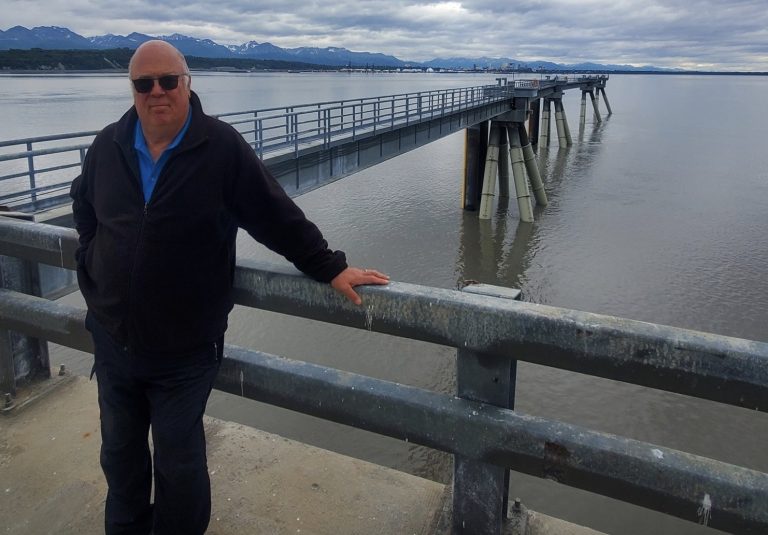
Rep. Kevin McCabe is an Alaska legislator representing District 30, Big Lake. He has lived in Alaska for 43 years, served in the US Coast Guard, as a Boeing 747 captain, and was a volunteer firefighter. Follow him on Substack at this link.



5 thoughts on “Rep. Kevin McCabe: Lead, follow, or get out of the way”
That was a very loquacious way of saying “Kelly Merrick”.
This.
Well said. Seems it should be required reading for all of our �elected as conservative/republican leadership. It takes courage and conviction to stand firm. It takes character to hold to conviction and moral clarity, backed by the courage and integrity, to uphold our constitution. Then constituents need to pay attention, and vote, for leaders who evidence courage, moral conviction & clarity, and integrity, instead of voting for entitlement and more government dependency promises.
In other, fewer, words, Co-Governor & Finance Minister Giessel is not our True Leader?
.
Anyone tell her that?
.
If The Giessel doesn’t possess all these grand leadership attributes, including the unmentioned one about keeping your opponents’ cojones in your private lock box, who does?
.
Your frustration’s understandable, Kevin. Venting’s understandable too, God knows plenty of it comes from our end.
.
Difference is you took the job knowing the toxic muck awaiting you.
.
Quoting God’s scripture is good, helps remind who you are. Quoting Art Chance’s “Red on Blue, Establishing a Republican Governance,” is good too, helps remind you’re at least near the target, if not right over it.
.
Lectures don’t help. With the possible exception of yourself and precious few others, who on Alaska’s lobbyist-legislator team stands out as a leader worth emulating?
.
Want to lead, why not persuade the FBI to have another look at the Corrupt Bastards Club redux, why not bring in a squad of citizen journalists to get the dirt on your sybaritic colleagues, help run ’em off?
.
You got it to do, Kevin. Otherwise, how can the legislature ever work if decent folk are forever forced to compromise with indecent folk to get anything done?
.
There’s your leadership challenge, what we elected you to do, no?
McCabe is not fit to offer an honest lecture on “principled leadership.” Was it his principles that made him try and hide campaign expenses on his APOC filings in two different campaigns? Was it his principles that caused him to be a property-tax cheat for a decade? Was it his principles that caused him to try and force innocent Alaskans to pay his legal expenses recently?
Speaking of principles, Grammarly’s online AI detector says a lot of the text of this piece “appears to be AI-generated”. Seems to be a common denominator with some of his Substack essays, too. I hope nobody has been foolish enough to pay for them.