


By SUZANNE DOWNING
Jan. 23, 2026
Alaska Gov. Mike Dunleavy used a major section of his State of the State address Thursday night to highlight what he described as an unprecedented era of natural disasters in Alaska, saying the state has faced a historic volume of emergencies during his time in office and praising the response efforts of state, federal, and local agencies.
Dunleavy opened the section by recalling that the “excitement” of his governorship began even before he took office, with what he described as the second-largest recorded earthquake in Southcentral Alaska’s history. From there, he said, disasters became a near-constant reality.
Since taking office, Alaska has experienced 85 state and federal disaster declarations, according to the governor, an average of roughly one per month. Those events have included wildfires, landslides, windstorms, typhoons, flooding, record-breaking snowstorms, and the Covid-19 pandemic.
“Tragically, we’ve lost some of our fellow Alaskans to these disasters,” Dunleavy said, while emphasizing what he described as the consistent heroism of first responders, National Guard members, State Defense Forces, federal partners, health care workers, state agencies, nonprofit organizations, private companies, and citizens. He credited those groups with repeatedly “answering the call of duty” and saving lives across the state.
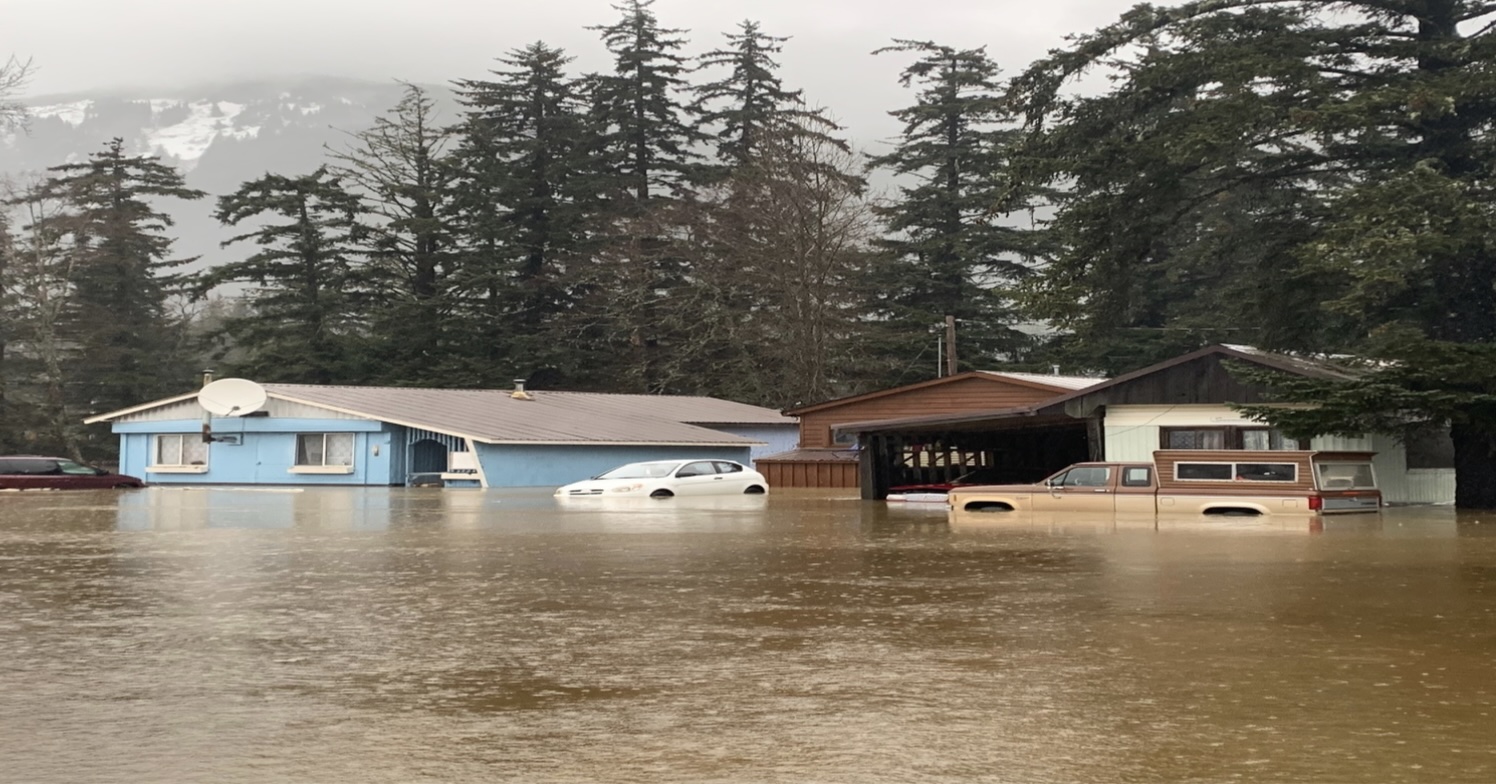
A centerpiece of his remarks focused on the state’s response to the remnants of Typhoon Halong, which struck western Alaska last fall. The storm surge swept homes and vehicles away in the communities of Kipnuk and Kwig in the Kuskokwim Delta.
Dunleavy said the Alaska National Guard, the Coast Guard, and the State Defense Forces launched an immediate response that resulted in the rescue of 51 Alaskans, the evacuation of approximately 1,000 residents from affected communities, and the transport of millions of pounds of relief supplies into the region.
He also highlighted the role of the Department of Transportation and Public Facilities, which conducted rapid damage assessments in 35 communities in just three days using drones, GoPros, and remote Starlink connections. The department flew more than 300 missions to support rescue operations, supply deliveries, and infrastructure recovery.
Dunleavy said disaster responders from outside Alaska told him the state’s response operations were “the best disaster response they’d seen anywhere in the country,” despite Alaska’s vast geography and extreme weather conditions.
“We can’t control natural disasters,” he said. “But we can control how we respond.”
Dunleavy says Anchorage violent crime rate is higher than Los Angeles, New York City, and Chicago
During the address, Dunleavy publicly recognized senior leaders involved in disaster response efforts, including Major General Torrence Saxe, Coast Guard Capt. Christopher Culpepper, Homeland Security and Emergency Management Director Bryan Fisher, and Transportation Commissioner Ryan Anderson, thanking them and the personnel under their command for “running toward danger in service to others.”
He closed the section by drawing a contrast between natural disasters and what he described as a “manmade disaster,” referring to policies of the Biden administration. Dunleavy said federal actions had threatened Alaska’s ability to sustain itself through resource development, citing what he described as at least 74 executive actions affecting the state during that administration.
The disaster-focused portion of the speech framed resilience, emergency response capacity, and interagency coordination as defining features of Alaska’s recent history, with Dunleavy portraying the state’s response system as a model built under sustained pressure from nearly continuous large-scale emergencies.
Dunleavy closes out his final State of the State speech with fiscal plan push, Alaska LNG momentum
5 thoughts on “Eighty-five disaster declarations, seven years: Dunleavy highlights Alaska’s era of constant crisis”
There are more to come.
Who knows the next major disaster such as a 5-min 9.0 earthquake hitting Anchorage-Kenai-Soldotna-Wasilla-Palmer may hit during the next Governor’s administration hitting the economic heart of the state and the most populous area.
Natural and economic disasters is why a state does not want to be a Government dependent people
Just as the cold spell this winter fi Anchorage and Southcentral tested how well you took care of your vehicle maintenance because all the cars with poor maintainance history were breaking down or not starting. The natural and economic disasters tests our foundation and our independence and resilience what we are anchored on.
It is shocking how many Alaskans love the guvment money.
Easy money always leads to big problems.
I’ve been reporting on this stuff long before Dunleavy reported on it. Why am I not getting the credit? I’m the one who tips off Dunleavy of the daily news before it actually happens. I use my great sorcery skills and Tarot cards. In fact, I see a great booze shipment coming to my front door soon. Is Dunleavy reading this? I hope so. I don’t want to be the next disaster.
Over-self-served again, Dermutt? Years and years of abuse has caused the brain to turn sludgy. But your nastiness carries on. Such a pathetic old man.
Poor Derm. Another complete alcoholic meltdown. His nephew was right.