


By ZACK GOTTSHALL
For more than a decade, Anchorage has pursued a homelessness strategy centered on a “homes-first” approach, closely mirroring the national Housing First model. The premise has been simple: Provide housing without prerequisites, offer voluntary services, and stability will follow.
That premise has now been tested extensively, and it has failed.
Since roughly 2014, the Anchorage Assembly and its partners have directed well over $120 million toward homelessness response efforts, including emergency shelter operations, permanent supportive housing, service contracts, and related infrastructure. Despite this extraordinary level of public spending over more than a decade, the city has not achieved meaningful reductions in chronic homelessness. At some point, continued investment without results ceases to be persistence and becomes negligence.
The evidence of failure has been visible for years, yet the strategy remained largely unchanged—at significant and unnecessary cost to taxpayers.
Unsheltered encampments remain widespread. Emergency shelters are consistently over capacity. Public safety, sanitation, and emergency response costs continue to rise. Most concerning, the same individuals cycle repeatedly through shelters, hospitals, jails, and housing placements without achieving durable stability.
The consequences of this failure are immediate, visible, and measurable.
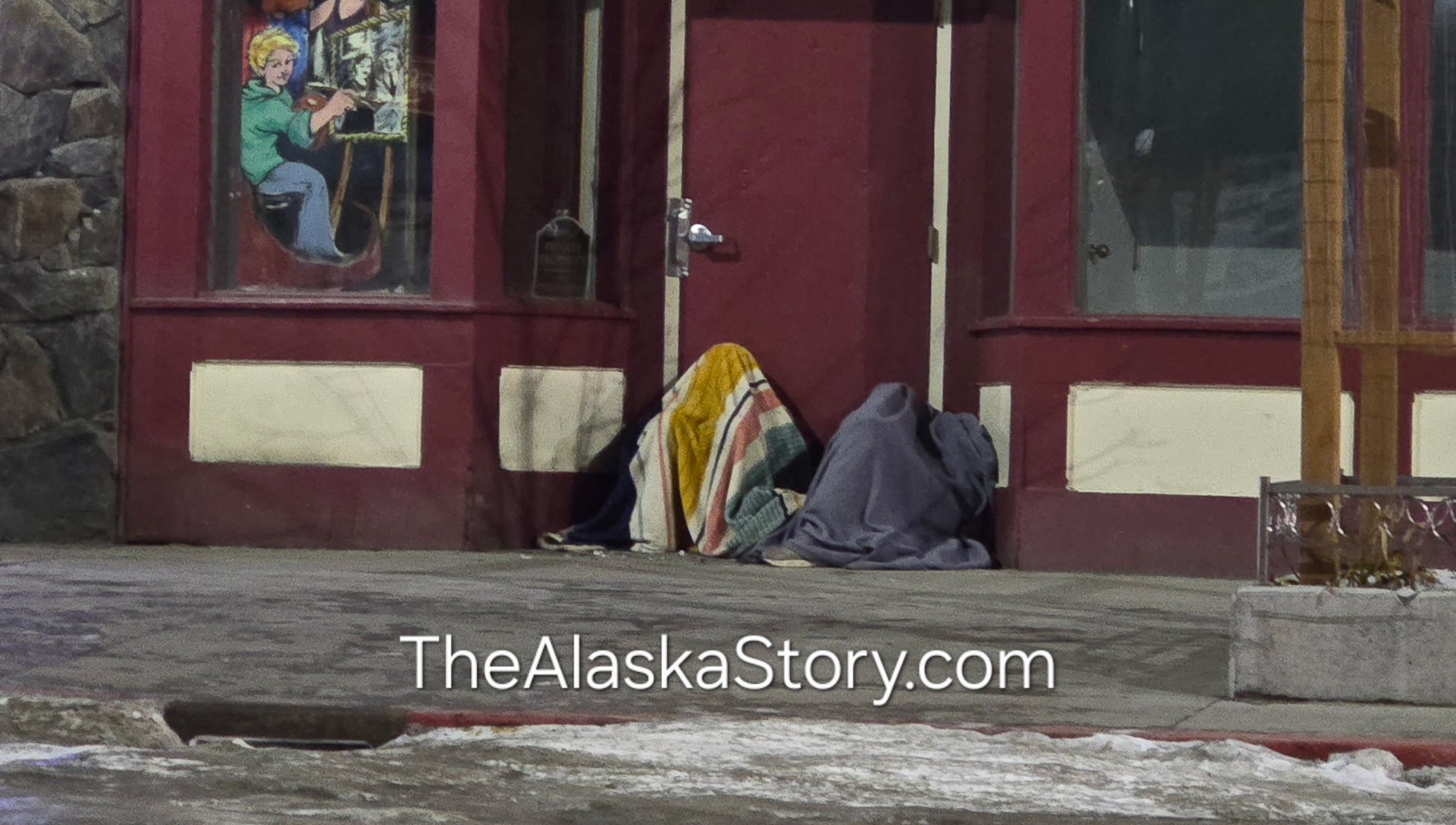
Even as the city debates long-term strategies, existing housing resources sit unused. The micro-unit transitional housing constructed for immediate deployment has remained empty because the Municipality continues to argue over insurance and liability requirements with an overpaid service provider. While bureaucratic disputes drag on, beds remain vacant and people remain outdoors in sub-zero temperatures. And it’s now nearing the end of January.
This winter alone, Anchorage has lost more than 50 people to cold-weather exposure. Many of them were preventable deaths occurring in a city that has already spent extraordinary sums on homelessness response. At this point, the problem Anchorage faces is no longer a lack of funding or professional services. It is the strategy that has failed.
Anchorage’s experience demonstrates the limits of a government-centered response. Housing is necessary, but insufficient for people experiencing long-term or chronic homelessness. What housing alone does not restore is what many have lost over years on the streets: family, community, trust, identity, and belonging. A housing unit can provide shelter, but it cannot rebuild a life fractured by prolonged isolation. Government systems and professional services are designed to administer programs—not to replace family, restore community, or walk alongside people through long-term recovery.
For this reason, chronic homelessness is not primarily a technical problem; it is a relational one. Yet Anchorage’s response has remained overwhelmingly bureaucratic and service-driven, even as outcomes stagnated.
At the same time, restrictive zoning, burdensome permitting, and rigid ordinances have made it unnecessarily difficult for churches to step forward. Faith communities with land, volunteers, and long-term commitment are often delayed or blocked by regulatory barriers, leaving the institutions best suited to address the relational roots of chronic homelessness constrained by the very systems claiming to solve it.
If Anchorage wants different results, it must pursue a different approach—one that treats housing as the foundation, not the finish line. A growing body of national research and real-world experience points toward a community-first model for addressing chronic homelessness. This approach pairs permanent housing with intentional community structures that restore belonging, accountability, and purpose—factors largely absent from housing-only strategies.
Homes of Hope is a locally driven effort being developed around this community-first model, with the goal of launching its first community in the fall of 2026. Rather than dispersing individuals into isolated units or cycling them through programs, the model envisions small, permanent residential communities located on church property, where long-term presence, shared values, and stewardship provide stability.
The proposed model emphasizes relational support alongside professional services, drawing on volunteers, church staff members, healthcare professionals, and others willing to walk alongside residents over time. Meaningful work and contribution are treated as central, reinforcing dignity and long-term stability.
Homes of Hope is not presented as a quick fix, but as a deliberate shift toward solutions that address the full reality of chronic homelessness—housing, community, and belonging together.
The Church is uniquely positioned to address chronic homelessness because it operates in ways government systems cannot.
Faith communities are relational by design. They are rooted in neighborhoods over generations, built on shared values, moral accountability, and long-term presence. They mobilize volunteers motivated by commitment rather than contracts, and they remain engaged long after programs end. Unlike institutional systems, churches do not cycle people through services; they walk alongside them.
Chronic homelessness will not be solved by additional contracts, reporting requirements, or funding streams alone. It will be addressed when people are restored to community, given a stable place to belong, and surrounded by relationships that endure beyond formal interventions.
Anchorage has demonstrated a willingness to spend significant public resources. What it has not yet done is align its strategy with the relational realities of chronic homelessness. Until barriers to church-led solutions are reduced, and until community is treated as essential rather than incidental, the city is likely to continue investing heavily while achieving little.
The evidence of failure is clear. The path forward is equally clear. The remaining question is whether Anchorage is willing to change course.
Zack Gottshall is a retired U.S. Army Intelligence Officer, former Vice Chairman of the Alaska Republican Party, a Commissioner on the Alaska State Commission for Human Rights, and a small business owner in Anchorage, Alaska.

14 thoughts on “Zack Gottshall: Anchorage’s homes-first strategy has failed. The cost is seen in lives and taxpayer dollars”
If our esteemed elected leadership haven’t been able to solve this homelessness issue, why not exercise a strong dose of “empathy” and send these individuals on a one-way ticket to warmer winter climes, where they have a fighting chance at survival!?!? Instead, and shamelessly, this “draconian” Homelessness Industrial Cartel continues to fleece Anchorage Taxpayers while never making any meaningful measure of progress, just like the Somalia Pirates in MN.
Au Contraire!
There -are- Meaningful Measures of Progress.
As noted, the Progress is well over $120 million in Someone Else’s Pocket.
The homeless industrial complex is the biggest growth industry.
Amen!
You’re aiming at the Principal of Subsidiarity, Mr. Gottshall, and I agree with you 100%!
Downtown Hope Center and Anchorage Gospel Rescue Mission are two Christ-centered groups that do not rely on state or federal funds to operate and have inspiring success getting people out of the cycle of addiction and homelessness and onto a path of stability and clean living. They both have fantastic track records of guiding transformation in people’s lives. We need more outreaches like them!
BTW, NYC Communist In Chief Mamdani is about to launch the Failure that is Housing First.
https://nypost.com/2026/01/21/opinion/mayor-mamdanis-proposals-will-fail-to-address-the-homeless-crisis-going-on-across-nyc/
And after these people can get into a future tiny home. How do we keep them from becoming Permanent Residents of it until the day they die. We see the Looong wait list for public Alaska Housing because low income singles and families have become comfortable on a housing option that was never meant to raise generations in a State apartment. While the tiny homes are designed as a step up. There will be a line of homeless people waiting to get in. The current residents need to Quickly learn how to budget, live with a roommate, and pay rent so the tiny house that gave them a new life can become another’s new life.
You do not seem to understand the meaning of PERMANENT Supportive Housing.
That means that a Democrat buys a house/houses or apartment complex, rents it to their friends on the Assembly, and the addicts, mentally ill, and grifters are PERMANENTLY housed, and the Democrat gets the building(s) rented out until they are paid off. Rinse, repeat. How do you think Begich got his renovated hotel paid for?
At the same time they own the companies that get paid to provide ‘services’ to and for the homeless, without being responsible for any actual change in addiction, mental illness, or ability or willingness to re join society as functioning adults.
PERMANENTLY. Your money. Forever.
Much more than 130 million since 2013. Not sure where you got your numbers but they spent more than that in the 2 years I worked at the city a couple years ago. I believe it is now closer to 300 million.
AT least some of the housing should be sobriety housing as a reward for those who really want to change their lives. Putting them all together in wet housing is the worst place to be for someone wanting to stop drinking.
I still wonder if there has been even one person who has gotten sober from the ‘housing first’ model.
Something added more to the author about Christians needing money and programs to be successful. They don’t. If planA is getting resistance from government impending a process of a plan. Then find another planB that gets the Word to the people they want to reach.
Because I know there are hundreds of men walking in and out of the Gospel Rescue Mission who are not being discipled in God’s Word, taught how to apply it. And how read it and memorize. I know the staff are not encouraging the men to be getting into the Word. How could they when I know for a fact I have donated Bibles to their office but a couple days later to a week later found the very same bibles redonated at East Value Village? Yes I disappointingly found them. Now I give the gospel mission nothing. Whatever I have I give to the hobos themselves. Also the men on the streets they tell me the Gospel Mission doesn’t put much energy into having bible studies for them.
So if churches cant get their housing modules approved then go directly to the shelters and hold multiple bible studies to let God equip the men with his knowledge and wisdom to get out of the situation they are living in without government intervention because of it is slow.
Where there is a bible life changes are waiting to be made in whoever is seeking a new life.
Theee men on the streets they won’t listen to a woman teach them. They are waiting for my brothers n Christ to teach them.
All I can do is pray that either these lost men of the streets ask they get taught God’s Word by the Holy Spirit to interpret God’s Word for understanding or more Anchorage men attending churches or not for whatever reason they are listening to sermons on internet, podcasts, radio, reading the Bible, tv that they get out and go to the Gospel Mission to group lead a bible study. There should be a bible study with a new bible study starting Every hour to 30minutes seven days a week at the Mission.
To be honest that Anchorage Mission needs new leadership that is more God-Centered where they don’t re donate the very resource that the men need more than provisions
Preaching to the choir doesn’t help, Zack. Objective, analytical insight, done by you, would have helped.
.
Say what? Don’t you think productive residents stuck with the “homes-first strategy” bill already know it failed, was meant to fail from the beginning because bums and illegal aliens can’t be forced to live in tiny houses if they don’t want to live in tiny houses and, more importantly, serious money changes hands while the program’s kept in failure mode?
.
No? Imagine the homeless problem’s solved, gone, not there …what happens to the orderly flow of that $120M you mentioned if there’s no reason for it to flow anymore because the problem went away?
.
So, how does stirring in another nonprofit fix the problem while those who created the problem are rewarded with the $120M prize for sustaining the problem?
.
Church is “uniquely positioned to address chronic homelessness because it operates in ways government systems cannot …but government Covid Cops can shut down Church anytime government wants? Government Covid Cops can shut down tiny houses on church property too? No answers there, either.
.
What does “Anchorage” mean here: “If Anchorage wants different results, it must pursue a different approach.”?
.
What’s this, a subtle hint that “Anchorage” taxpayers better fork over something to somebody for a “model which envisions (but may not quite prove -our words) small, permanent residential communities located on church property, where long-term presence, shared values, and stewardship provide stability.”?
.
In other words this scheme’s all about leaning on taxpayers to pay for churches getting into the government subsidized real estate and landlord industry while being exempt from local real-estate taxes, because church attendance, and more importantly, collections are down, especially post-Covid?
.
This scheme couldn’t be about getting a piece of the “well over $120 million” action?
.
What if IRS decides churches getting in the real estate/landlord industry aren’t tax-exempt anymore, who picks up their tax tab?
.
Speaking of stability, did you or your non-profit get the latest 411 on Anchorage property taxes? More property taxes for homeowners who apparently should be giving more money to your nonprofit which, remind again, pays how much in property taxes?
.
That’s “small, permanent residential communities located on church property” stuffed in the church parking lot whether or not neighbors want them?
.
And the muscular men needed to haul the giant collection plate the Church must use to hold all the money congregants offer to pay for utilities and upkeep on your “communities located on church property”, where do you find them?
.
What happens if money dries up and the bums and illegal aliens leave or get tossed in jail or deported? Somebody else get their beds? Who fumigates these “communities” so whatever the bums and illegal aliens drag in with them doesn’t infest or infect the neighbors? Church’ll be liable for harboring perverts, stalkers, murderers, and dopers who find their way into your “communities”?
.
Saving best for last, Zack you do pledge your life, fortune, and sacred honor that these communities, and their physical addresses, will never, ever be used as private-property havens for fradulent Census counts, fraudulent voter registrations, prostitution, crimes against women and children, ballot harvesting, gambling, harboring illegal aliens, strong-arm robbers, chronic drunks, liquor sales, human trafficking, welfare fraud, Medicare fraud, Medicaid fraud, or drug trafficking?
.
If your answer’s not a resounding yes, kindly remind again why productive law-abiding taxpayers should tolerate this shite anywhere within a hundred miles of their homes and families?
.
This is what we meant by objective, analytical insight …glaring by its absence in your essay.
.
One can understand GOP Inc. pushing this to attract voters, but a U.S. Army Intelligence Officer pushing it on fellow Americans?
.
Bad optics, Zack.