


By SUZANNE DOWNING
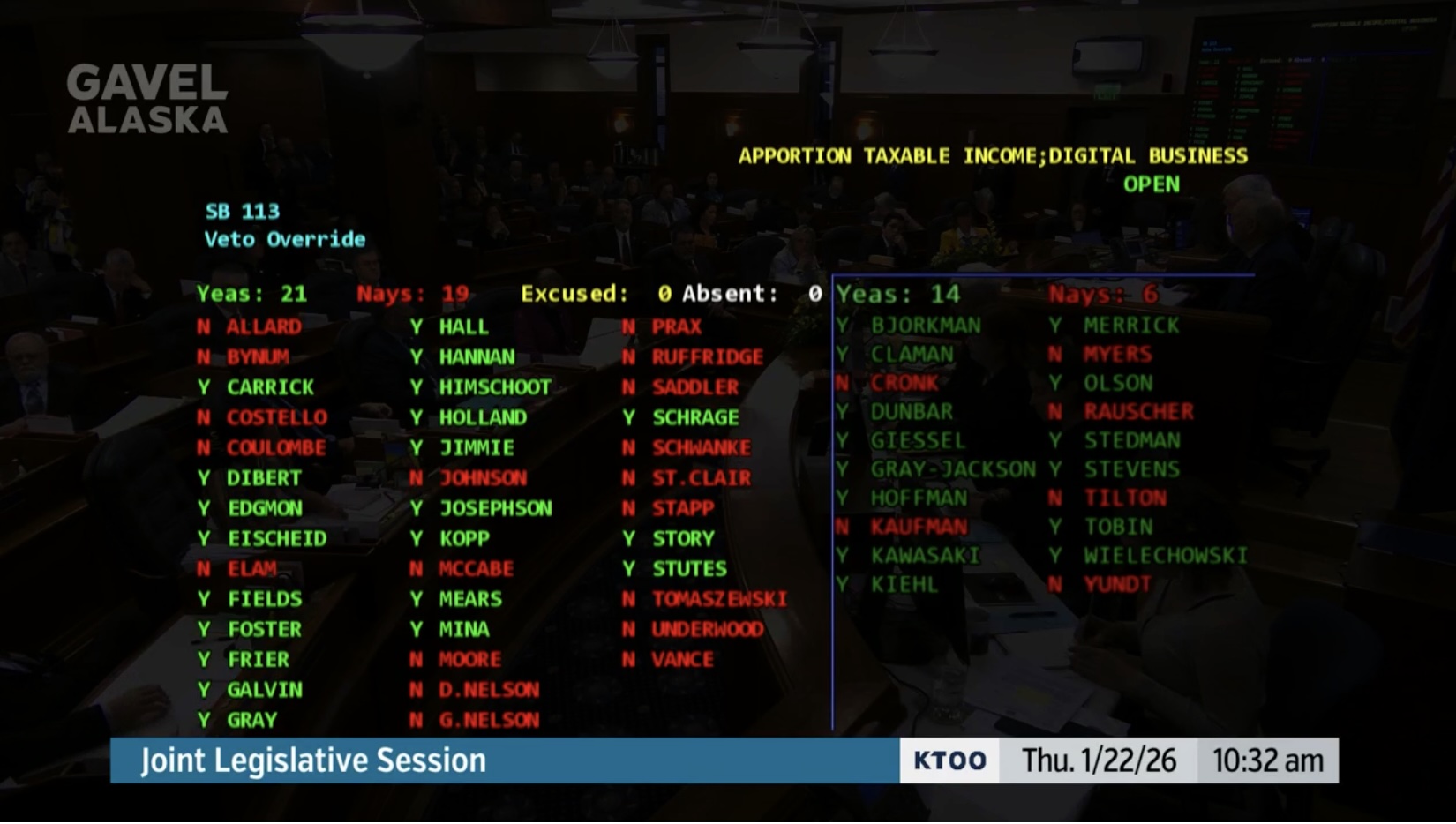
On the third day of the Alaska Legislature’s 2026 session, lawmakers moved into joint session to attempt an override of Gov. Dunleavy’s veto of Senate Bill 113 — a Democrat-sponsored tax bill known informally as the “Etsy Tax” or “Netflix Tax.” The override failed, 35 to 25.
SB 113, sponsored by Democratic Sen. Bill Wielechowski, is formally titled “An Act relating to the Multistate Tax Compact; relating to apportionment of income to the state; relating to highly digitized businesses subject to the Alaska Net Income Tax Act; and providing for an effective date.” The bill passed last year with broad bipartisan support, but was vetoed by the Republican governor after sitting for months without being transmitted for signature.
Supporters of Wielechowski’s bill describe SB 113 as a modernization of Alaska’s tax structure aimed at digital and internet-based businesses that generate revenue from Alaska consumers without having a physical presence in the state. It’s a complicated bill that is poorly understood by many due to the complexity of corporate taxes.
The override effort itself was highly strategic, set for the same day the governor is to give his State of the State address.
Democrats, who control the Legislature with the help of a small group of allied Republicans, scheduled the vote just hours before the governor is set to deliver his State of the State address, an address expected to include discussion of new revenue proposals, including a possible statewide sales tax. The override attempt functioned as a political message: either a direct show of legislative power if it passed, or a warning shot if it came close;
Under the Alaska Constitution, lawmakers needed 45 votes in joint session to override the veto.
The current governing coalition is led by Democrats but relies on a handful of Republicans to form its bipartisan majority — including Sens. Cathy Giessel, Kelly Merrick, Gary Stevens, and Jesse Bjorkman, all of whom have aligned with Democrats in organizing the chamber. Those Republican votes in favor of override represented direct breaks with the governor.
Floor debate reflected both ideological and strategic divisions inside the Legislature. And the debate illustrated the old adage: “If you have the votes, vote. If you don’t have the votes, talk.”
Rep. Calvin Schrage of the Democrat-controlled majority in the House argued in favor of the override, framing the bill as a fairness issue. He said corporations doing business in Alaska through the internet often avoid taxation while brick-and-mortar businesses bear the burden, calling the structure outdated and inequitable. He contrasted the bill with the governor’s proposed revenue ideas, arguing that consumer taxes would directly affect Alaskans, while the Netflix Tax would not.
Rep. Mike Prax acknowledged initial enthusiasm for the bill when it arrived late in the first session, but said concerns over interstate commerce, legal vulnerability, and the likelihood of court challenges made sustaining the veto the safer course. He argued the Legislature should refine the policy and return with a cleaner bill.
Democratic Rep. Andrew Gray supported override, saying Alaska should not continue forcing local businesses to compete against untaxed multinational corporations selling into the state digitally. He framed the issue as one of economic equity and incentive structure.
Opposition voices focused on process and complexity. Rep. Will Stapp said the bill passed in an “A version,” moved quickly, and then sat for months without regulatory guidance. He argued the Department of Revenue had not been given time to develop clear rules and that the bill’s structure was too complex and poorly understood to implement responsibly. Indeed, the implementation date had already passed.
Rep. Ashley Carrick, a Democrat, raised the revenue argument directly, noting estimates that the tax could raise between $25 million and $65 million annually and somewhat bizarrely tying the income to funding the Alaska Reads Act. She framed the measure as shifting tax responsibility from local storefronts to large digital corporations.
Rep. Alyse Galvin said “We need to get to the revenue as fast as we can,” and said the bill is needed because the state needs revenue.
SB 113 would not change Alaska’s corporate tax rates. Instead, it changed how income is apportioned for taxation purposes, targeting highly digitized businesses that derive revenue from Alaska markets without physical operations in the state. But beyond the policy itself, the override effort carried clear political meaning.
The vote was not only about SB 113, It was about power. It tested whether the Democrat-led coalition could override a Republican governor’s veto and demonstrated how narrow his legislative support may be. Staging the vote immediately before the State of the State address amplified the pressure and symbolism, especially as the administration is preparing to pitch new revenue measures.

One thought on “Legislature fails to override Dunleavy veto of ‘Etsy Tax’ in power play ahead of State of the State”
How can these fools think that taxing an out of state business that provides services and/or goods in Alaska will not affect the consumer? Do they think the business will absorb the tax and not pass it on to the consumer by raising prices?