

By PAULETTE SIMPSON
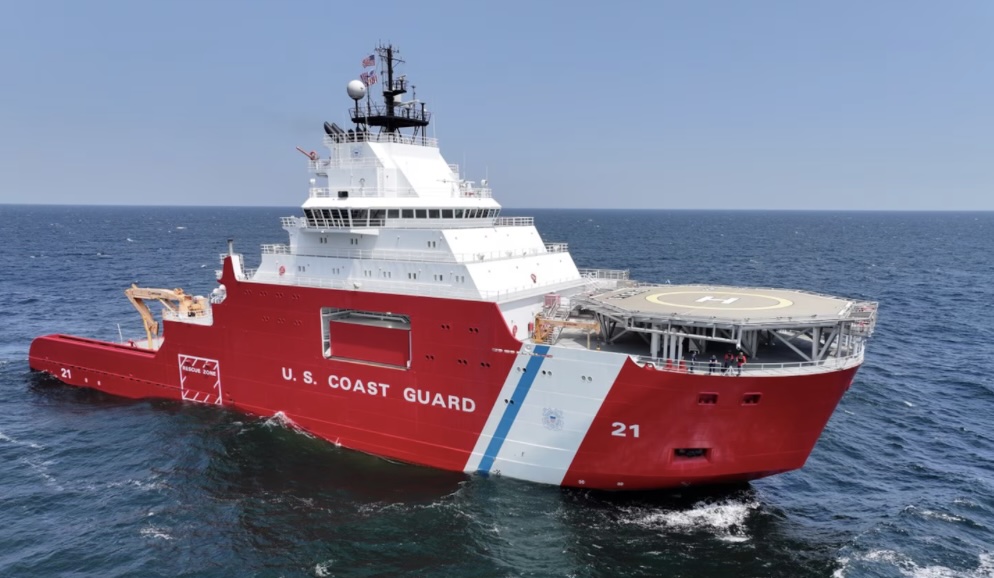
Carl Uchytil’s recent Juneau Empire column about the icebreaker Storis’ prospective homeporting in Juneau was a timely reminder of the importance of economic diversification and capturing opportunities when they come our way.
Uchytil’s column brought back memories of an earlier attempt by one of Alaska’s U.S. senators to throw Juneau an economic lifeline. I still remember the missed opportunity.
Thirty-eight years ago, Sen. Ted Stevens proposed homeporting two Navy ships in Juneau. To gauge public sentiment about the proposal, a non-binding advisory ballot proposition was placed on the October 1988 municipal ballot. This was the same election in which Bruce Botelho defeated Bob Ward in the Mayor’s race.
As reported by both the Washington Post on Oct. 5, 1988 and the Los Angeles Times on Oct. 6, 1988, the Juneau electorate voted down the idea of welcoming the Navy to town by rejecting the non-binding ballot proposition.
“This was a vote to avoid malignant growth, said opposition spokesman Dave Allison, a Juneau lawyer. The impact of a fleet on the social fabric of Juneau would have ripped it asunder.”
Allison sharply criticized Sen. Ted Stevens for encouraging the Navy to base ships in Juneau, saying, “It would be really good for Ted Stevens to learn to ask first before delivering these dubious gifts to us.”
This was mystifying. Navy-centric towns like Whidbey Island, Norfolk, Pensacola, and San Diego are hardly dystopias. They’re nice places.
Unfazed by the public scolding, Sen. Stevens didn’t hold the rebuke against Juneau. In 1995 our Republican senior senator obtained funds for KTOO to purchase the ALASCOM building so public radio and television could relocate to larger quarters. He secured funding for major repairs to Perseverance Trail. In 1999, Stevens gave Juneau the biggest injection of federal funds in its history with NOAA’s $51 million Lena Point marine research facility. Over the years, he directed millions to our airport for navigational, safety and infrastructure improvements.
I don’t recall that Juneau ever showed its gratitude by voting heavily for Sen. Stevens, but that’s Juneau.
We’re a maritime community. Instead of two Navy ships, Juneau got more cruise ships. Would Navy ships have forestalled Juneau’s morphing into an aging, shrinking, seasonal tourist town? We’ll never know. But some cruise ship-hating locals invoke harsher terms than “malignant growth” to describe Juneau’s current tourism-dependent economy.
The icebreaker homeporting has not drawn opposition from Juneau residents. Most understand that direct and indirect jobs, and a reliable outside income stream can eventually stabilize Juneau’s economy and stem its demographic slide.
These good things don’t happen overnight or by pure luck.
Alaska’s three-member congressional delegation worked tirelessly and in sync to convince the US Coast Guard to select Juneau as the homeport. But it’s been Sen. Dan Sullivan who has spent the past four years doing most of the heavy lifting with his Senate Commerce Subcommittee membership and chairmanship. Sullivan’s diligence and mastery of the committee process were necessary conditions for the opportunity to materialize.
Yet practically from the time he was elected to the U.S. Senate in 2014, Sen. Sullivan has been the target of non-stop criticism in the opinion pages of Juneau’s two newspapers. One columnist has made it his life’s mission to trash Sen. Sullivan practically every time he puts pen to paper.
Opinion writers’ disagreements on national policy issues that have little to do directly with Alaska or Juneau seem narrow and lazy. There are many senators who do spend all their airtime and political capital on big geopolitical and national headline issues. I appreciate that Sen. Sullivan is not one of those.
Hardcore partisans are often incapable of separating emotions from relevant issues, so there’s no grace given for good things that come our way – or even assigning credit where credit is due. It’s not very pragmatic.
Sullivan, I suspect, takes this in stride, much like Stevens did. Elected by some to take care of all, it’s the way our public officials are expected to serve their constituents. When they channel their energy and influence into delivering big things that matter to a community’s long-term viability, that should factor into elections – something Juneau should appreciate.
But as they say, no good deed goes unpunished. We’ll see what happens in November.
Paulette Simpson is a longtime Juneau resident.



2 thoughts on “Paulette Simpson: Of ships, senators, and good deeds that don’t go unpunished”
Good to see that you are still alive and kicking Paulette. Keep your tongue and boots sharp because you are correct. Dan Sullivan is the man for Alaska in the U S Senate. Even Princess Lisa recognizes it because she has not come out in support of Mary Peltola.
Communism at the local level. Pure and simple.