


By WAYNE E. HEIMER
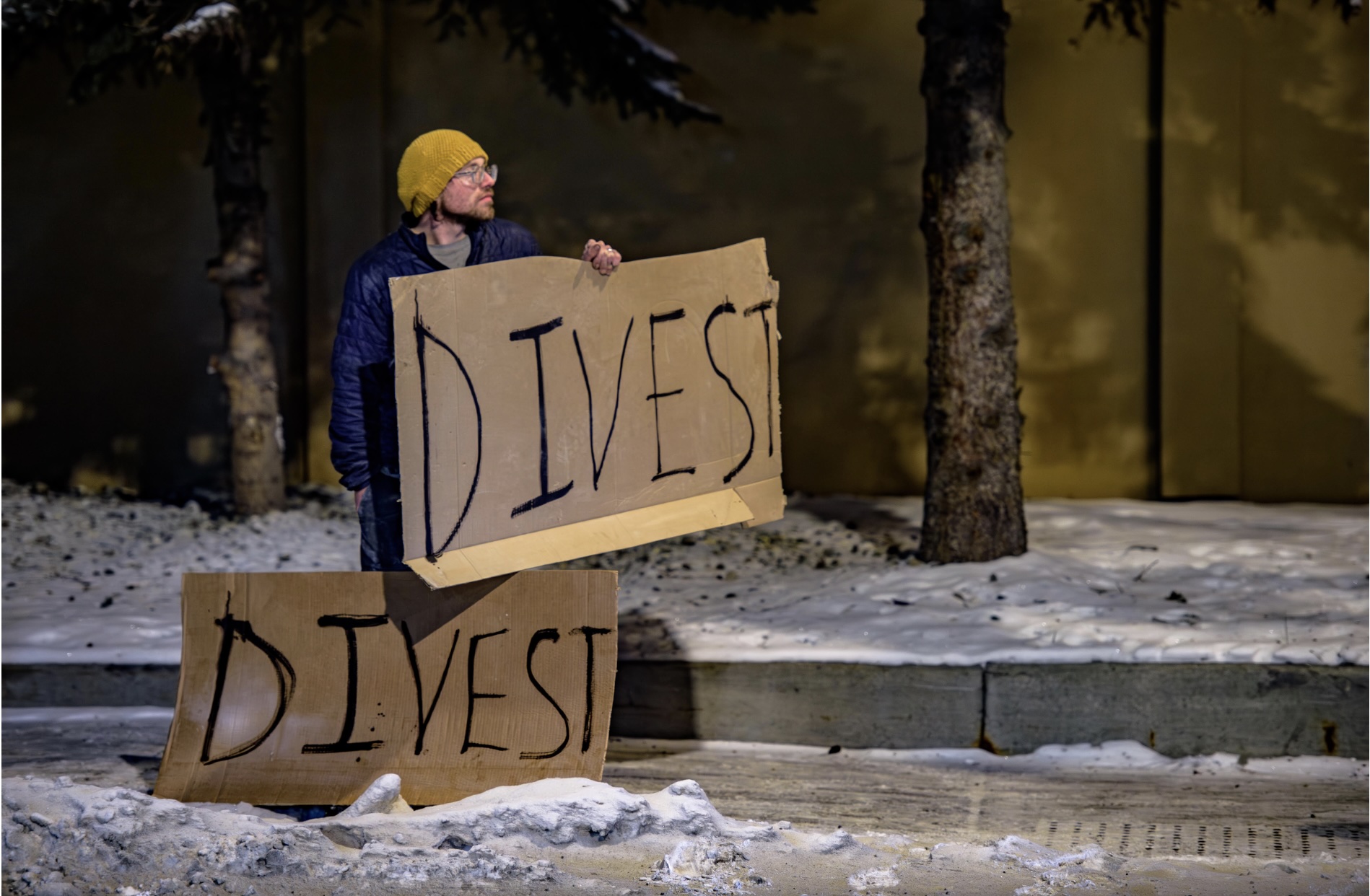
Having some history with ineffective peaceful demonstrations, I think I may have figured them out. The past point of peaceful demonstrations was to raise awareness. Activists assumed that once the uninvolved became aware of their issue, they’d support fixing it. This anticipated support was optimistically expected to drive positive change as seen by the demonstrators.
Something has changed. My hypothesis de jour is: there has been an evolution from ‘demonstration’ to ‘protest’ to ‘riot/revolution.’ The historic function of peaceful demonstration was letting everyone know the participants were dissatisfied about something beyond their immediate control.
Historically, when a pre-existing “good idea” was ignored, non-violent protest or demonstration worked to raise awareness (because the good ideal had been ignored) and lead to primarily peaceful change. Here, I broadly recall the civil rights movement in America.
In their day, polite and peaceful partisan demonstrations supplanted writing letters to one’s local, state, or national representative. If one were really ‘connected’ a phone call or office visit was recommended. Apparently, those activities were unsatisfying or ineffective. That’s been my longer-term experience with letters and visits with everyone from then-active Sen. Stevens to my present Alaska State Representative, Ashley Carrick. Ashley is refractory to my reasoning because we simply see the world differently. I don’t think my organizing a demonstration or protest will change Ashley’s mind.
Even when I fancy I’m supporting a good idea, I find that although I may find a sympathetic listener, outcomes are driven by specific interests beyond mine. I doubt any unaffiliated individual is more effective than I–unless they have an economic ‘edge’ plus a shared philosophy with decision-makers.
So, if one is passionate about a cause, but without influence; the alternative to informative demonstration becomes organizing “peaceful protests” that portend violent revolution via radical group solidarity. Inflammatory language on protest signs and flag burning express the symbolic threat. Today’s news reports threats of violence against ICE personnel are up 8,000 percent.
So, is there a lesson here? As a casual student of historic social change, I note that little of social significance happens without some kind of anti-government violence. Governments exist to promote stability. Hence, governments exist to slow social change if not to stymie it via procedural inertia. Where idealistically radical social revolution has been achieved (e.g. the Soviet Union, Communist China, the Islamist State of Iran and its proxies) violence has been typically necessary.
For violent revolution to materialize, there must be a cause, resources, and a willing mass of foot soldiers. In the US, the resources are provided by special interests. Necessary foot soldiery has apparently been supplied by open border policies and mass indoctrination. Even a small percentage of 20 million refugees will do the job. Coordination is readily achieved via social networking.
A failed cause example: Throughout American history, social revolutionaries have attempted effective social change by dividing poor from so-called rich. The farther left still tries this, but to date, it hasn’t worked. The poor simply do too well. So, what’s next?
If a highlighted social injustice can’t be leveraged to generate the hatred necessary for violent revolution, an ideal becomes the functional substitute. One ideal common among today’s social revolutionaries exploits the inherent American fear of autocracy to produce the programmed perception of losing individual freedom.
When the pre-existing ideal is a failed notion or a bad idea, the ultimate functional alternative becomes violent revolution on the streets. We saw this with the Black Lives Matter riots of 2020, but that issue rather blanched in the face of facts about who was profiting.
Today’s methods include fear of assault on democracy or the plight of presumed victims if law is followed. The street entity is loosely identified as ANTIFA, which hybridizes ethnicity with alleged human rights violation. (See pro-Palestinian paranoia and the fear that “innocent illegal aliens” — a legal oxymoron — or anyone who looks brown will be swept off the streets and deported by an accused wannabe dictator.)
If our existing system is to be overthrown, violence will be necessary. ‘Peaceful protests’ in the cause of a misplaced ideal are readily identified as political theater. If an activist axis wants to replace peace and order with chaos, violence is the only way. Since nobody in their right mind really wants to live in chaos, I infer the longer-term aspiration of revolutionaries must be an idealistic system of their projection, which will eventually under-deliver on idealistic promises.
In turn, that system will be overthrown by violence to move forward (or not) as human political recycling happens.
Wayne E. Heimer, a long-term Dall sheep biologist, may take ‘the long view’ because Dall sheep have been influenced by Alaska’s repeated ice age impacts.

3 thoughts on “Wayne Heimer: Are demonstrations, riots, and revolution just part of the human cycle?”
People who lack self control, do a people really want unstable people making rules in governance because they toppled the old order.
Anarchists, protestors, Radicals make poor leaders because for one they don’t know how to L.I.S.T.E.N and they lack patience
The Bible, The principles, the values, the US constitution and the bill of rights gave the people the knowledge how to govern America.
Neighbors today can start attending their home district community council as a start for returning Alaska back to its original structure before immoral Alaskans thought snowing was wrong with it to start making changes
People who lack self control, do a people really want unstable people making rules in governance because they toppled the old order.
Anarchists, protestors, Radicals make poor leaders because for one they don’t know how to L.I.S.T.E.N and they lack patience
The Bible, The principles, the values, the US constitution and the bill of rights gave the people the knowledge how to govern America.
Neighbors today can start attending their home district community council as a start for returning Alaska back to its original structure before immoral Alaskans thought what was set in placed was wrong or needing improvements. The framework for governing America and the states as Alaska need no improvement. It was a remarkable system of governance, it’s just generations today need to remember it or learn it.
Protests on the political left these days are exclusively for hire affairs, with the protesters and organizers being paid, generally by either Soros or taxpayer dollars laundered though some God forsaken NGO. Look no farther than the carefully printed signs they hold. The revolutions were likewise funded by the taxpayer, usually via USAID, the outfit created to do things the CIA was not allowed to do. There is nothing organic or grass roots on the political left these days. It is all astroturf. Cheers –