


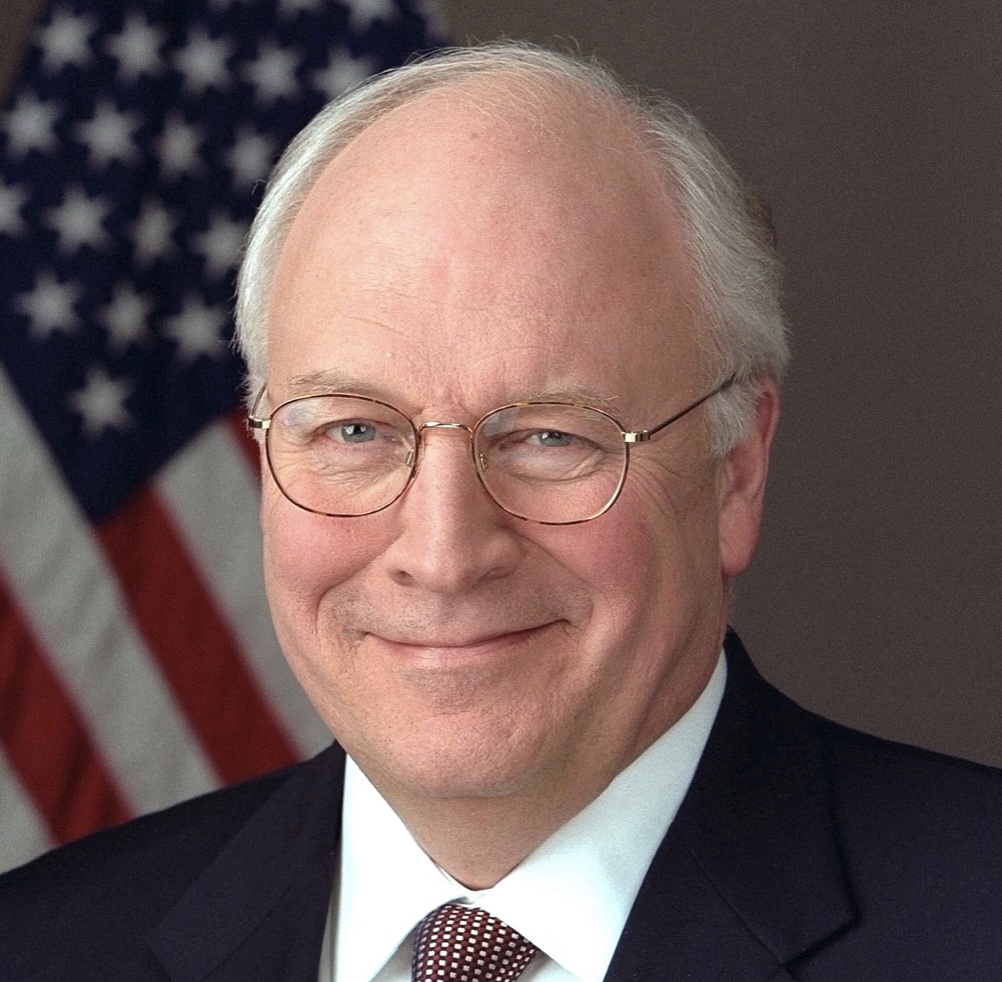
On Nov. 4, Dick Cheney, the Republican who served as the 46th vice president of the United States under George W. Bush from 2001 to 2009, passed away at the age of 84. His family announced the death, attributing it to complications from pneumonia and cardiac and vascular disease.
He was one of America’s most consequential, and often polarizing public figures.
Cheney’s political career spanned five decades, from his early service in the Nixon and Ford administrations to his tenure as Secretary of Defense under George H.W. Bush, where he managed the Gulf War.
As vice president, he was widely regarded as the most powerful second-in-command in US history, steering national security and energy policy after the Sept. 11 attacks. His legacy is inseparable from the 2003 invasion of Iraq, a war he championed based on intelligence claims later proven false.
In Alaska, Cheney’s imprint has been enduring. Long before his vice presidency, he recognized the state’s role as both an energy powerhouse and a strategic military frontier.
As White House Chief of Staff under President Gerald Ford in the mid-1970s, Cheney helped coordinate post–Vietnam energy strategy amid the OPEC oil crisis.
Alaska’s North Slope, newly opened by the Trans-Alaska Pipeline, became central to his argument for American energy independence.
As Secretary of Defense from 1989 to 1993, Cheney oversaw the military’s northernmost outposts, including Elmendorf and Eielson Air Force Bases. He emphasized Alaska’s importance to NORAD during the waning years of the Cold War, authorizing northern defense exercises that simulated Soviet incursions across the polar region. The Pentagon’s Alaska presence, which later expanded under Bush-era defense budgets, reflected his doctrine that America’s northern frontier was its first line of defense.
After leaving government, Cheney became CEO of Halliburton, an oilfield services giant, where he deepened his ties to Alaska’s energy industry. Under his leadership, Halliburton won contracts for pipeline maintenance and drilling support on the North Slope and in Cook Inlet. The company’s Alaskan operations flourished as Cheney argued that energy policy was inseparable from national security. Critics continually accused him of blurring that line when he returned to government in 2001.
As vice president, Cheney became Alaska’s most powerful advocate in Washington for oil and gas development. His National Energy Policy report in 2002 called for opening the Arctic National Wildlife Refuge to drilling, citing US Geological Survey estimates of more than 10 billion barrels of recoverable oil. The proposal polarized Congress and galvanized Alaska politics for a generation. Cheney’s argument that domestic drilling was a patriotic duty resonated deeply with Alaskans, even as environmentalists mobilized in opposition.
Cheney also backed offshore exploration in the Beaufort and Chukchi Seas, initiatives that expanded lease sales to Alaska Native corporations and energy majors such as BP and ConocoPhillips. He visited Elmendorf Air Force Base in 2004 to rally troops and highlight Alaska’s role in post-9/11 security operation.
In later years, Cheney remained involved in Alaska. He endorsed then-Gov. Sarah Palin’s 2008 vice-presidential candidacy, calling her “a kindred spirit on energy and defense.” Palin in turn credited Cheney for shaping Republican orthodoxy around resource independence. Even in retirement, his name surfaced in Alaskan political debates – from ANWR leasing battles to theories linking him to HAARP, the atmospheric research project in Gakona.
Born Jan. 30, 1941, in Lincoln, Neb., Cheney rose from Midwestern modesty to Washington dominance. He survived multiple heart attacks, a 2006 hunting accident, and a 2012 heart transplant. He is survived by his wife, Lynne, daughters Liz and Mary, and grandchildren. Funeral arrangements have not yet been announced, but dignitaries from across the political spectrum are expected to attend.

4 thoughts on “Breaking: Dick Cheney passes, age 84. His impact on Alaska was far-reaching”
The amount of suffering and death he caused Americans is immense. May God have mercy on him because he deserved none from us. Good riddance.
Micah I couldn’t agree more , I changed from a GOP supporter to independent because of him & George W ! 🙁
A vile neocon sociopath who will not be missed by anyone with a conscience or a soul.
His parents did much better than they could have known at the time when they named him “Dick”.
Dick Cheney was not alone in his and Rumsfeld assessment of the Iraq War. Most commentators on the right were full throttle in agreement of their views on the war. Hannity, Levine, Limbaugh, and David Victor Hansen all drank from the same teacup. Rush’s why not victory was pathetic. Criticize Cheney but do not forget his loyal followers.