

THE ALASKA STORY
Nov. 22, 2026 – Southeast Alaska’s Bigfoot lore has a paper trail: In 1925, Petersburg prospector Harry Colp wrote down an account of a gold seeker who was chased by hairy creatures near Thomas Bay. A century later, the Alaska State Library still holds his handwritten manuscript.
Now a different set of records is bringing the Northwest’s Sasquatch stories back into the news.
The US Forest Service posted three historical records from Washington and Montana last month. Among them is a 1982 report from the woods near Walla Walla, where a federal wildlife biologist had a question: What made those 15-inch tracks?
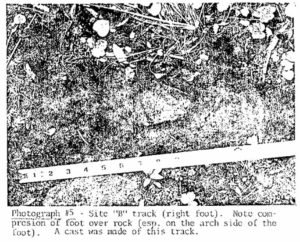
In June 1982, part-time Forest Service patrolman Paul Freeman reported seeing what he believed was Bigfoot on the Washington side of the Umatilla National Forest. He later reported finding tracks in the Mill Creek watershed. Wildlife biologist Rodney L. Johnson inspected the site June 17.
The investigation produced photographs and plaster casts.
Those prints had details that struck Johnson as natural and difficult to duplicate.
But the trail itself gave him pause: The stride stayed about four feet even as the slope changed, he saw none of the slippage he expected on the slopes, and fine forest litter appeared to have been brushed aside around some of the prints. Combined with the shallow impressions, that led him to conclude the tracks were made by something other than a heavy, two-legged creature. A prank, perhaps.
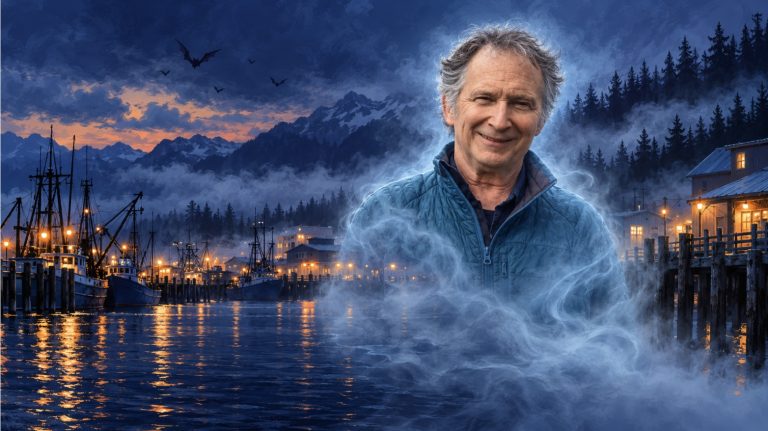
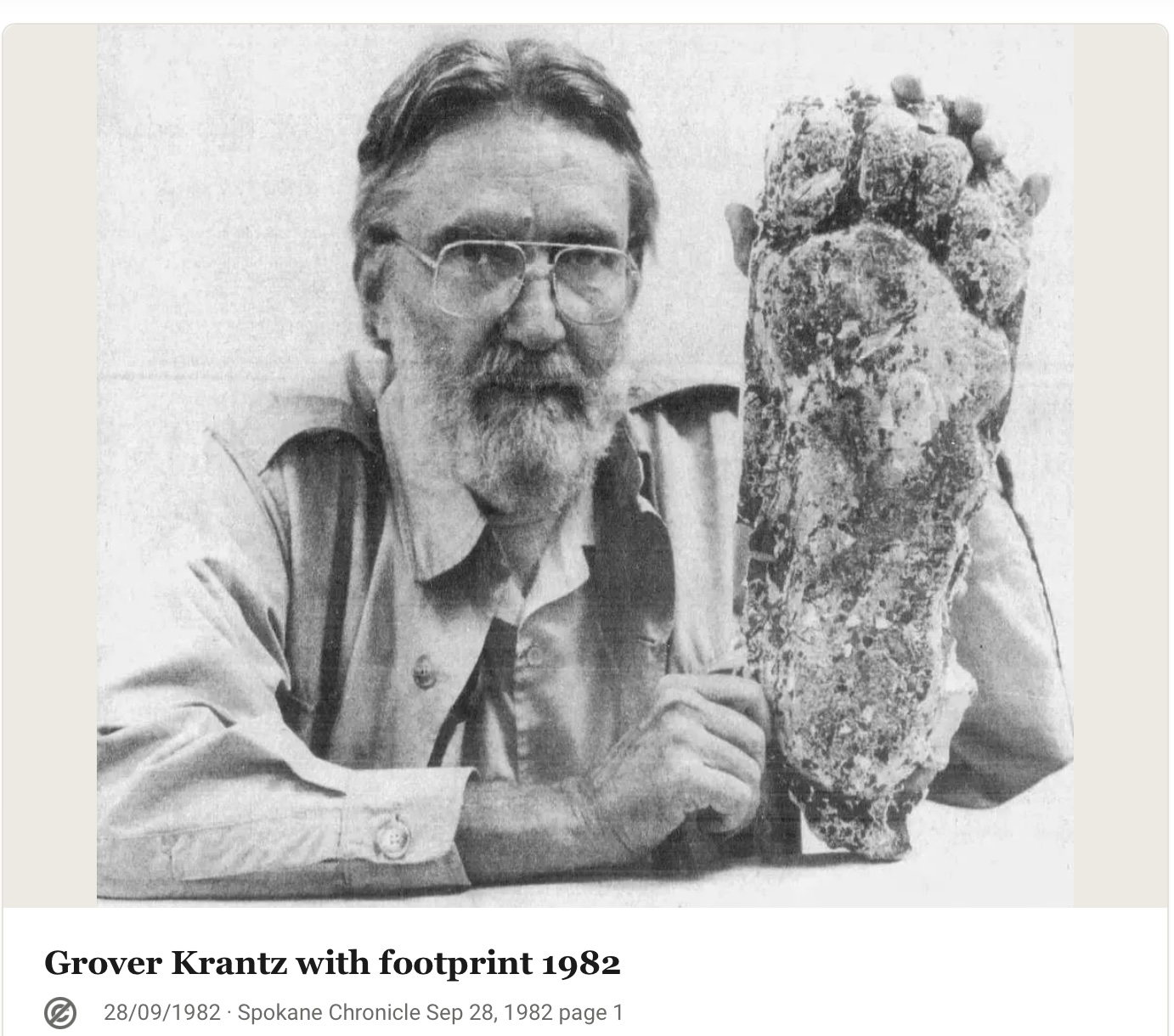
US Border Patrol tracker Joel Hardin went further. In a follow-up memo, he suspected someone had made the prints with an artificial foot. Washington State University anthropologist Grover Krantz, pictured at the top of this article, later disagreed, pointing to fine ridges in the casts that he believed would have been too difficult to fake.
The two Montana records are a 1980 account by Leo T. Kinney recounting strange encounters around Petty Creek decades earlier and a 2003 Clark Fork Valley Press clipping about large, humanlike tracks in the snow by a Sanders County sawmill. A Forest Service spokesman told The Washington Post that expected public interest is one factor the government weighs when deciding which records to post online.
Near Petersburg, in the Tongass National Forest, Thomas Bay is the setting for a prospecting tale that Bigfoot enthusiasts have shared over the years.
Harry D. Colp arrived in Wrangell in 1898 and prospected with three others near Thomas Bay in 1900, according to the Alaska State Library. He wrote The Strangest Story Ever Told in 1925. It was published in 1953, three years after his death.

In Colp’s telling, a prospector goes looking for gold and comes back with a story about foul-smelling, hairy creatures that chased him. The account inspired searches of the Thomas Bay area. In 1978, the Petersburg Pilot reported that a 22-person party was being organized to investigate reports of strange creatures there, according to Wrangell History Unlocked. The local history project also traced a strikingly similar plot to a gold-rush tale that appeared in an Indiana newspaper in 1894, decades before Colp put his story on paper.
The Forest Service has posted the old footprint photographs, and the Alaska State Library holds Colp’s original manuscript.