


THE ALASKA STORY
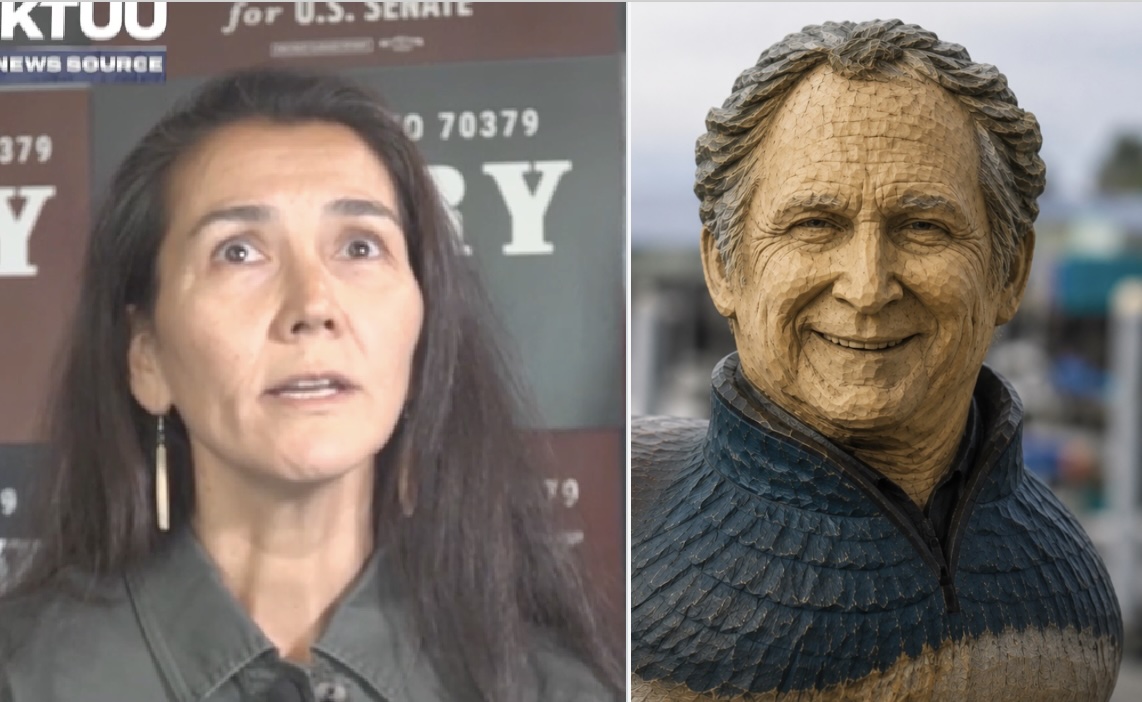
Nov. 3, 2026 – National political commentators, attorneys, and Republican officials are demanding answers about Mary Peltola’s Senate campaign following a New York Times investigation into efforts to recruit candidates who could draw votes away from Republican Sen. Dan Sullivan.
The reactions range from calls for further investigation to predictions of criminal charges. Some legal commentators, however, have offered a more qualified assessment of whether prosecutors could build a case.
The Times reported that Peltola campaign aides, lawyers, and senior Democratic Senatorial Campaign Committee staff participated in recruiting a second Dan Sullivan to the Alaska Senate race. According to the reporting, the effort was known internally as the “ballot composition project.” Peltola’s campaign and the DSCC have denied involvement with the Petersburg candidate’s campaign.
The controversy has put Alaska’s Senate race before a national audience just days before the Nov. 3 election, with commentators questioning both the reported recruitment effort and the denials that followed.
CNN commentator Scott Jennings delivered one of the bluntest assessments.
“They are abject liars, and they did engage in a conspiracy,” Jennings said.
Brad Todd similarly argued that the controversy extends beyond ordinary campaign maneuvering.
“It’s more than dirty tricks. This is an effort to defraud the voters,” Todd said, asserting that the allegations reach the leadership of the Democratic Senatorial Campaign Committee.
Former White House press secretary Ari Fleischer called for investigators to examine the national Democratic organization.
“There also needs to be an investigation into the Democratic Senate Campaign Committee,” Fleischer said, pointing to the Times’ reporting about the committee’s alleged involvement.
The organization’s formal name is the Democratic Senatorial Campaign Committee.
Will Chamberlain of the Article III Project argued that the alleged conduct could support a federal civil-rights prosecution.
“Recruiting a fake ‘Dan Sullivan’ to confuse voters and siphon votes from the real one is a conspiracy to deceive voters and corrupt the ballot,” Chamberlain said.
He cited 18 U.S.C. § 241 and predicted: “Federal charges are coming.”
Whether the reported conduct supports criminal charges is a question investigators and prosecutors would have to establish.
Outkick’s Clay Travis also characterized the alleged recruitment effort as criminal.
“This is direct criminal interference designed to fraudulently lead voters in Alaska to not select the right candidate,” Travis said.
Attorney Jonathan Turley predicted potential consequences on multiple legal fronts.
“This is quickly becoming a serious scandal for Peltola,” Turley said. “I think there will be criminal and civil elements here.”
Turley also focused on statements made about the recruitment effort and the potential exposure of those involved.
“All of those people are going to have to lawyer up, including the lawyers,” he said.
Criminal defense attorney Donna Rotunno raised similar concerns about the response to the allegations.
“Not only is there corruption but now there is a coverup to the crime,” Rotunno said. “The legal challenges are going to be unbelievable.”
CNN senior legal analyst Elie Honig offered a more conditional assessment. He said a “very aggressive prosecutor might try to put together a charge” based on deprivation of voting rights, “if there was intentional effort to confuse people.”
His wording underscores a distinction running through the national reaction: Condemnation of the reported tactics does not itself establish the elements of a criminal offense.
Other commentators focused on Peltola’s response.
Campaigning in Soldotna after the Times report appeared, Peltola dismissed the controversy as a distraction and said her focus was affordability. Her campaign said it had no involvement with either Sullivan campaign, while the DSCC also denied involvement with Dan J. Sullivan, known as Decoy Dan.
Sen. Mike Lee, R-Utah, accused Peltola of deflecting from allegations that the recruitment effort itself was intended to distract voters.
“She literally created a scheme to distract and confuse voters,” Lee said. “That’s some serious, end-stage projection.”
Washington Examiner commentator Byron York highlighted Peltola’s argument that the reporting was intended to sell newspapers, describing her response as “the old standard reaction to her ballot-stacking scandal.”
Independent journalist Catherine Herridge pointed to the contrast between the allegations and Peltola’s public messaging about wanting to “unrig the system.”
NewsBusters’ Tim Graham said the Times investigation supported suspicions critics had raised for months about the second Sullivan candidacy.
One America News’ David Pollack likewise focused on the reported messages and documents behind the investigation.
“When your path to a Senate seat runs through a matching name, you already know you can’t win on the issues,” Pollack said.
Radio host Hugh Hewitt argued that the controversy should weigh on voters considering replacing the incumbent senator.
“You cannot conspire to defraud an electorate,” Hewitt said, predicting that Peltola could face a prolonged investigation.
Daniel Turner of Power the Future went further, predicting investigations, indictments, and possible convictions.
“Mary got caught. There’s a paper trail,” Turner said. “Alaska deserves better. America deserves better.”
In Alaska, Gov. Mike Dunleavy’s response centered on the evidence described by the Times and the state’s earlier examination of the matter.
“Today’s New York Times reporting reveals disturbing new evidence of an organized effort to manipulate Alaska’s elections,” Dunleavy said.
“The Alaska Division of Elections investigated these very concerns in June of this year. The new reporting substantially supports the Division’s findings.”
On Election Day, the Mary Peltola scandal is still one of the top stories across America.


One thought on “‘More than dirty tricks’: National commentators weigh in on Peltola ballot-stacking allegations”
Would anyone (any leftist) even consider for voting for Mary Polenta if she were not both a woman and a Native?
Aside from those radical leftist, group identity Bingo cards, what does she have to politically offer, or ever had to offer?