


By SUZANNE DOWNING
Oct. 21, 2026 – Alaska North Slope crude is approaching $128 per barrel at a time when production is climbing, giving the state a potentially substantial revenue boost as turmoil in Middle Eastern shipping keeps global oil prices elevated.
The combination means Alaska is selling more oil into a stronger market. Production reached 562,647 barrels on Oct. 12, compared with a reported average of 467,257 barrels per day over the preceding year. That daily figure was about 95,390 barrels, or 20.4%, above the annual average.
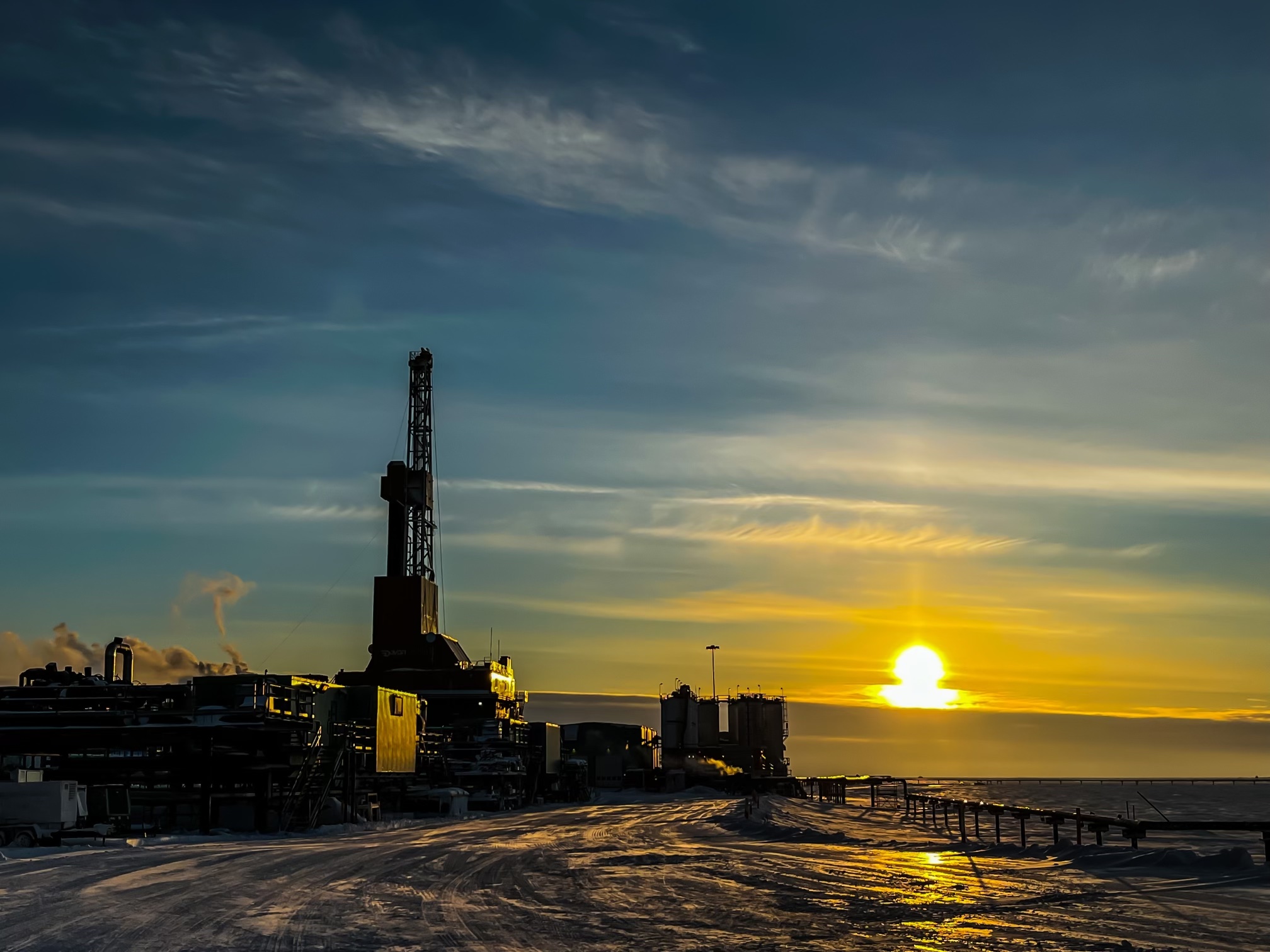
The increase comes as the Pikka development adds new production to the North Slope. Operator Santos announced first oil in May and targeted production of approximately 80,000 barrels per day during the third quarter. October figure illustrates the scale of the increase as Pikka ramps up.
Alaska also has a transportation advantage over Middle Eastern barrels moving through a costly wartime shipping system.
The Alaska Department of Revenue’s spring forecast estimated North Slope oil transportation costs at $10.70 per barrel for fiscal year 2027. Those costs include moving crude through Alaska’s pipeline and shipping network to market. Higher pipeline throughput can help spread infrastructure costs across more barrels.
By comparison, The Maritime Executive reported this week that delivering Arabian Gulf oil to Asia now costs more than $35 per barrel, reflecting extraordinary tanker rates and the hazards of moving through the region.
That puts the reported Gulf shipping expense at more than three times Alaska’s forecast transportation cost. The comparison involves different destinations and a current wartime shipping estimate versus an annual Alaska forecast. It shows how sharply conflict has changed the economics of getting oil to buyers.
Alaska crude moves south through the Trans Alaska Pipeline System to Valdez, then by tanker to refineries. It does not need to pass through the Strait of Hormuz.
In the Arabian Gulf, exporters have restored substantial volumes by using alternative pipelines and a tanker shuttle system. Smaller voyages through dangerous waters feed offshore transfers, where crude changes vessels before continuing to distant markets. There is a growing reliance on this multistep shipping network.
According to preliminary figures reported by The Wall Street Journal, regional oil flows through Hormuz and alternative routes averaged more than 24 million barrels per day in the week ending Oct. 18, exceeding the prewar average of 23.3 million. That broader regional total includes bypass routes; it does not mean traffic through Hormuz itself has fully recovered.
Restored exports have therefore not translated into restored inexpensive transportation. Shipping risks, vessel shortages and transfers between tankers continue to add costs.
For Alaska’s budget, the duration of high prices is enormously important.
A price near $128 is approximately $53 above the state’s spring forecast of $75 for fiscal year 2027, which runs through June 30, 2027. The original fall forecast had assumed $62.
Applying the older shorthand of $25 million to $30 million in additional unrestricted revenue for every sustained $1 increase would put a $53 annual increase at approximately $1.3 billion to $1.6 billion.
However, the state’s current model shows an even larger potential effect. Its spring sensitivity table estimates total unrestricted revenue of $9.3 billion at a sustained $125 oil price, compared with approximately $6.7 billion in the official forecast — a difference of roughly $2.6 billion. That is a modeled scenario holding other assumptions largely constant, rather than money already collected.
The state receives revenue through royalties and taxes, with transportation expenses, production costs, tax provisions and ownership affecting collections.
Higher prices arriving alongside greater production give Alaska two sources of upward pressure on petroleum revenue.



8 thoughts on “Alaska oil nears $128 as production rises, strengthening state’s revenue outlook”
I wonder why energy costs are so high?
Also, our corrupt Alaskan politicians are licking their lizardly lips thinking there will be even more of a PFD dividend to steal from the people.
The is really going to upset Jonathan Kreiss-Tomkins and many on the Left. Why? Rest assured that the Legislature will spend every dime of the newly-generated cash. That is a given. JKT and the Left will be upset because it will be harder and less justifiable to increase taxes on the oil and gas industry AND impose the INCOME TAX that is so essential for a socialism and the redistribution of money.
Shifting topics just a bit: Is anyone going to ask some basic questions about JKT? I will offer a couple: Have you ever held a job where you had to respond to the assignments and expectations of a boss? (I can see no experience of this type). And: Have you ever managed an organization? (I see nothing in his bio). Just a couple of questions…
JMARK is at 100%.
Full Statutory PFD payout……..Bernadette Wilson.
Exactly how will increased oil revenues and production transfer to the PFD? Will it mean higher payouts or will it mean the Alaskan Legislature keeps more of the income and basically continues to ignore the Constitutional mandate? One would think that the PFD is directly related to the income from the oil revenue. Will this be the case?
There is a little hope for European leaders right now: there is a little light at the end of their dark tunnel. Maybe financial stability they’ll get a little relief for the next two years IF America maintains a Republican controlled Congress and US Senate
To beat the Alaska Big Oil gasoline price rip-off, buy an EV.
Earl that’s cute!
Oil prices are dictated by world supply and demand and of course let us not forget OPEC. So your anger at Alaskan Oil producers is somewhat misplaced. Sure you can buy an EV, but the electricity you need to run it, is most likely produced by natural gas, oil or coal, since wind and solar are not reliable and hydro poo-pooed as environmentally mean to fish. So you are really not beating anyone by driving an EV. Of Course I suppose your EV gets charged by you on your stationary bike every night and is made of wood (since we are sticking it to the oil companies)…..
The Democrats in Juneau are already getting their little official debit cards warmed up to Spend! Spend! spend! , buying more votes from their union pals. THeyre also getting ready To put us all on the hook for a nice, fat little pension plan for their donors in the Education Administration Mafia