


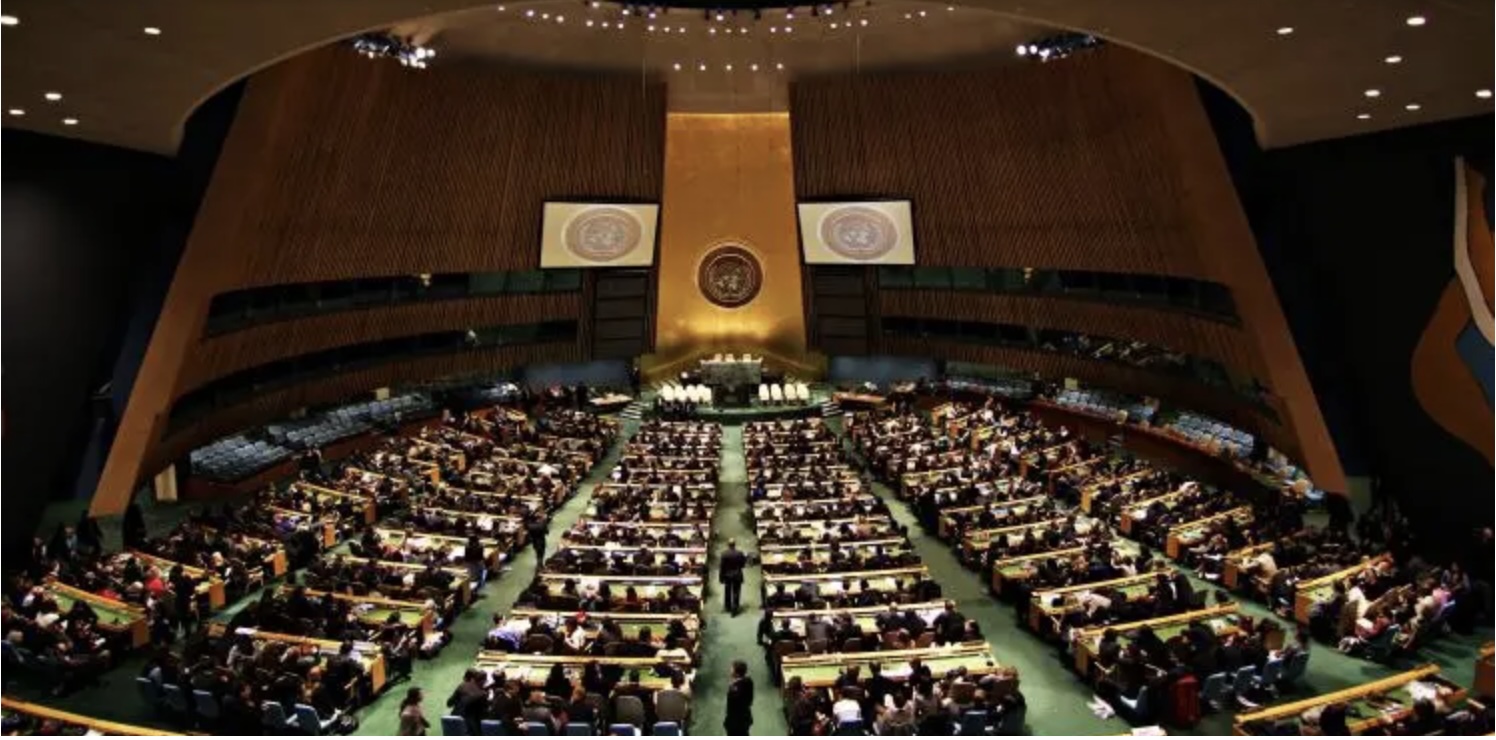
The United Nations’ International Maritime Organization is holding a vote this week on whether to adopt the world’s first global carbon levy on international shipping emissions. The measure appears poised to pass.
The proposed “Net-Zero Framework” would create a binding plan for the maritime industry, which moves about 90% of the world’s goods, to reach net-zero greenhouse gas emissions by 2050. It also sets interim targets of a 20% reduction by 2030 and 70% by 2040.
The framework was initially approved in April by a simple majority during the IMO’s Marine Environment Protection Committee meeting, with 63 member states in favor, 16 opposed, and 24 abstaining. Under the IMO rules, final adoption requires a two-thirds majority, and that vote is taking place Oct. 14–17 in London. A decision is expected Friday.
If passed, the framework would impose a carbon levy of between $100 and $380 per metric ton of CO₂ or equivalent emissions.
The tax would apply to ships exceeding emission limits and are projected to raise between $10 billion and $40 billion annually. The tax would be directed toward funding so-called cleaner fuel technologies and climate adaptation programs in developing and small island nations.
Countries supporting the measure include India, the European Union’s 27 member states, and many developing and island nations, as well as environmental groups.
The Trump Administration, is leading the opposition. US officials have called the plan an “unsanctioned global tax” that would raise costs for consumers and undermine national sovereignty.
“”President Trump has made it clear that the United States will not accept any international environmental agreement that unduly or unfairly burdens the United States or harms the interests of the American people,” said Secretary of State Marco Rubio last week. “Next week, members of the IMO will vote on the adoption of a so-called NZF aimed at reducing global carbon dioxide gas emissions from the international shipping sector. Whatever its stated goals, the proposed framework is effectively a global carbon tax on Americans levied by an unaccountable UN organization.”
“The Administration unequivocally rejects this proposal before the IMO and will not tolerate any action that increases costs for our citizens, energy providers, shipping companies and their customers, or tourists. The economic impacts from this measure could be disastrous, with some estimates forecasting global shipping costs increasing as much as 10% or more,” Rubio said.
US delegates walked out of earlier negotiation sessions, and Washington is actively rallying its allies to block the proposal. Should the framework pass, detailed implementation guidelines would be developed in 2026, and the carbon levy could take effect by 2028.
“We will fight hard to protect our economic interests by imposing costs on countries if they support the Net Zero Framework… We ask you to join us in rejecting adoption of the NZF at the October meeting and to work together on our collective economic and energy security,” Sec. Rubio said on Oct. 10.
Specific economic penalties for nations supporting the NZF may include tariffs and trade restrictions, port access fees or bans for flagged vessels, visa restrictions on officials, and other sanctions on foreign shippers. No official statement has been made about withdrawing from the United Nations, but Sen. Mike Lee of Utah has proposed a bill to defund the organization.
That bill, S.669, aims to halt US funding to the UN and explore withdrawal, citing overreach like this carbon levy. The bill is gaining traction, as the tax could cost the US $12 billion annually in shipping fees, and could be increased in years ahead.


4 thoughts on “Globalist much? United Nations undertaking vote on world carbon tax on shipping companies”
Has the U.N. ever before assumed the power of taxation? Is it in the 1945 Charter?
Get us O-U-T of the U.N.!
No, No, and maybe… This is the globalist wet dream, and the antichrist’s lubrication for the path to power. As a bureaucracy – get us out. As an international forum for talk, we need to be there… TALK only, no teeth, no power to enforce anything or do anything with authority.
Because government doesn’t create wealth, it has tax those who do, so governments can pay government paid employees
Back to the Age of Sail, that’ll help all those Just-in -time supply chains