

THE ALASKA STORY
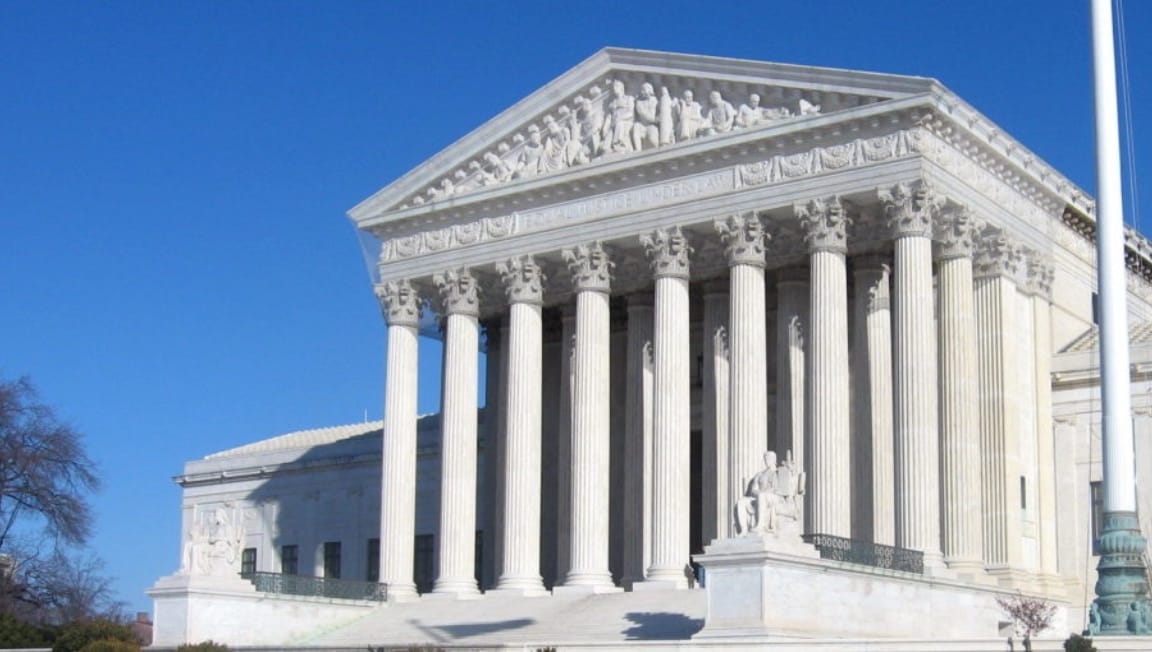
Sept. 14, 2026 — Alaska lawmakers who voted to reject Stephen Cox as attorney general after criticizing his prolific use of amicus briefs have now decided to file one of their own with the US Supreme Court.
They just appear reluctant to call it an amicus brief.
“The Legislature’s hired attorney is expected to send its letter to the Supreme Court by mid-October,” Rep. Sara Hannan, D-Juneau and chair of the Legislative Council, told the Alaska Beacon.
The “letter” is formally known as an amicus curiae brief, or friend-of-the-court brief; it’s precisely the type of legal filing that became a central issue during Cox’s bruising confirmation battle earlier this year.
On Sept. 10, the joint House-Senate Legislative Council voted to hire an outside attorney to file the brief supporting the State of Alaska in Jouppi v. Alaska. The US Supreme Court is scheduled to hear oral arguments Dec. 1 in a case testing whether the state may seize a pilot’s $95,000 airplane over alcohol found aboard before a planned flight to a dry Interior village.
The Legislature’s decision is a johnny-come-lately concurrence with Gov. Mike Dunleavy’s administration. The Department of Law had asked lawmakers in late August to participate in the case.
Senior Assistant Attorney General Kaci Schroeder told legislators that the dispute centers around how seriously Alaska may treat the illegal importation of alcohol into communities that have affirmatively chosen to prohibit it, and what sanctions the Legislature may impose to deter individuals from using aircraft to circumvent the local decisions.
That is a traditional reason for filing an amicus brief: An interested party that is not one of the litigants offers the court additional arguments or information that may help the justices decide the case.
Yet amicus briefs were treated far less sympathetically when Cox’s confirmation came before the Legislature on May 14.
Lawmakers rejected Cox by a 29–31 vote after critics repeatedly attacked him and the Department of Law for joining more than 100 amicus briefs in state and federal cases. Opponents portrayed the filings as participation in conservative “Lower 48 culture wars,” including cases involving birthright citizenship and election law.
Hannan voted against Cox, as did Juneau’s other two Democratic legislators, Sen. Jesse Kiehl and Rep. Andi Story.
Rep. Andrew Gray, D-Anchorage, specifically criticized Cox and the department’s solicitor general for participating in cases that Gray said had little direct connection to Alaska. Sen. Löki Tobin, D-Anchorage, accused Cox of spending the preceding year fighting national political battles rather than focusing on Alaska issues.
Now the Legislature has joined the amicus party — although its leaders have softened the terminology by calling their filing a “letter.”
The case began in April 2012, when Fairbanks air-taxi pilot Ken Jouppi was preparing to fly a passenger to Beaver, an Interior community that prohibits the importation and possession of alcohol.
Troopers spotted a six-pack of beer among the passenger’s luggage. A search uncovered three cases — 72 cans of Budweiser and Bud Light — reportedly intended for the local postmaster.
Jouppi was convicted of knowingly transporting alcohol into a local-option community. He received a sentence of 180 days in jail with 177 days suspended, a $3,000 fine with $1,500 suspended, and three years of probation.
The state also sought forfeiture of his Cessna 206, valued at approximately $95,000.
A trial judge initially refused to order the forfeiture, but the case continued through more than a decade of appeals. In April 2025, the Alaska Supreme Court unanimously upheld the seizure, concluding that it did not violate the Eighth Amendment’s prohibition against excessive fines.
The court emphasized the Legislature’s decision to impose particularly severe sanctions on people who use aircraft to move alcohol into dry communities. It also cited the extensive social damage caused by alcohol abuse in rural Alaska, concluding that “the illegal importation of even a six-pack of beer causes grave societal harm.”
The US Supreme Court granted Jouppi’s petition in July.
The legal question is how courts should measure the seriousness of an offense when determining whether a forfeiture is “grossly disproportional” under the Excessive Fines Clause. That standard comes from the Supreme Court’s 1998 decision in United States v. Bajakajian. The court’s 2019 ruling in Timbs v. Indiana confirmed that the clause applies to state and local governments as well as the federal government.
Jouppi, represented by the Institute for Justice, argues that courts must examine what the individual defendant actually knew and did. His attorneys contend that forfeiting a $95,000 airplane is wildly disproportionate to a misdemeanor carrying a maximum fine of $10,000, particularly when the Alaska Supreme Court based its analysis on the six-pack that was visible.
The state argues that the Legislature made a considered policy judgment about the uniquely destructive effects of bootlegging in rural Alaska and the central role airplanes play in moving illegal alcohol into isolated communities. It says courts should give substantial weight to that legislative determination.
A ruling for Jouppi could require courts nationwide to conduct more individualized reviews before governments seize vehicles, homes or other valuable property as punishment. A ruling for Alaska could reinforce the power of legislatures to impose harsh, categorical forfeiture penalties for conduct they consider especially damaging.
For Alaska lawmakers, the case also produces a striking political reversal. Four months after amicus briefs helped sink Cox’s confirmation, the Legislature has hired its own attorney to write one.
Or, as its chair now calls it, a letter.


2 thoughts on “Legislature discovers the virtues of amicus briefs after rejecting Steve Cox for filing too many”
This is VERY typical Leftist behavior – redefining terms to suit the purposes at hand. Example: Racial discrimination becomes “affirmative action” or “equity”. I should create a dictionary of this sophistry. Variants of this include conversations that include phrases like “… we are not saying that X means Y..”. Or “…we are using X to mean Y – to think of X in a new way…”. I urge folks to recognize when the sleight-of-hand occurs and instantly reject it. It is both Orwellian and Machiavellian. It is wrong.
Was Jouppi actually bootlegging or was he in the capacity of a taxi driver as the charter pilot.
This is a gross miscarriage of justice on its face, the legislature’s word play aside.