

By SUZANNE DOWNING
Sept. 9, 2026 – California imposed a sweeping emissions rule on ships docked at its ports, costs that are added to the cost of transporting Alaska crude oil, moving exports, and delivering imported products that eventually reach Alaska stores and households.
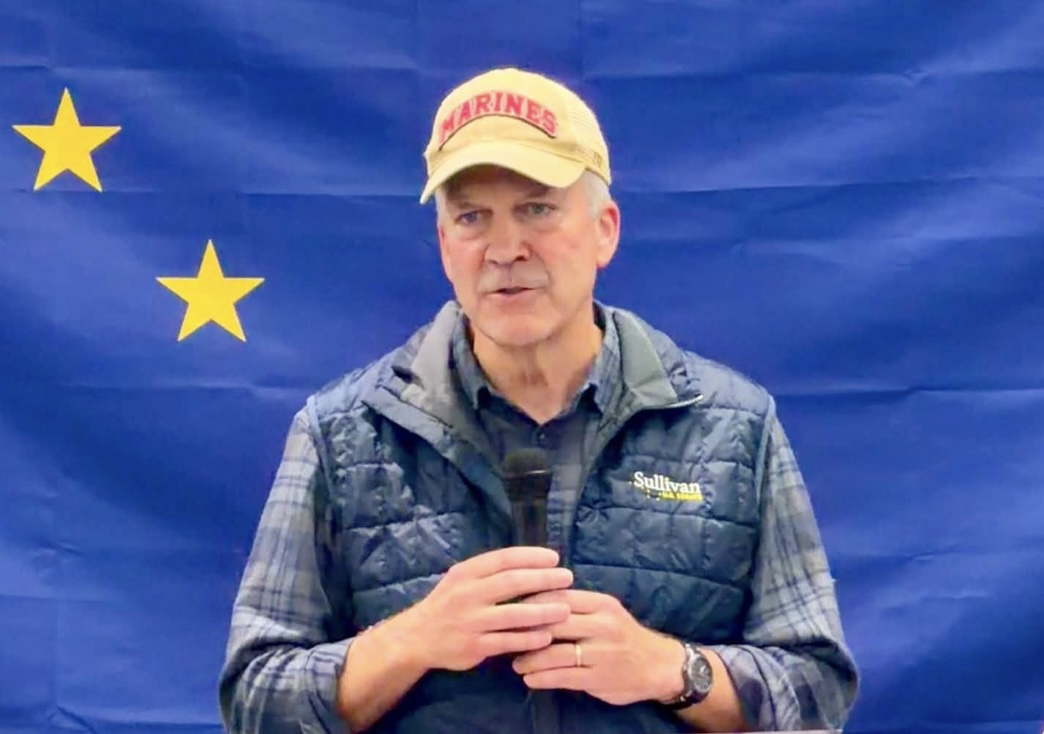
US Sen. Dan Sullivan is leading an effort in Congress to overturn the federal waiver granted by President Joe Biden that allows California to enforce its “Vessels-at-Berth” regulation. Senator Sullivan introduced a “resolution of disapproval” under the Congressional Review Act, a law that gives Congress an expedited process for rejecting federal regulations.
The issue is complicated legally, but its practical effect is easier to understand:
California requires certain ships to reduce emissions while tied up at its regulated ports. If operators cannot meet the onerous requirement, they face expensive remediation payments or penalties. Those costs are incorporated into shipping rates and ultimately passed along to producers, exporters and consumers.
For Alaska, the most direct concern is crude oil.
Tankers carrying Alaska North Slope oil regularly travel from Valdez to refineries on the West Coast. When those vessels call at California terminals, they become subject to regulations written by the California Air Resources Board, even though the oil was produced in Alaska and transported between two American ports.
California’s rule is therefore impacting Alaska oil, as well as American products awaiting export.
The regulation requires covered ocean-going vessels to reduce emissions from the auxiliary engines that power onboard systems while the ships are docked. Operators may use shore-based electricity or some another emissions-control system approved by California.
That may be practical for some container and cruise ships, but petroleum tankers present additional technical and safety challenges. Shore-power connections and alternative emissions-capture systems are not yet available at every terminal or suitable for every tanker operation.
California provides a remediation-fund option in certain limited circumstances when a vessel or terminal cannot use an approved emissions-control system. The state’s published 2026 rates allow payments reaching thousands of dollars per hour, depending on the vessel and circumstances. But civil penalties for violations can be substantially higher.
The California rule is a hidden tax on commerce. The rule was allowed to proceed after the Biden Administration’s Environmental Protection Agency granted California a waiver from federal Clean Air Act preemption, allowing California to impose emissions requirements that differ from national standards.
The Trump administration’s EPA has since determined that the waiver qualifies as a “rule” under the Congressional Review Act. In July, the agency transmitted the waiver to Congress, opening the door for lawmakers to overturn it.
Sullivan’s Senate Joint Resolution 209 would disapprove the waiver and prevent California from enforcing the vessel rule under that federal authorization.
The Congressional Review Act generally allows the Senate to consider a disapproval resolution through an expedited process that avoids the usual 60-vote requirement for overcoming a filibuster. Sullivan’s resolution must first gather enough support to be discharged from the Senate Environment and Public Works Committee and brought forward for consideration.
A related court fight has made the issue more urgent.
California has sued the EPA over its decision to treat several Clean Air Act waivers as rules subject to congressional review. US District Judge Beryl Howell recently blocked the EPA’s handling of four earlier waivers covering vehicles and other engines, finding that California was likely to succeed in its challenge.
That order did not directly block the separate waiver for the Vessels-at-Berth regulation. and so Sullivan’s resolution remains positioned for congressional action.
The larger dispute is over who ultimately has authority.
For Alaska, the case raises the question: How much power should one state have to increase the cost of moving another state’s resources? Alaskans already pay some of the country’s highest transportation costs because nearly everything must travel long distances by ship, truck or airplane. Additional costs imposed at California ports work their way through supply chains and reach Alaska families in the prices of fuel, food, equipment and other goods.
Sullivan’s resolution gives lawmakers a relatively direct choice: Allow California’s port regulation to continue affecting Alaska oil and national commerce, or revoke the federal permission that makes the mandate possible.



2 thoughts on “Sullivan moves to block California climate imperialism that raises costs for Alaskans”
Why are we “importing fuel oils/petroleum products” from the 3rd world toilet mexifornia?
Alaska used to have 4, four refineries, but are now down to 2, and 1 of those only produce petroleum products for the military bases. Why doesn’t Alaska, since it is so rich in oil, to have at least 4 operational refineries. Thereby eliminating the shipping of the crude to WA and CA for refinement just to ship it back up and cost this exorbitant prices we currently see????
Wish instead of Texas, Alaska would get monies to build the infrastructure of refining.
US Sen. Dan Sullivan is leading an effort in Congress to overturn Trump’s Canadian tariffs and Trump’s War in Iran would have been the headlines that would have put this November Senate election to bed. Instead we have record setting diesel prices affecting most of our goods. The 50% tariff on Canadian whisky isn’t going to make this any more tolerable! But those actions would have meant standing up to Trump and that is unthinkable to any Republican Senator including our own. Good luck topping off that heating oil tank this fall!