


By SUZANNE DOWNING
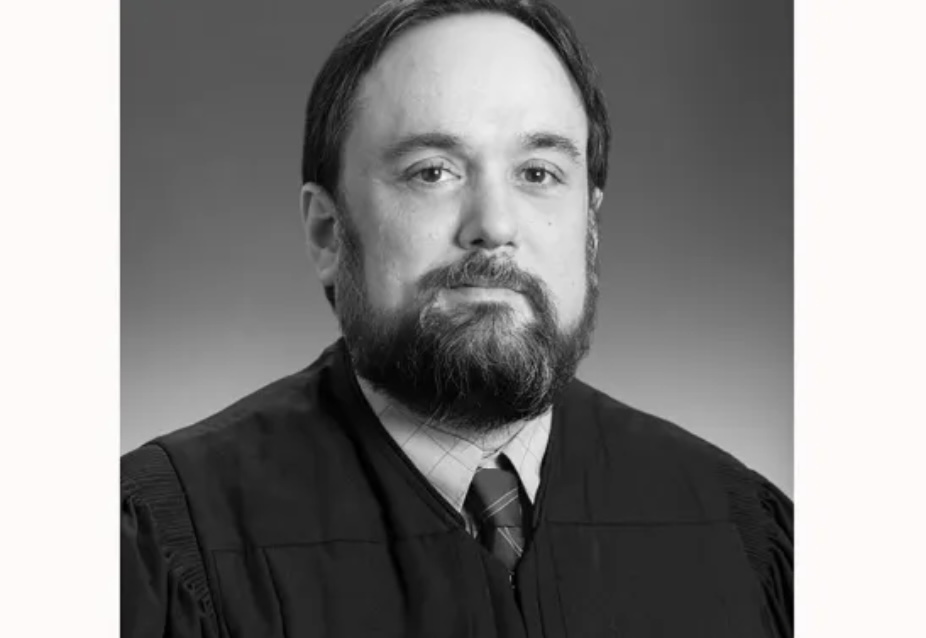
Sept. 1, 2026 – Terrence Haas spent 15 years building a reputation as an advocate and judge in Bethel. An allegation involving his former law clerk, now his wife, brought his tenure as Alaska’s chief public defender to an abrupt end. So, what happened?
Alaska’s top public defender resigned Friday, less than three years into a four-year appointment, after an allegation about his personal life became entangled with a criminal case he oversaw while serving as a Superior Court judge in Bethel.
Terrence Haas has said the allegation is false. His wife has also denied it under oath. No court has found that Haas was biased, that he had an improper relationship with his law clerk or that the defendant received an unfair trial.
But the accusation alone appears to have cost Haas his position leading the Alaska Public Defender Agency.
Haas submitted his resignation to Gov. Mike Dunleavy on Aug. 28, saying the administration’s response to the allegation made it “untenable” for him to remain in the job. It’s unclear if Dunleavy has yet accepted the resignation.
“Your representatives have made it clear that you were ‘surprised’ by an allegation in a recent legal pleading concerning when my relationship with my wife began,” Haas wrote. “My wife and I have both denied that allegation under oath.”
“Nevertheless, I understand that your administration has concluded that the political consequences of an allegation matter more than determining whether it is true,” he added, according to his letter.
The dispute arises from the case of Peter Albrite, 65, who was charged in 2021 with sexually abusing a minor in the village of Kasigluk. A jury convicted him on all five counts in August 2022.
Haas presided over the case as a Bethel Superior Court judge.
In June, attorney William Cason filed a motion seeking a new trial for Albrite. The motion alleges that personal relationships involving Haas, his law clerk and Albrite’s trial attorney created at least the appearance that Albrite did not receive a fundamentally fair trial.
The clerk had previously dated the public defender who represented Albrite. The motion also alleges that Haas may have begun a romantic relationship with the clerk while she worked for him and while Haas was married to another woman.
Haas and the former clerk, who is now his wife and works as an attorney for the Alaska Office of Public Advocacy, deny that their romantic relationship began while she was employed as his clerk. Court records show Haas’ former wife filed for divorce in 2025. Haas and his former clerk became engaged later that year, according to the new-trial motion.
Those dates matter because a romantic relationship between a sitting judge and a clerk, particularly one with a personal connection to an attorney appearing before the judge, could raise serious questions about disclosure, recusal and impartiality.
But at this point, they remain disputed allegations contained in a defense motion. A motion is an argument by one side in a case, not a judicial finding.
That distinction makes Haas’ departure particularly notable. He was not removed following a completed investigation or an adverse finding by the Alaska Commission on Judicial Conduct. He resigned after, according to his letter, the governor’s representatives expressed concern about the political consequences of the accusation.
The Dunleavy administration appointed Haas to the position in September 2023 after the Alaska Judicial Council nominated him. He took over the agency that December and was subsequently confirmed by the Legislature.
Haas was not an outsider parachuted into Alaska’s criminal justice system. He had spent roughly 15 years in Bethel and was known primarily for his long service in rural Alaska.
He joined the Public Defender Agency in Bethel in 2008, became the agency’s Southwest regional supervisor in 2015 and remained in that position until Gov. Bill Walker appointed him to the Superior Court in 2018. Haas later became presiding judge of Alaska’s sprawling Fourth Judicial District.
Before attending law school at Roger Williams University in Rhode Island, Haas worked in Michigan group homes serving adults with disabilities. He described public service as the organizing principle of his professional life.
“What constitutes a meaningful life,” Haas told a radio host in a 2024 interview, is “being of service to your neighbors” and confronting difficult human circumstances.
Haas also spoke extensively about the cultural and historical conditions contributing to crime, substance abuse and family trauma in Western Alaska. His approach was not to excuse criminal conduct, he said, but to insist that everyone entering the courtroom receive a fair and impartial process.
That reputation — a rural public defender who became a judge and then returned to lead the agency where he began — made Haas an unusually experienced choice for the statewide job.
His move from the bench in 2023 was itself disruptive. Haas was one of only two Superior Court judges in Bethel and handled approximately half the criminal cases in the Fourth Judicial District. When he left, roughly 450 cases had to be reassigned.
As public defender, Haas inherited an agency struggling with crushing caseloads, attorney vacancies and recruitment problems, particularly outside Anchorage. The agency has 13 offices and represents indigent Alaskans in criminal proceedings, juvenile cases, child-protection matters, involuntary commitments and post-conviction cases. Haas repeatedly appeared before the Legislature seeking the personnel and funding necessary to keep cases moving.
How unusual is his resignation?
Alaska has had another abrupt departure at the top of the Public Defender Agency in recent history. Quinlan Steiner, who led the agency for approximately 14 years, resigned in April 2019 amid tension with the newly installed Dunleavy administration. Steiner had sought to travel to Juneau to testify about the governor’s crime legislation, but the administration denied the request. Dunleavy accepted his resignation effective immediately and appointed Beth Goldstein as acting public defender.
Samantha Cherot later received the permanent appointment and served until Haas replaced her in 2023.
Thus, Haas is the second permanent Alaska public defender to resign during the Dunleavy administration. But the circumstances are markedly different. Steiner’s departure involved a policy and administrative dispute over appropriateness of Steiner’s actions. Haas’ resignation follows an allegation about his conduct as a former judge in a case that remains under litigation.
The immediate question is who will manage an agency already under enormous pressure. Alaska law allows the governor to appoint an acting public defender when the position becomes vacant. For the permanent replacement, the Alaska Judicial Council nominates qualified candidates, from whom the governor makes an appointment. The new public defender begins a four-year term and is subject to legislative confirmation.


6 thoughts on “What happened to Alaska’s top public defender?”
To be honest considering his own high position in Alaska’s Corrupt Bastards club How many times as he looked the other way instead of standing up for righteousness when his colleagues and peers were what he knew was wrong?
Corruption cares for no one even for the ones inside that circle orchestrating it or passivily allowing it, it just cares for Ambition. They obviously wanted him out and replaced by someone else.
It’s what comes around goes around.
Who would want to be a public defender anyway? All of that law school training, bar exam, then being mentored for years, only to learn that your real job is being legally creative in argument so you can spring criminals out of jail. Of course, as a fledgling attorney, you do get trial advocacy practice, which is invaluable and difficult for most attorneys to get.
But look at the number of state judges in Alaska, from the Supreme Court, Superior Court, District Court and Magistrate Courts, who went on to the Bench. The number is staggering. The AG’s Office is also well represented on the Bench.
Government attorneys seem to get disproportionate selection as newly minted judges. But is this good for our judicial system? The Alaska Judicial Council, which screens would-be judges and helps place them on the Bench has a political agenda. An examination of the members appointed by the Bar Association to the AJC may tell you which direction our justice system is flowing.
“But look at the number of state judges in Alaska, from the Supreme Court, Superior Court, District Court and Magistrate Courts, who went on to the Bench. The number is staggering.” That makes no sense. “State judges” going from state courts to “the bench”? State judges are already on “the bench”. You seem confused.
Itty Bitty confused their self again. It must be horrible to live in such confusion that Itty Bitty has to make comments trying to correct perfectly lucid people. Bye Itty Bitty. Get well soon.
How about keep your marriage vows and consequently in your pants and none of this would even be an issue.
He and his wife said that he was falsely accused. A made up story.
I’m assuming given the nature of Alaska’s current leadership aka The Corrupt Bastards club some wanted him out and replaced by someone of their own,
Despite how much corruption and scrupulous characters he has turned a blind eye to if he has been falsely accused I feel sorry for him and his wife being on the other side of the victims he likely saw thrown under the bus to be replaced.
If and his wife say he is innocent. In America it’s still innocent until proven without a doubt guilty.