


By SUZANNE DOWNING
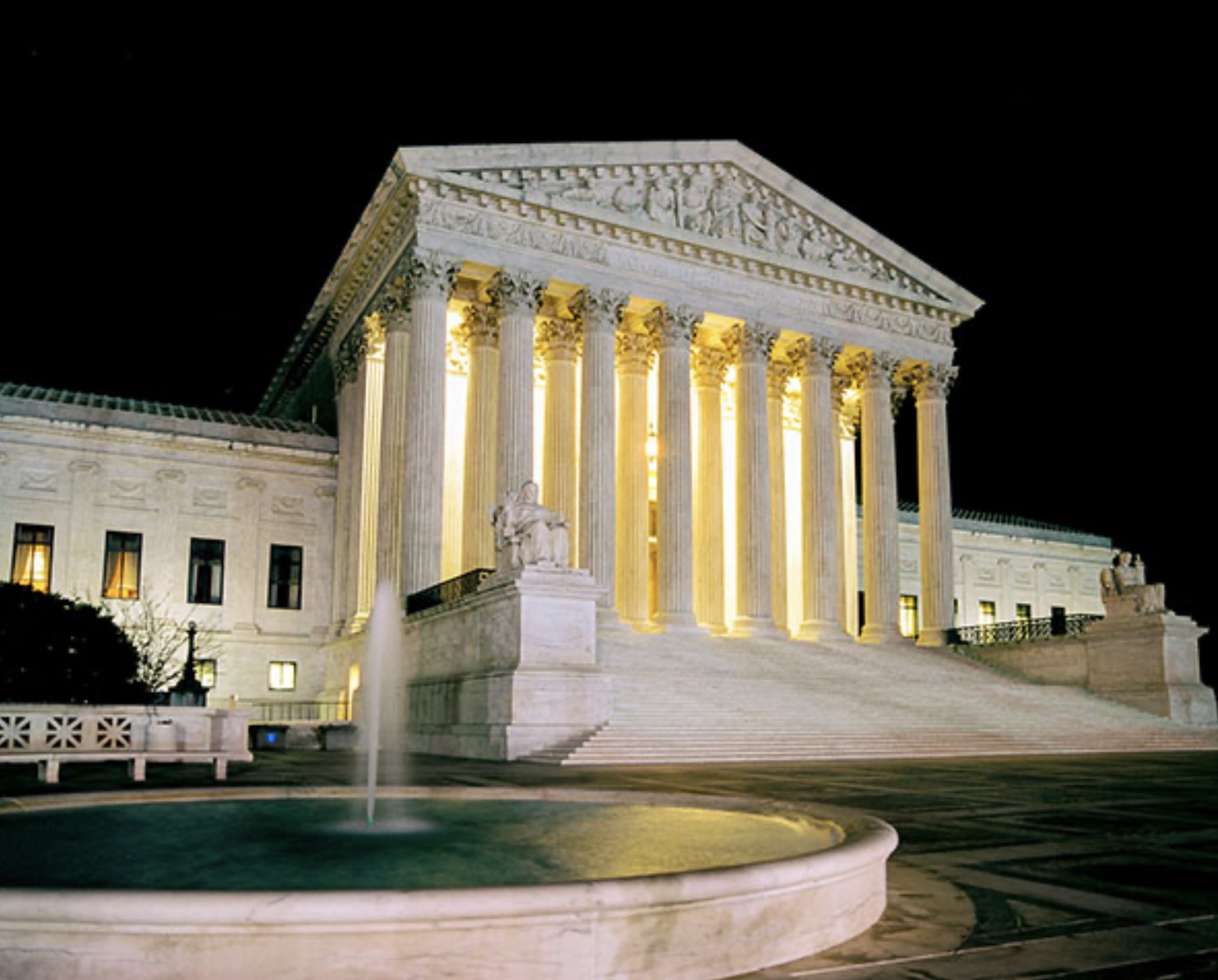
The US Supreme Court handed President Donald Trump a victory in his effort to tighten federal rules surrounding mail-in ballots, ruling that a coalition of Democrat-led states sued too soon to block his executive order.
In a 6-3 decision on Monday, the court’s conservative majority lifted a lower-court order that had prevented the Trump administration from moving forward with portions of the March directive in 23 states and the District of Columbia.
The ruling does not determine whether Trump’s proposed mail-ballot restrictions are constitutional. What the court found was that the states had not yet demonstrated the concrete and imminent injury required to bring their lawsuit.
“This internal directive does not regulate the States’ voter registration processes,” the court said. “Nor does it impinge on the States’ authority ‘to create and enforce a legal code’ for elections.”
The decision gives the administration room to continue developing its new system, but it does not immediately change how Alaskans vote absentee by mail. A separate nationwide injunction issued in another lawsuit continues to block the Postal Service from enforcing the central ballot-delivery restrictions.
The Trump order, issued March 31, directed the Department of Homeland Security to compile lists of adult American citizens residing in each state. States would not be required to use those lists, according to the majority’s reading of the order.
The directive also tells the Justice Department to prioritize investigations and, when appropriate, prosecutions involving state or local officials who issue federal ballots to people who are not legally eligible to vote.
A third provision directs the Postal Service to develop rules for handling federal election mail. The proposed system would require official election markings, automation-compatible envelopes and unique barcodes for outgoing and returned ballots. It also contemplates requiring voters using mail ballots to appear on state-specific participation lists maintained through the Postal Service.
The coalition of states, all Democrat-run, argued that the order exceeded presidential authority and intruded into election administration, a responsibility the Constitution assigns primarily to state legislatures and Congress.
US District Judge Indira Talwani of Massachusetts agreed with the states in June and blocked the administration from implementing the challenged provisions against them during the 2026 midterm election. The Trump administration appealed and now the Supreme Court has concluded that the case was premature because the executive order initially directed federal agencies to develop lists and begin a rulemaking process. At the time the states filed their lawsuit, the Postal Service had not even issued a final rule.
The states therefore asked the courts to predict what the agencies might eventually do and how those future actions might affect their elections, the majority found.
The executive order itself “does not harm the States,” the court said. Any injury would come from later actions taken by federal agencies to implement it.
“If the Postal Service’s final rule harms the States, they may challenge that rule,” the majority wrote.
The court cautioned that its ruling was not approval of every step the administration might take. Whether all of the implementation measures will comply with federal law remains to be seen.
“On that score, time will tell,” the majority said.
The Postal Service finalized its new ballot-mail rule last week, with publication scheduled for this Wednesday. That rule requires federal ballots traveling through the mail to use the official Election Mail logo, automation-compatible envelopes and unique barcodes identifying them as federal ballot mail.
That development could provide the states with grounds for a new lawsuit based on an actual final rule rather than a proposed policy.
Alaska was not part of the Democrat-led coalition challenging Trump’s order. Alaska is a no-excuse absentee-voting state, meaning any qualified voter may apply to receive a ballot by mail.
For the Aug. 18 Alaska primary, the Division of Elections reported issuing 18,082 absentee ballots by mail and receiving 9,216 as of Aug. 20. That number was not final because properly postmarked ballots may continue arriving through Aug. 28.
Mail voting played an even larger role in the 2024 general election. The state issued 59,158 absentee-by-mail ballots and received 51,212 of them, according to Division of Elections statistics.
Alaskans who wish to receive an absentee ballot by mail for the Nov. 3 general election must apply by Oct. 24. Voted ballots must be postmarked on or before Election Day, according to the Division of Elections.
Justices Sonia Sotomayor, Elena Kagan and Ketanji Brown Jackson dissented on Monday.
Sotomayor, joined by Kagan, emphasized that the court had not ruled on the underlying legality of the president’s plan.
“Today’s decision does not address whether the President’s attempts to interfere with States’ administration of the November 2026 elections are lawful,” she wrote.
Jackson issued a separate dissent accusing the majority of allowing the administration to create uncertainty immediately before the midterm elections. She complained that the decision could leave states trapped between bringing a challenge too early, before final rules are issued, and bringing it too late under court precedents discouraging last-minute changes to election procedures.
She said the ruling “needlessly injects chaos and uncertainty into the upcoming midterm elections.”
The White House has defended the order as an election-integrity measure intended to ensure that only eligible American citizens participate in federal elections.
“Only Democrat politicians and operatives would be upset about lawful efforts to secure American elections and ensure only eligible American citizens are casting ballots,” White House spokeswoman Abigail Jackson said after the lawsuit was filed in April.


2 thoughts on “Supreme Court clears hurdle for Trump’s mail-ballot restrictions, but legal fight continues”
These judicial idiots in the lower courts are all indoctrinated Democrats. Their only pathway to the last bit of power that they have. Thank God for our reasoned higher court. Here in Alaska, the Democrat controlled Alaska Judicial Council selects our judges. Guess what?
Alaska’s courts are packed with left-wing partisan, activist judges. No wonder our judicial system is so broken.
By design, Brystole. The AK Judicial Council is secretive and does not give out the particulars on how they choose their attorney members. For example, one of the Council’s newest members is attorney Savannah Fletcher of Fairbanks. A former Borough Assembly member who was censured last year by the Assembly for her dishonesty. By all accounts she is unqualified to serve on the Council due to her violations of attorney ethics. But she’s a rabid far left Democrat with axes to grind against Conservatives. Apparently,that’s her primary qualification, (along with the fact that she used to clerk for the Chief Alaska Supreme Court Justice).