By THE ALASKA STORY
On Aug. 15, 1935, two of the most celebrated Americans of their generation climbed into a small red airplane near Fairbanks and headed north toward Point Barrow.
They never arrived.
A few hours later, pioneering aviator Wiley Post and humorist Will Rogers were dead in the shallow waters of a lagoon southwest of Barrow, now Utqiaġvik. Their deaths shocked the nation and gave Alaska one of the most tragic and enduring stories in its aviation history.
Post, 36, was among the world’s most accomplished pilots. Blind in one eye following an oilfield accident, he had nevertheless become the first person to fly solo around the world. In July 1933, flying his famous Lockheed Vega, Winnie Mae, Post circled the globe in seven days, 18 hours and 49 minutes.
He also pioneered high-altitude flight and helped develop an early pressure suit that allowed him to reach the lower stratosphere.
Rogers, 55, was even better known. The Oklahoma-born cowboy, actor, newspaper columnist, and radio personality had become one of America’s most trusted and recognizable voices during the Great Depression. His humor was pointed but rarely cruel, and his observations about politicians and government earned him the title of America’s “cowboy philosopher.”
Post and Rogers were close friends. During the summer of 1935, they embarked on what was described as an informal aerial tour of Alaska. The trip was also intended as preparation for a possible pioneering flight across Siberia toward Moscow.
Their aircraft was experimental and unconventional.
Post had combined the fuselage of a Lockheed Model 9 Orion with wings from another Lockheed aircraft and installed a Pratt & Whitney Wasp engine. Oversized pontoons were added so the plane could land on Alaska’s remote lakes and rivers.
The floats made the aircraft substantially heavier and dangerously nose-heavy when the engine was not producing power.
Post and Rogers traveled north from Seattle, stopping in several Alaska communities. They visited the Matanuska Colony, made a side trip near Mount McKinley and continued to Fairbanks.
On Aug. 15, they departed the Fairbanks area for Point Barrow, then the northernmost settlement in the United States.
Fog and poor visibility complicated the flight. When the two men became uncertain of their position, Post landed on Walakpa Lagoon, near the mouth of the Walakpa River and roughly 15 miles southwest of Barrow.
There they encountered a small group of Iñupiat residents who were camping in the area. Among them was hunter Clair Okpeaha.
Post and Rogers asked for directions to Barrow and spent a short time on the ground before returning to the aircraft. Post taxied across the lagoon and attempted another takeoff.
The plane climbed only about 50 feet.
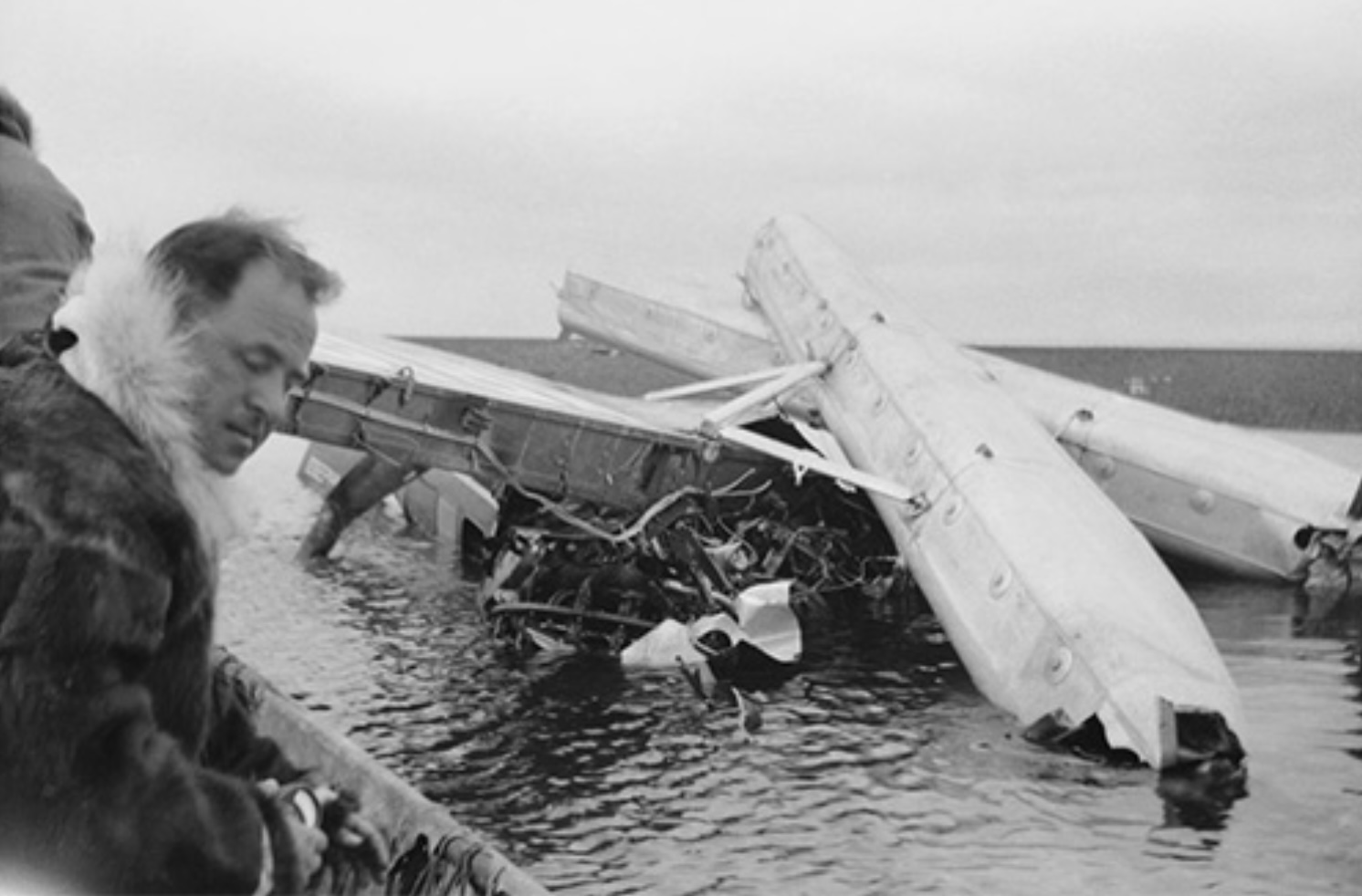
Witnesses reported that its engine sputtered or backfired and then stopped. Without engine power, the heavily loaded aircraft immediately pitched downward and rolled to the right, striking the shallow lagoon nose-first. The right wing and pontoon tore away, and the aircraft flipped upside down. Both men died instantly.
Clair Okpeaha called out to the men but received no response. He then made the difficult journey to Barrow by kayak and on foot to report what had happened.
At Barrow, he encountered Staff Sgt. Stanley R. Morgan of the US Army Signal Corps. Despite a language barrier, Okpeaha was able to convey that an airplane had crashed and that its occupants were dead.
Morgan organized a recovery party. Ice complicated the boat trip to the wreckage, and rescuers had to dismantle portions of the aircraft to recover Post’s body. Bush pilot Joe Crosson later flew the remains of Post and Rogers south.
The news was radioed from the Arctic and quickly spread across the country.
Congress suspended its proceedings. Flags were lowered to half-staff. Political leaders, entertainers and ordinary Americans sent messages of grief. Movie theaters across the nation later went dark in tribute to Rogers, one of the country’s biggest motion-picture stars.
The federal Bureau of Air Commerce investigated the accident and concluded that the probable cause was a loss of control at low altitude after the sudden engine failure, aggravated by the aircraft’s extreme nose-heavy condition.
Investigators could not determine conclusively why the engine stopped. It could have been carburetor icing, moisture or condensation, or the cooling of the engine while the aircraft sat idling on the lagoon.
Post’s hybrid aircraft and its oversized floats were well suited for landing on remote Alaska waters, but the modifications gave Post almost no margin for recovery when the engine quit so close to the ground.
The crash was the first fatal aviation accident recorded near Barrow.
Today, the community’s airport is named Wiley Post–Will Rogers Memorial Airport. The crash location, known as the Rogers–Post Site, is listed on the National Register of Historic Places.
A concrete memorial funded through public donations was dedicated near the crash site in 1938. It incorporated a granite marker quarried near Rogers’ family home in Claremore, Oklahoma.
A second, taller obelisk was constructed years later by Jesse Stubbs, who said he had known Rogers. That monument also honored Alaska veterans of World War II. It was later moved closer to Utqiaġvik as coastal erosion threatened the original location.
The story is remembered not only because of the fame of the two men, but because it captures a defining period in Alaska aviation.
Post was attempting to push the boundaries of what aircraft could do. Rogers was traveling with him, observing the people and places of Alaska and sending his impressions to readers across the country. And that is where their stories ended.