


By THE ALASKA STORY
Aug. 14, 2026 – An undercover video released Thursday by investigative journalist James O’Keefe offers startling and indisputable evidence of just how little documentation Minnesota requires from some people registering to vote on Election Day.
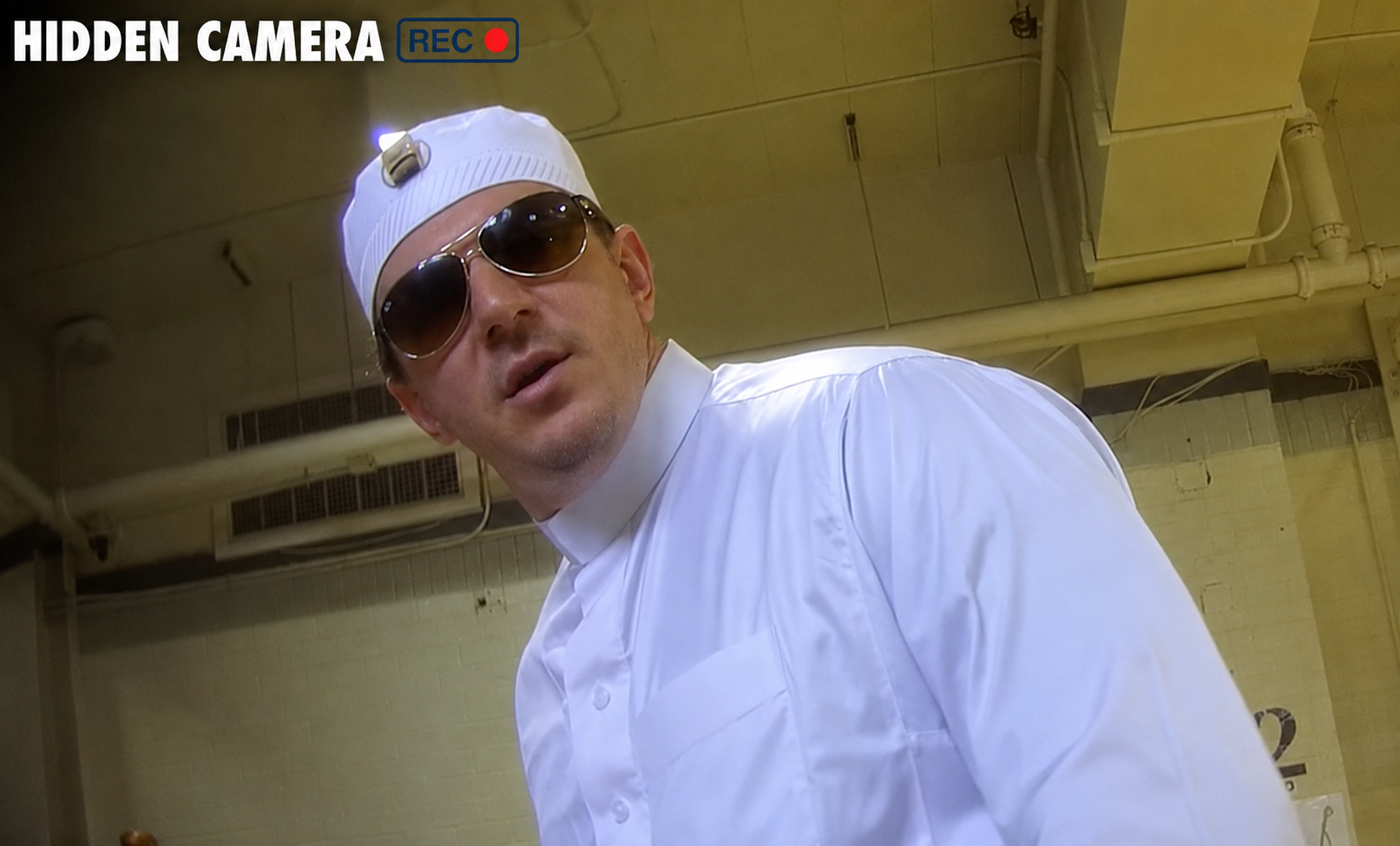
The footage, recorded during Minnesota’s Aug. 11 primary election, shows O’Keefe and associates, including Cam Higby, approaching Minneapolis poll workers while dressed in traditional Muslim attire. They presented an intentionally extreme scenario involving several people who were not registered to vote and asked what identification or residency documents would be required.
The answer from election workers was simple: If O’Keefe was already registered in the precinct, he could vouch for as many as eight other people.
“You’re the ID,” one poll worker told him.
In another exchange, O’Keefe asked whether he could vouch for people who were not registered.
“That’s okay. That’s fine. Yeah,” the worker responded.
“If you’re all in the same precinct and you are already registered, you can vouch for them as ID,” another worker explained. “Eight people.”
These were not confused election workers misstating the rules. They were accurately explaining Minnesota law.
CAUGHT INSIDE MINNEAPOLIS POLLING BOOTHS: Minnesota Poll Workers Tell O’Keefe, Dressed in Muslim Garb, & @camhigby, in a Burka, That They Can Vouch for Eight Unregistered Voters Without ID, Allowing Them to Vote in Minnesota Primary Election
Election worker says, “You’re the… pic.twitter.com/bUPVxym08G
— James O'Keefe (@JamesOKeefeIII) August 13, 2026
Under Minnesota Statutes § 201.061, subdivision 3, an eligible person may register at a polling place on Election Day by completing a registration application, taking an oath and establishing residency through one of several approved methods.
One of those methods is “vouching.”
A voter already registered in the precinct may sign an oath stating that he or she personally knows the applicant resides in that precinct. That sworn statement serves as the applicant’s proof of residence in place of the usual identification or residency documents.
One registered voter may sign proof-of-residence oaths for up to eight people on the same Election Day. Minnesota election officials track the number on an official form.
The Minnesota Secretary of State’s Office confirms it plainly: “A registered voter can vouch for up to eight voters.”
Someone who registers through vouching that day may not then turn around and vouch for others. Employees of certain residential facilities are subject to separate provisions and may vouch for eligible residents of those facilities.
Those safeguards, however, do not change what the O’Keefe video demonstrates: A person may register and vote without presenting conventional proof that he lives in the precinct if another registered voter signs an oath claiming personal knowledge of his residence.
The registrant must still complete an application and provide identifying information, generally including a name, address, date of birth and a driver’s license or state identification number, the last four digits of a Social Security number, or an indication that the person has neither. The voucher and registrant also make sworn statements, and knowingly making a false statement may result in criminal penalties.
But the residency claim itself is accepted at the polling place on the word of another voter. Independent documents establishing the applicant’s address are not required when vouching is used.
O’Keefe described his operation as an effort to expose the “sheer lunacy” of Minnesota’s system. The group’s clothing and scenario were deliberately theatrical, and some poll workers appeared suspicious. Yet the unusual presentation forced election workers to explain how far the law actually reaches.
The video provides solid proof of the process and its vulnerability. It does not, standing alone, establish that fraudulent ballots were ultimately cast. Publicly available descriptions of the initial operation indicate that O’Keefe’s team primarily questioned workers and documented their explanations. Related posts have made broader claims about successfully completing the vouching process, but the original Aug. 13 video centers on what election workers told them.
The system depends heavily on the honesty of the people standing at the registration table. If a voucher falsely claims personal knowledge that eight people live in the precinct, election workers have no separate residency document to examine before those individuals register and receive ballots.
Verification after the election is not the same as verification before a ballot is cast.
That is the real significance of O’Keefe’s video. It does not reveal a rogue precinct or a handful of workers ignoring Minnesota law. It reveals that the law itself allows one voter’s sworn word to replace documentary proof of residence for eight other people registering on Election Day.
For comparison, Alaska has no comparable system. Alaskans generally must register at least 30 days before an election. The state provides a narrow same-day registration exception during presidential elections, but ballots cast under that exception count only in the races for president and vice president.
At Alaska polling places, voters are asked to present identification, which may include a voter registration card, driver’s license, state identification card, passport, birth certificate, hunting or fishing license, another valid photo ID, or certain current documents displaying the voter’s name and address. An election official may waive the requirement when the official personally knows the voter, subject to restrictions for certain first-time voters.
Alaska does not permit an ordinary registered voter to establish residency for eight unregistered people through a precinct-wide vouching process.
The Alaska Division of Elections states that voters must be registered by the applicable deadline and must have lived in the state and election district for at least 30 days before an election. Its official voter information and registration materials emphasize individual registration and identification rather than Minnesota-style group vouching.

2 thoughts on “Video: James O’Keefe exposes Minnesota law allowing one voter to vouch for eight others, no ID required”
UNBLIEVABLE!!! What could possibly go wrong!!!
After all the learing center and daycare scams they have to keep Democrats in power to hoard more money for their warped leaders.
Just imagine what kind of country America would be if the kackling Kamala and her tampon salesman from Minnesota were running the show. I havent heard of anything productive coming out of what used to be a decent place to live.