


By THE ALASKA STORY
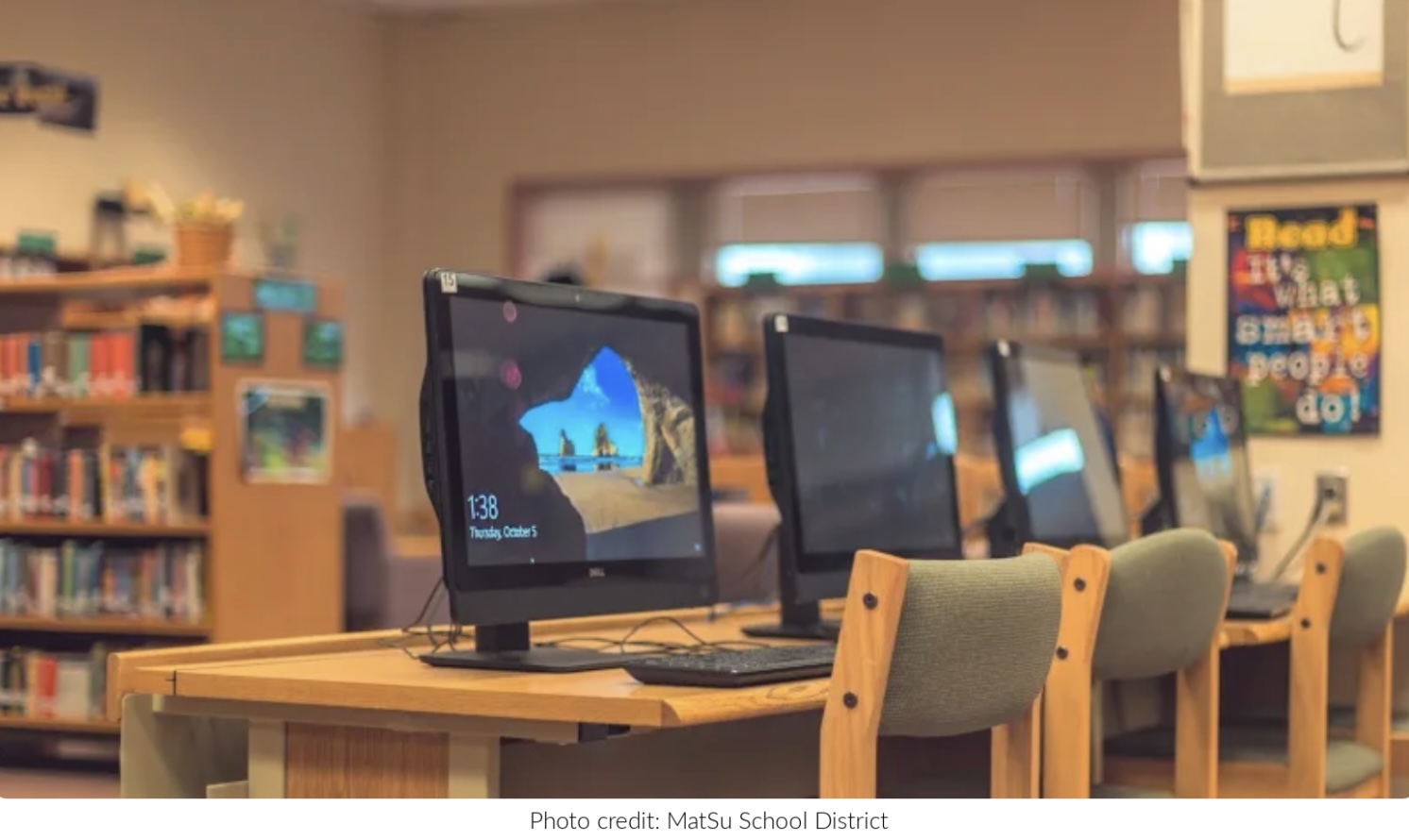
Aug. 9, 2026 – Summer vacation is almost over for thousands of Alaska students, with the Matanuska-Susitna Borough School District opening its doors first among the state’s largest school systems.
School buses will start their routes soon as Mat-Su students in grades 1–12 return Thursday, Aug. 13 — just four days from now. Kindergarten and prekindergarten students begin one week later, on Aug. 20. The district’s opening week also includes kindergarten roll-in assessments.
The start dates vary across Alaska. Fairbanks students return Aug. 18 (Election Day), most Kenai and Anchorage students begin Aug. 19, Juneau opens Aug. 20, and Ketchikan classes beginning Aug. 31.
Here are the scheduled first days for six of Alaska’s larger school districts:
- Mat-Su: Grades 1–12 begin Thursday, Aug. 13. Kindergarten and prekindergarten begin Thursday, Aug. 20. Individual charter and alternative school calendars may vary. Mat-Su district calendar
- Fairbanks: The first day for students in the Fairbanks North Star Borough School District is Tuesday, Aug. 18. Fairbanks district calendar
- Anchorage: Students in grades 1–6 and grade 9 begin Wednesday, Aug. 19. Grades 7–8 and 10–12 begin Thursday, Aug. 20. Preschool and kindergarten classes begin Wednesday, Aug. 26. Teachers return Aug. 14. Anchorage district calendar
- Kenai Peninsula: The districtwide first day is Wednesday, Aug. 19. Several charter, village and alternative schools operate under variance calendars, so families should check their individual schools. Kenai Peninsula calendars
- Juneau: The general district calendar lists Thursday, Aug. 20, as the first day of school. Grades 1–12 begin that day, followed by kindergarten Aug. 25 and preschool Aug. 27. Juneau district calendar
- Ketchikan: Students return Monday, Aug. 31. Teachers report Aug. 24, followed by several days of staff training and professional development. Ketchikan district calendar
Anchorage’s calendar received extra attention this year after the district proposed moving the opening earlier to add three instructional days. Parents objected that the change came too late for families that had already made summer plans.
The Anchorage School Board ultimately returned to the previously approved August start dates and placed the additional instructional days in the final quarter of the school year. The district now says its final student day will be May 28, 2027.
The return to school also brings renewed attention to enrollment and academic performance.
Anchorage remains Alaska’s largest district, although even its own website offers differing descriptions of its size. Its main page has refers to more than 43,000 students and 100 schools, while an “About” page says the district educates nearly 41,000 students through more than 120 schools and programs.
The larger trend is unmistakable: Anchorage’s enrollment has declined by roughly 7,000 students since the middle of the last decade. Falling birth rates, movement of families to other communities, and growing use of charter, correspondence, and homeschool programs have all contributed.
Mat-Su, by contrast, serves approximately 19,000 to 19,500 students in a borough that has been among Alaska’s fastest-growing regions for years. Some families have moved north from Anchorage in search of less expensive housing, more space, better schools, and a different lifestyle. Other Anchorage-area students participate in Mat-Su correspondence programs without moving into the borough.
Alaska’s Foundation Formula is largely based on the number of students counted during a specific fall window.
Under state law, districts count students during a 20-school-day period ending on the fourth Friday in October. For 2026, that period is expected to run from late September through Oct. 23, although the Alaska Department of Education and Early Development publishes the final reporting schedule. Districts submit their numbers shortly afterward, and the count becomes the principal basis for state foundation funding. Alaska does not conduct a second statewide funding count later in the school year.
Academic performance will also return as a topic of debate and discussion soon.
Anchorage’s data dashboard prominently displays a 32.4% third-grade reading proficiency figure, but that number is the district’s May 2023 baseline, not its latest result.
The more recent spring 2025 result was lower: approximately 29.2% of Anchorage third graders scored proficient or advanced on the AK STAR English language arts assessment. The district’s stated goal is to raise third-grade English language arts proficiency to 46.4% by May 2028. The ASD data dashboard is here.
Mat-Su performed better, with approximately 37.6% of third graders testing proficient or advanced in English language arts in spring 2025. That continued an upward district trend from approximately 33.4% in 2023 and 36.3% in 2024.
Changing enrollment can affect districtwide results, particularly when schools are absorbing students who need additional academic support. The scores alone do not establish that migration from Anchorage is depressing Mat-Su’s proficiency rate. Student achievement is influenced by many factors, and Alaska’s growing use of correspondence and homeschool programs further complicates comparisons.
For comparison, Florida reported that 60% of its third graders scored at Level 3 or above on that state’s FAST English language arts assessment in 2026, up from 57% in 2025. That is roughly twice Anchorage’s latest AK STAR proficiency rate. Alaska and Florida administer different assessments and establish their own proficiency standards, so the percentages are not perfectly interchangeable.
Florida has long emphasized early-literacy intervention, progress monitoring and third-grade promotion requirements. Alaska more recently implemented the Alaska Reads Act, which requires screening and added support for young students struggling with reading.
For families, the immediate concerns are more practical: registration, school supplies, transportation, orientation and getting children back onto a school-year sleep schedule, even while the sun stays high in the sky in August evenings.



5 thoughts on “Back to school: Mat-Su students are first to return as Alaska districts open for 2026–27”
In a more civilized culture, summer vacation was held back until Memorial Day, and students did not return to school until after Labor Day. A big reason was the single-parent bread winner, and Mom was a Home-Maker. Raising children was a burden of joy. Enter socialism, where the State becomes the owner of children, feminism is the new religion, and school functions as baby-sitter. Mom needed to enter the workforce because of income taxes and inflation. With less parental control, the restless and poorly disciplined student now becomes the school’s problem, thus disrupting classes. Only by entertainment can the schools distract them. Thus, the serious-minded kids are now sent to charter or private schools. Another factor creating shorter summer vacations is NEA-driven teacher “in-service” days. Teachers get indoctrinated, too. The latest educational fads, which fade-in and then fade-out, are spoon fed to the faculty. Many saw them for what they are: useless. Thus, schools increasingly became indoctrination centers, not education centers. You might notice that reading skills were better, not worse, in previous decades, proving that longer school days have nothing to do with educational outcomes. Finally, in Alaska’s culture, when fishing and hunting are at their peak in late summer, returning to the classroom after Labor Day is far more sensible. Instead, schools release the students in mid-May, when there are NO salmon runs and weather is still quite dicey. So — kids re-enter the classroom, when they could be learning the skills of outdoorsmen. Many are pulled out of school for a week or two in August or September for just that reason, leaving a continuity gap as the curriculum moves forward. Home or private school students generally are better prepared for life, because God is part of their education, too. Our secular culture robs students of a theological education, leaving a mere 1-2 hours a week for religious instruction. Public schools cannot instruct anything beyond a temporal life. Ergo, the subliminal conclusion in a public school young person’s mind is that there is nothing to prepare for except in this world, and does not even think of an eternal destiny.
Start school after Labor Day and end a few weeks later in June, please.
Our mid-August through May schedule is totally lame for fishing, hunting, high school summer jobs, etc. It should be criminal to send kids back into a school building while our extremely short summers still have a few weeks of decent weather left, and nobody wants to deal with late breakup outdoor gear and the nasty smell of spring water and dead grass in their entryways in the third week of May.
But I guess this idea won’t fly unless I can find a silver lining for the teachers, who’s desires matter most in any consideration regarding education.
You can always homeschool. Then you can pick your own start and end dates.
Some homeschoolers their summers are Dec-Feb. some homeschoolers they do start after Labor Day or well after the fishing season.
Matsu Republicans if you want to change the direction of the Matsu, you all are going to have to not return your communities next generation back to a school district that still gets its direction from the NEA and state department education board.
Else your political work to try keeping Matsu redder is all in vain when the next generation is being influenced by leftist ideas, personalities, and politics.
To be frank. You Matsu residents that vote typically Right. You don’t have much time to turn Wasilla, Palmer, Chickloon, and the whole valley back right. The AKDemocrats increased their aggression in the Matsu.
It’s time to get radical and take your childrens and grandchildren’s education in your own hands and sacrifice a bit of your money, your lifestyles for them not to go left leaving their parents more Republican and conservative principles behind. Even if it means going without or downsizing your lifestyle to afford more time and money to a private or homeschool education.