

By BRANDON BREFCZYNSKI
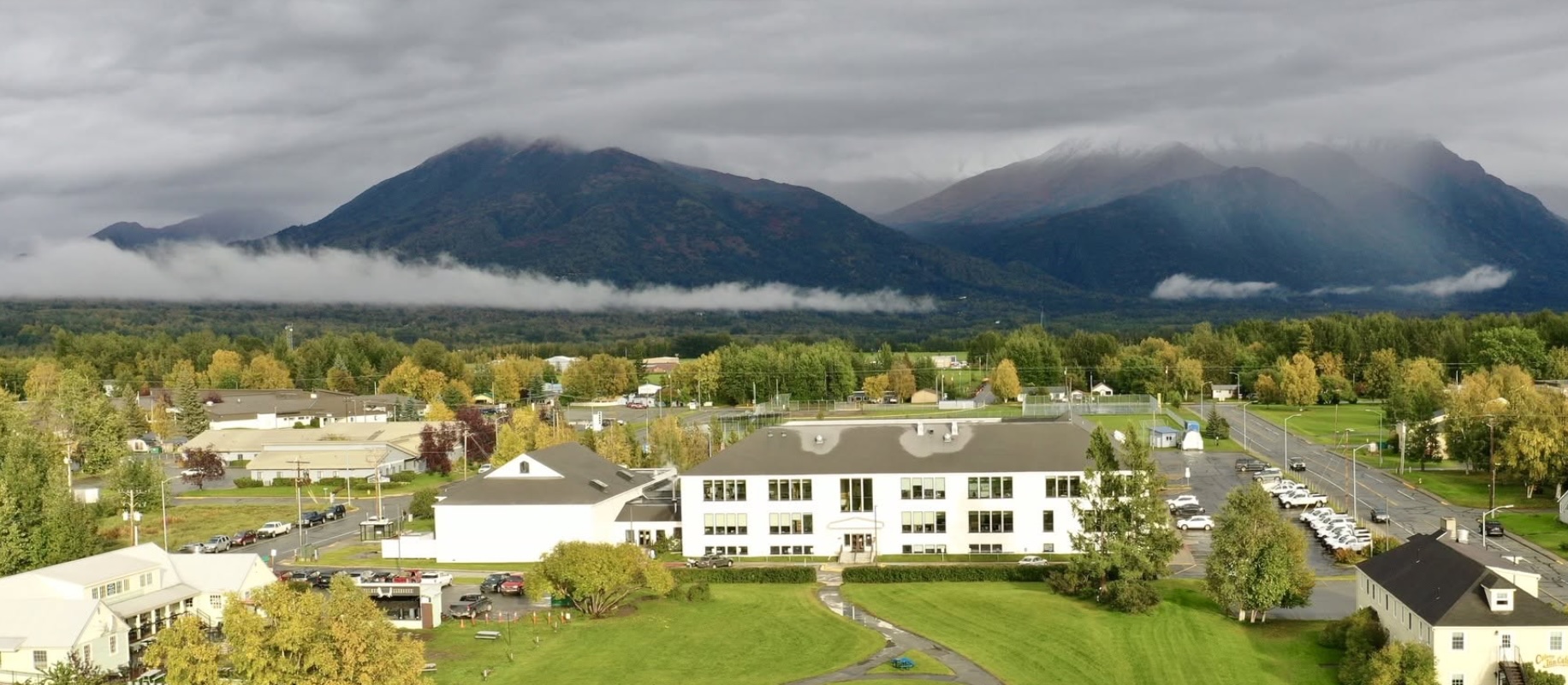
July 31, 2026 – The Department of Natural Resources’ preliminary decision concerning approximately 19,950 acres north of Houston has prompted understandable questions. Residents want to know what could be built, how it would affect trails, wildlife and water, whether a data center is already planned, and what the community would gain.
Houston and Matanuska-Susitna Borough officials have also said they would have preferred to hear about the proposal before the public notice was issued. Those concerns deserve direct answers.
First, no project has been approved or selected. There is no committed data-center tenant, industrial developer, site plan, power source, cooling system, water-supply plan or construction schedule. DNR is considering whether to convey the land to AIDEA, not whether to approve a finished industrial park. The preliminary decision remains open for public comment through August 19, after which DNR will decide whether and under what conditions to proceed.
AIDEA’s development plan identifies possibilities, not commitments: rail-served logistics, shared utility corridors, advanced manufacturing, local material production, energy infrastructure, workforce housing and, potentially, data centers. Listing a possible use lets the public and reviewing agencies see the range under consideration; it does not mean any of it will be built.
Future decisions will turn on economics and due diligence. A proposal would need to demonstrate market demand, realistic infrastructure and energy requirements, financing capacity, technical feasibility and measurable public benefit, and satisfy all applicable local, state and federal permits, reviews and authorizations. A project that cannot make economic sense or responsibly address its impacts should not move forward merely because it appeared in a planning document.
Data centers illustrate why project-level review matters. They vary widely in scale, power demand, cooling technology and water use. With no specific proposal before AIDEA, it would be premature either to promote or reject a particular design. If one emerges, AIDEA would have to weigh its power and water requirements, infrastructure impacts, permafrost and site conditions, employment and tax effects, and its benefits to Houston, the Borough and the State.
The same principle applies to trails, wildlife and water. The area includes public rights-of-way, RS 2477 routes, mushing and recreational use, wetlands and waterways. These are not blank spaces on a map.
Before siting projects, AIDEA would need to understand how residents use the area, map legal and practical access, and evaluate water and habitat conditions. The development plan already contemplates concentrating activity on suitable uplands, using existing corridors where feasible, and maintaining stewardship and buffer areas around Deception Creek and wetter ground. Local knowledge can fill gaps that agency records miss.
There is also a financial question: why convey the land to AIDEA rather than leave it in State ownership? Undeveloped State land holds public value, but it does not, by itself, generate income. AIDEA has different tools. It can lease land, build shared infrastructure, finance eligible development, retain an ownership interest in a project, or contribute land and on-site sand, gravel and rock. Contributing land or materials can reduce the private cash needed for site preparation and let the public keep a share of long-term value rather than sell an asset once.
Revenue from leases, repayments and retained project interests can contribute to AIDEA’s net income, from which the Authority declares an annual dividend to the State under state law. Including the dividend declared for fiscal year 2026, AIDEA has declared approximately $495 million in dividends to the State. No Houston return is guaranteed, and no responsible agency would claim otherwise before a project exists. But ownership creates a mechanism to convert land and materials into recurring public value. Passive State ownership does not.
AIDEA ownership can also create flexibility for the Borough. If planning together identifies land better suited to a Borough facility, local infrastructure, housing, recreation or public access, AIDEA can evaluate a conveyance or exchange under its property authorities. Any such transaction would still require AIDEA Board action, public-interest safeguards, title and survey work, and applicable public notice. But it could offer a more direct path than a separate state municipal-entitlement process. AIDEA is prepared to work with the City of Houston, the Borough, residents, trail users, utilities, the Alaska Railroad, state agencies and private partners before committing land to specific projects. The goal is not to impose one concept on nearly 20,000 acres. It is to identify which ground is suitable for development, which should remain buffer or stewardship area, which access routes must be protected, and where local ownership makes better sense.
Alaska rarely has the chance to plan for growth before a project arrives. The Houston conveyance offers that chance, but only if the planning happens with the Mat-Su rather than around it. The public comment period is the beginning of that work, not the end.
Brandon Brefczynski is the deputy executive director of the Alaska Industrial Development and Export Authority, and is a lifelong Alaskan.


4 thoughts on “Brandon Brefczynski: A rare opportunity to plan with the Mat-Su”
A data center can be built there. But. It’ll stunt population growth in the area of the Data Center.
Data Centers are massive. It (unintentionally) affects the growth of a community.
It’s a neighbor that likes being Alone.
Don’t complain about Data Centers
When you can’t live without your phone, computer, and digital technologies.
We have managed just fine with our present phones, computers and digital technologies, haven’t we…? Yet we want more? Oh, we have to build it for national defense? Well, I guess so, if we continue to trust in our own understanding — our own armor. I don’t see that strategy having ended well in the pages of history.
I would argue we are not better off. We are wealthy, pampered paupers, having departed from the soul-nourishing foundations of faith in the living God revealed through Jesus Christ, and deep family and neighborhood/community connections. We feed on our social media feeds, and all other manner of substitutes, and wonder why we’re starving. We are created beings.
I wonder what would happen if we relinquished our own rebellious ways and fully trusted in Jesus Christ for our defense — personal, and national.
MEA and Enstar told us it’s going to be a cold, dark winter with rolling blackouts. The bafoons in the Senate Resource Committee are going to mess up any chance of a LNG line, the other bureaucrats are gonna over-regulate Hilcorp right out of Cook Inlet. There is no energy to operate a data center.
Shall we cut the power to all those idiots in legislative office who are throwing a wrench in the gearbox of any form of energy first to give them an inside peek at winter without and see if they know how to hold a chainsaw?